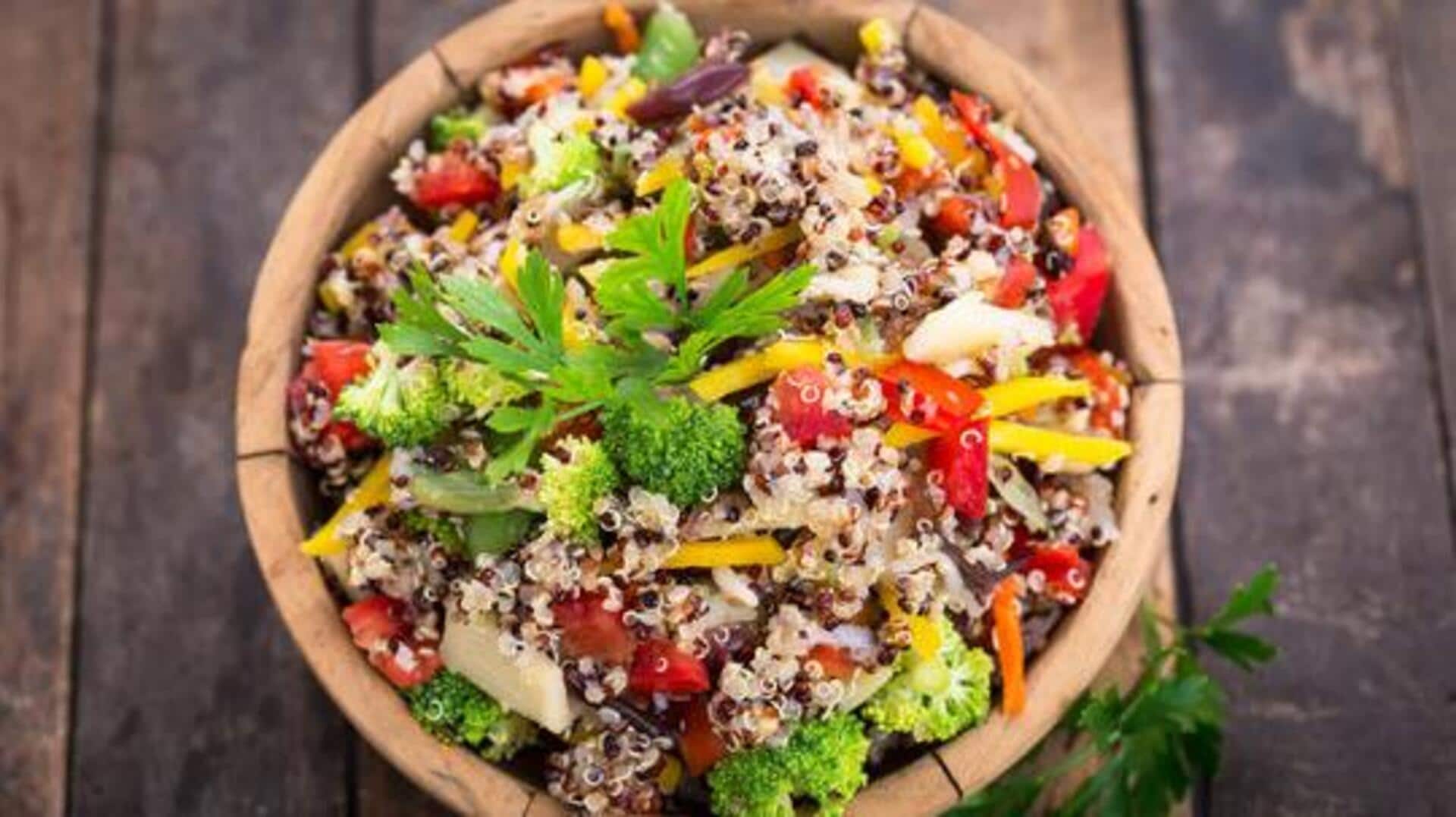
How quinoa is becoming a staple food in Africa
What's the story
Quinoa, the ancient grain, is making waves across Africa for its health benefits and adaptability. The grain, which originated in the Andes, is now a staple in several African nations. Here, we explore five cultures that have adopted quinoa into their diets, and how it is changing their culinary traditions and nutrition. Each culture's unique take on quinoa highlights its versatility and potential as a sustainable food source.
Ethiopian influence
Ethiopian love for quinoa
In Ethiopia, quinoa has become a popular substitute for traditional grains like teff.
The country's diverse climate allows for the cultivation of quinoa, making it an accessible option for many.
Ethiopians use quinoa in various dishes, often mixing it with vegetables and spices to create hearty stews.
Its high protein content makes it an attractive choice for those seeking nutritious alternatives to staple foods.
Moroccan twist
Moroccan fusion with quinoa
Moroccan cuisine is famous for its rich flavors and spices, and now quinoa is becoming a part of that.
In Morocco, people are mixing quinoa with traditional ingredients such as chickpeas and lentils to prepare filling salads and tagines.
The adaptability of quinoa allows it to soak up the flavors of spices like cumin and coriander, making it a perfect fit for Moroccan cooking.
South African adaptation
South African quinoa innovations
In South Africa, quinoa is being experimented with in a number of innovative ways.
Chefs are adding it to traditional dishes such as bobotie or braai sides.
Its versatility makes it an ideal addition to both savory and sweet recipes.
With a growing interest in healthy eating, South Africans are embracing quinoa as a way to boost the nutritional value of their meals.
Kenyan growth
Kenyan quinoa cultivation efforts
Kenya has also taken up the cultivation of quinoa, owing to its resilience in drought-prone areas.
This has not only provided farmers with an additional source of income but also ensured food security in regions affected by climate change.
Kenyans consume locally grown quinoa in various forms, from porridge to pilaf, showcasing the grain's adaptability.
Senegalese cuisine
Senegalese quinoa dishes
In Senegal, where rice is a staple food, quinoa is increasingly being used as a substitute or accompaniment in traditional dishes such as thieboudienne or ceebu jen (rice with fish).
The Senegalese are discovering how well this nutrient-dense grain goes with local vegetables and sauces.
It provides a healthier option without compromising on flavor or texture.