Rock climbing v/s paddleboarding: Which is better for core strength?
What's the story
Rock climbing and paddleboarding are two popular activities that promise a great workout. Both activities engage the core, but in different ways. While rock climbing requires you to use your muscles to stay balanced and pull yourself up, paddleboarding has you standing on a board and balancing on water. Here's a look at how each activity works on your core muscles, and which one may suit your fitness goals better.
#1
Rock climbing's muscle engagement
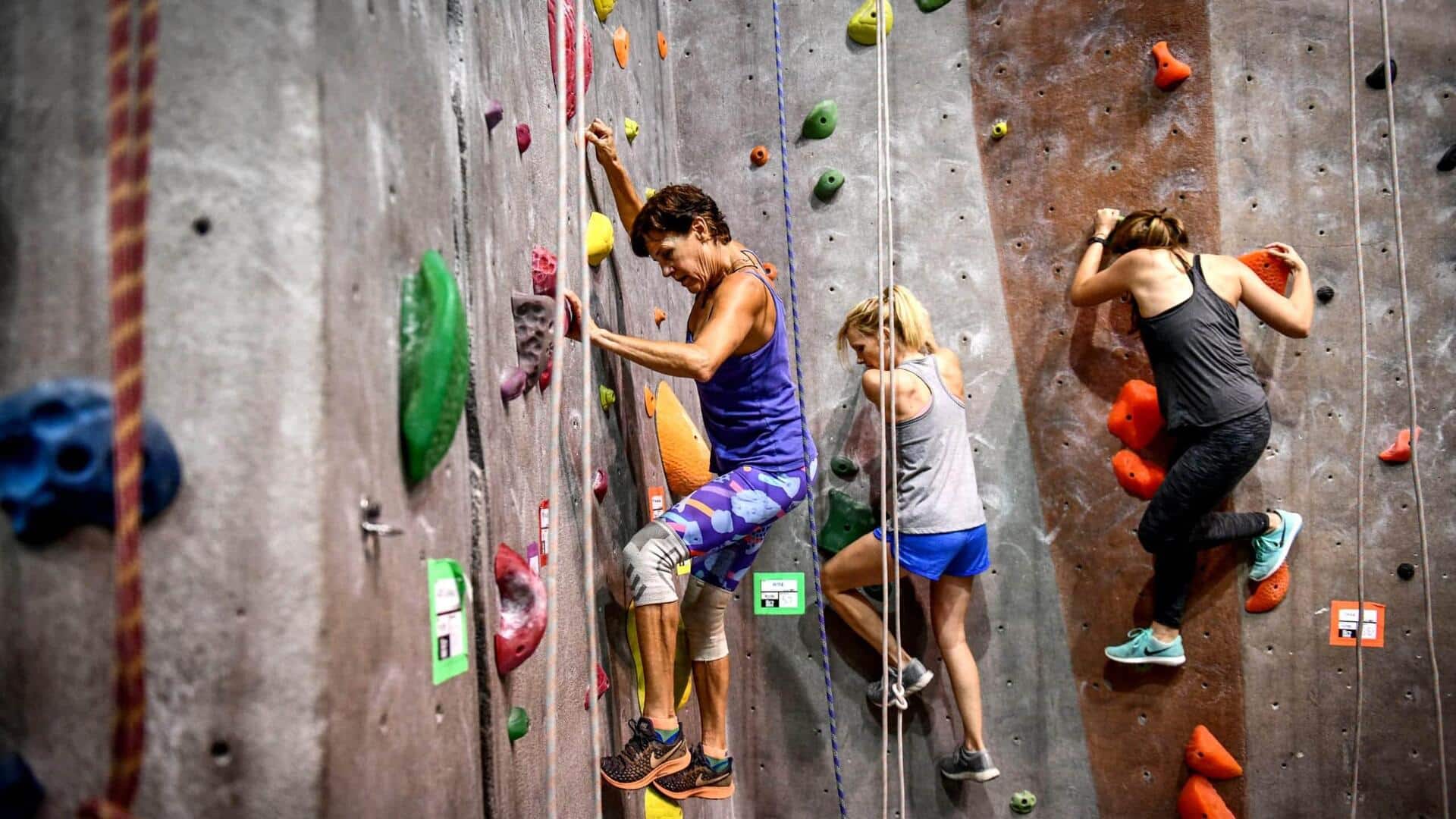
Rock climbing is a full-body workout that requires a lot of strength and endurance.
It engages your core by requiring you to maintain balance as you reach for holds.
The dynamic nature of climbing means your muscles are constantly working to stabilize your body.
This not only builds core strength but also improves your coordination and agility.
Regular climbers often notice improved muscle tone in their abs and obliques.
#2
Paddleboarding's balance challenge
Paddleboarding is all about balance, which is why it engages the core muscles constantly to keep you stable on the water.
The gentle movement of the water requires you to adjust your posture all the time, which is why your core is always engaged.
Paddleboarding also offers a low-impact workout that is great for people of all ages and fitness levels, while still giving you a great core workout.
#3
Comparing calorie burn rates
Calorie burn is an important factor when picking a workout. Rock climbing burns more calories than paddleboarding because of its high-intensity nature.
A person weighing around 70 kg can burn around 500 calories per hour while rock climbing, depending on the difficulty level.
Paddleboarding burns around 300 calories per hour for the same weight person, making it an ideal option for those looking for moderate exercise.
Tip 1
Considering accessibility and cost
Accessibility and cost are important factors when choosing an activity.
Rock climbing often requires access to indoor walls or outdoor climbing areas that may be far away or expensive to enter. It may also require special gear like shoes or harnesses, which can add to the cost.
Paddleboarding, on the other hand, requires less gear—a board and paddle—and can be done at many local lakes or rivers without high entry fees.