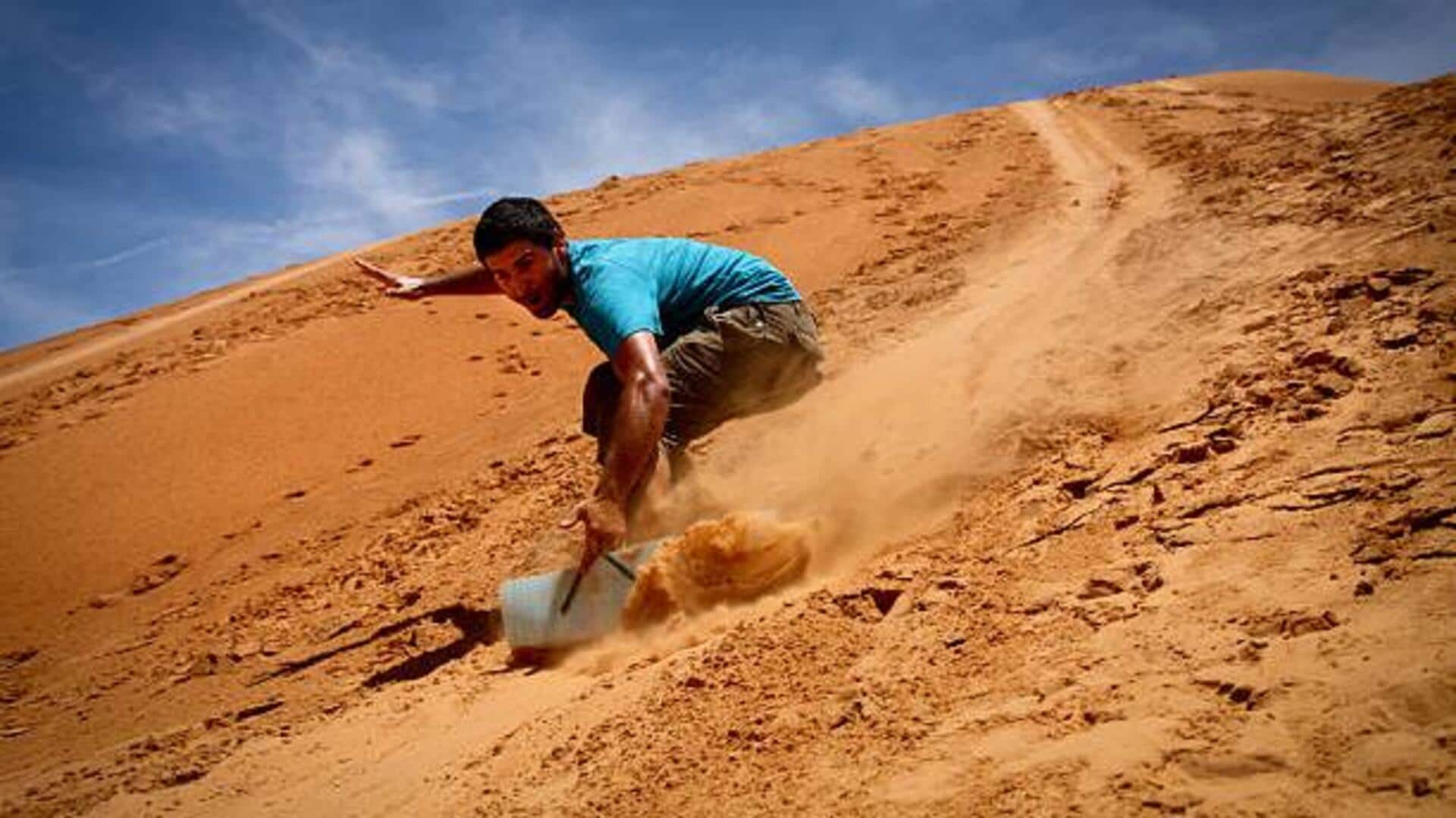
Sandboarding enthusiasts, head over to this iconic spot
What's the story
Exploring Egypt's Great Sand Sea is an exhilarating adventure, especially for sandboarding enthusiasts. This vast desert offers the perfect terrain for those seeking thrills on the shifting sands. With its towering dunes and endless horizons, the Great Sand Sea promises an unforgettable experience for both beginners and seasoned sandboarders. Here is a guide to navigating this incredible landscape, ensuring you make the most of your sandboarding journey.
Timing
Best time to visit
The ideal time to visit the Great Sand Sea is during the cooler months from October to April.
During this period, temperatures are more bearable, making it more comfortable for outdoor activities.
The daytime temperatures are usually between 20 degrees Celsius and 30 degrees Celsius, while nights can get chilly.
Planning your trip during these months ensures you have a pleasant experience, without the extreme heat.
Gear
Essential gear for sandboarding
Proper gear is essential for a successful sandboarding experience.
A sturdy board with a smooth base is a must to glide effortlessly down the dunes.
Wear comfortable clothing that allows freedom of movement, and protects you from sun exposure.
Sunglasses and sunscreen are also important to shield yourself from UV rays reflecting off the sand.
Safety
Safety tips while sandboarding
Safety should always be your priority while sandboarding in the Great Sand Sea.
Make sure you are well-hydrated by drinking lots of water throughout the day.
It is also advisable to keep an eye on weather conditions, as sudden changes can make the terrain risky.
Always check the dunes before you start your descent to avoid hidden obstacles or steep drops.
Navigation
Navigating the dunes effectively
Understanding how to navigate dunes is key to mastering sandboarding in this region.
Start with smaller hills before attempting larger ones as you gain confidence and skill.
Use your body weight effectively by leaning forward when descending steep slopes, and leaning back on flatter areas for balance control.