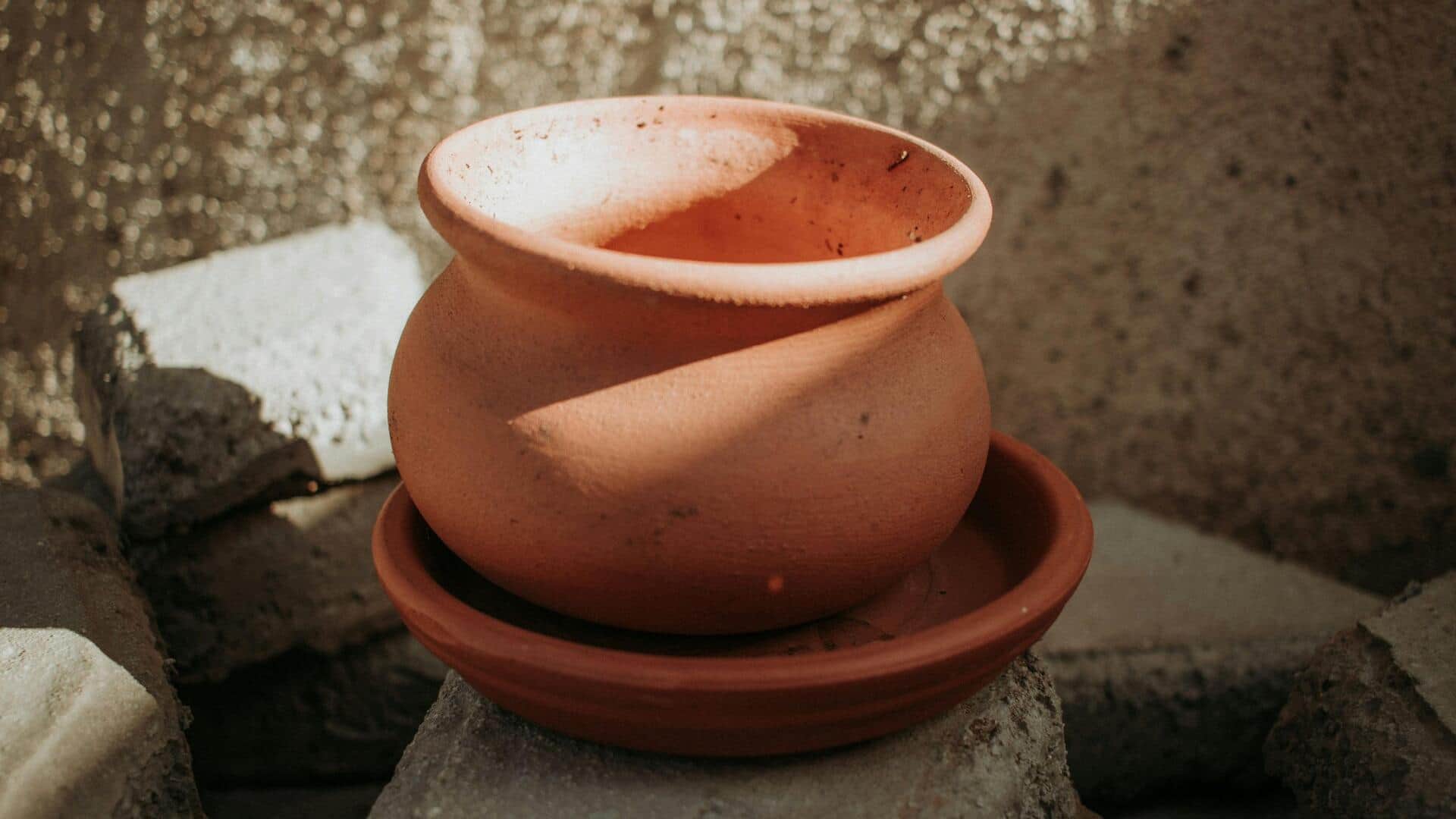
Things to know before buying clay cookware
What's the story
African clay cookware is famous for its durability and unique cooking properties. However, when choosing these traditional kitchen essentials, safety should be your top priority. Knowing the materials, construction techniques, and potential health risks associated with some clay products can help you make informed decisions. Here are some tips to help you choose safe African clay cookware for your kitchen.
Tip 1
Understand the materials used
African clay cookware is made from natural materials, mostly locally sourced clay.
It is important to ensure that the clay is free from harmful additives or contaminants.
Some manufacturers may use non-toxic glazes or sealants to prevent leaching of harmful substances during cooking.
Always check product descriptions and labels for material specifications.
Tip 2
Check for certification marks
Certification marks are a good way to ensure safety standards are met in cookware.
Look for certifications from recognized bodies that guarantee the product is safe for food contact.
These marks mean that the cookware has been tested for harmful substances and meets the required safety standards.
Tip 3
Examine construction techniques
The way African clay cookware is made also affects its safety and durability.
Handcrafted items are often more authentic but may have inconsistencies in thickness or finish. Machine-made products may offer uniformity but lose some traditional charm.
Check if the item has been properly fired at high temperatures to seal its pores and prevent cracking.
Tip 4
Consider heat retention properties
One of the biggest advantages of African clay cookware is its heat retention capacity, which makes it perfect for slow cooking techniques such as braising or stewing.
However, if you want to use it safely, you need to ensure that it can withstand high temperatures without cracking or breaking.
This way, you can enjoy the benefits of traditional cooking methods without compromising on safety or quality.