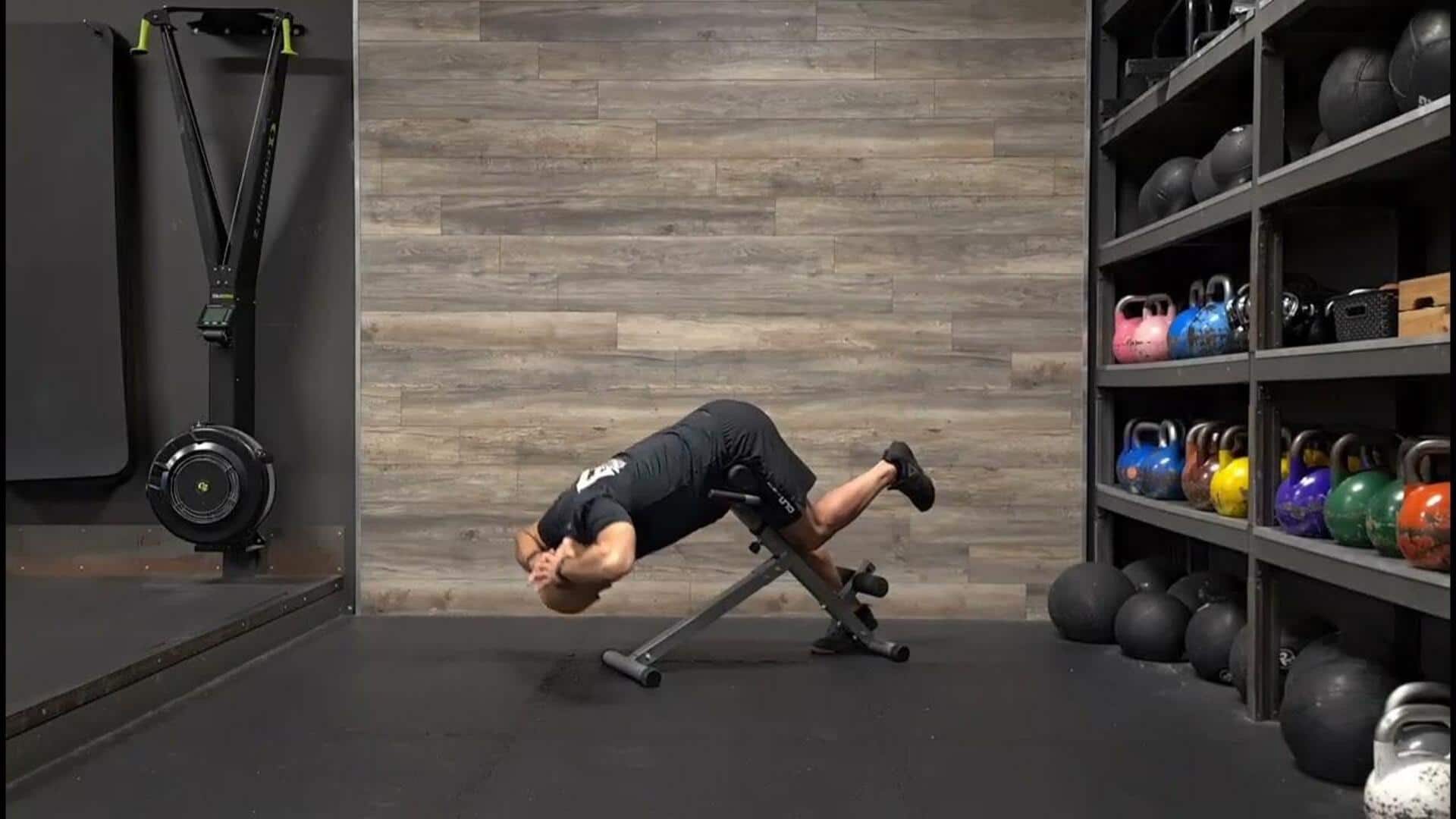
Single-leg Roman chair: Know about this core-strengthening exercise
What's the story
The single-leg Roman chair is a core-strengthening exercise that improves stability and balance. It targets the abdominal muscles while engaging the hip flexors and lower back. Performing this exercise regularly can improve posture and athletic performance by strengthening the core muscles. It is a great addition to any fitness routine for those looking to improve their core strength without any complex equipment.
Tip 1
Proper form is key
Maintaining proper form is essential to gain the most from the single-leg Roman chair exercise and avoid injuries.
Start by positioning yourself on the Roman chair with your hands gripping the handles firmly.
Keep your back straight and engage your core as you lift one leg to parallel with the ground.
This ensures that you are targeting the right muscles and not straining your back or neck.
Tip 2
Gradual progression matters
Like any other exercise, it's important to progress gradually with the single-leg Roman chair.
Start with a few repetitions on each leg, focusing on maintaining form over quantity.
As your strength improves, you can slowly increase the number of reps or sets.
This gradual approach helps in building endurance and strength without overwhelming your muscles.
Tip 3
Consistency is key
Consistency is the key to any fitness goal, including improving core strength with the single-leg Roman chair.
Aim to incorporate this exercise into your routine at least two to three times a week for best results.
Over time, regular practice will lead to noticeable improvements in muscle tone and stability.
Tip 4
Incorporate variations for challenge
To keep your workouts interesting and to continuously challenge your muscles, consider incorporating variations of the single-leg Roman chair exercise.
You can try holding weights in your hands or adding a resistance band around your ankles for added difficulty.
These variations not only increase intensity but also engage different muscle groups within the core area.