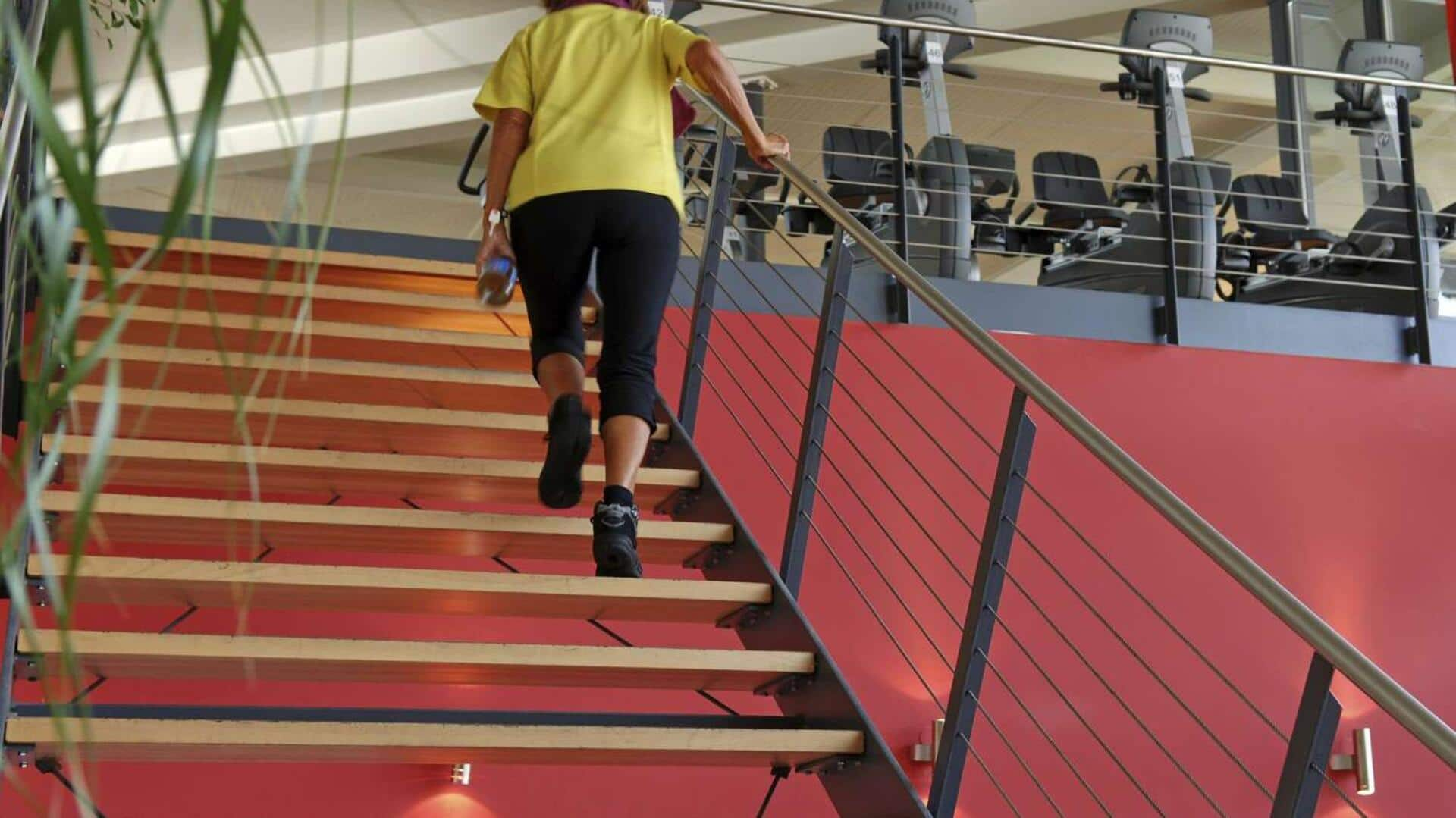
How slow stair climbing contributes to your well-being
What's the story
Slow stair climbing is a simple yet effective way to boost your well-being. This activity, which can be done almost anywhere, combines physical exercise with mental relaxation. By focusing on slow, deliberate movements, you can enhance your cardiovascular health, strengthen muscles, and reduce stress levels. Here's how you can incorporate slow stair climbing into your routine for better health.
#1
Enhance cardiovascular health
Engaging in slow stair climbing regularly can significantly improve cardiovascular health.
The activity gets your heart rate up gradually, which helps in improving circulation and increasing lung capacity.
Unlike high-intensity workouts, slow stair climbing is easier on the joints while still providing a solid aerobic workout.
Doing this regularly can help reduce the risk of heart disease and improve overall endurance.
#2
Strengthen muscles effectively
Slow stair climbing is a great way to strengthen muscles without the need for fancy equipment or gym memberships.
The action of stepping up and down works out major muscle groups including the quadriceps, hamstrings, calves, and glutes.
By concentrating on slow movements, you ensure that these muscles are engaged throughout the entire motion.
This promotes better muscle tone and endurance over time.
#3
Reduce stress levels naturally
The rhythmic motion of slow stair climbing also serves as a meditative practice that can help reduce stress levels.
By focusing on each step taken at a measured pace, individuals can achieve a state of mindfulness that calms the mind and body.
This mindful approach not only helps in lowering anxiety but also promotes mental clarity and focus.
#4
Improve balance and coordination
Regularly practicing slow stair climbing can also improve your balance and coordination skills.
The exercise requires you to maintain your balance as you move up or down the stairs at a controlled pace.
This improves your proprioception—the body's ability to sense movement and position—over time.
Improved balance reduces the risk of falls, especially in older adults, while enhancing overall agility for daily activities.