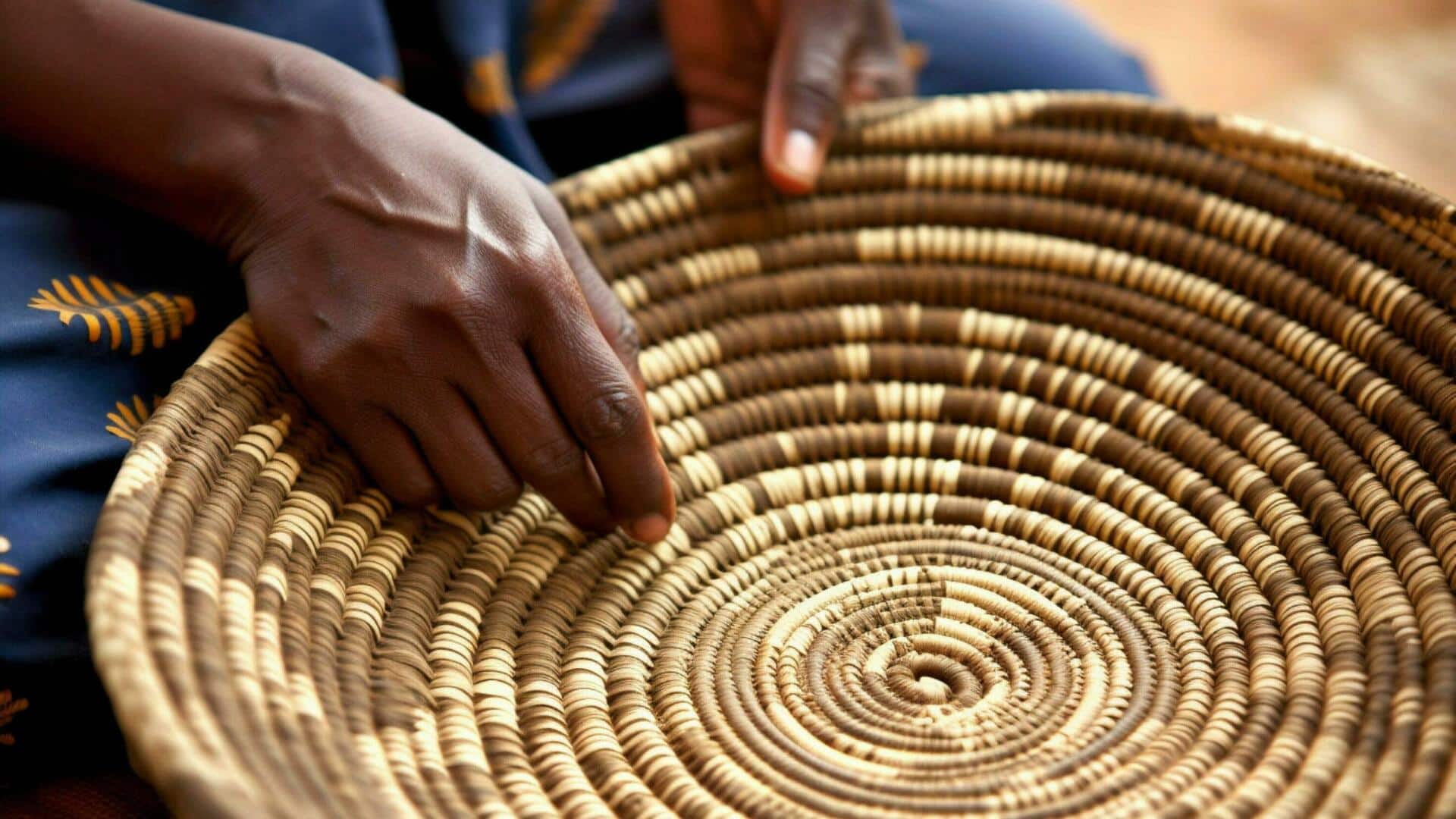
Why African basket weaving is gaining attention
What's the story
African basket weaving is a centuries-old craft that marries tradition with sustainability. The art, which has been passed down generations, is now gaining global recognition for its eco-friendly approach and cultural significance. The baskets are made from natural materials such as grass, palm leaves, and reeds, making them biodegradable and sustainable. The craft not only supports local economies but also promotes environmental conservation.
#1
Materials used in basket weaving
African baskets are made from a variety of natural materials.
Grasses such as sisal and raffia are commonly used due to their durability and flexibility.
Palm leaves are also popular because they are readily available in many regions.
Reeds provide another option, owing to their lightweight yet sturdy nature.
These materials are often sourced sustainably to minimize environmental impact.
#2
Techniques passed down generations
The techniques used in African basket weaving have been passed down generations, often through oral tradition.
Each region has its own unique style, which reflects the local culture and environment.
Weavers use intricate patterns and designs that often hold symbolic meanings or tell stories of their communities.
Mastering these techniques takes years of practice, ensuring the craft's authenticity is preserved.
#3
Economic impact on local communities
Basket weaving is a major source of income for many communities across Africa.
By selling their handmade products at local markets or exporting them overseas, artisans earn a living while preserving their cultural heritage.
The industry also encourages entrepreneurship by allowing women to run small businesses from home, making them financially independent.
#4
Environmental benefits of sustainable practices
The sustainable practices in African basket weaving contribute significantly to environmental conservation efforts.
By using renewable resources like grasses and reeds, artisans help reduce waste associated with synthetic materials, which are commonly used in modern manufacturing processes.
Furthermore, these practices promote biodiversity by encouraging the growth of native plant species used in production processes.