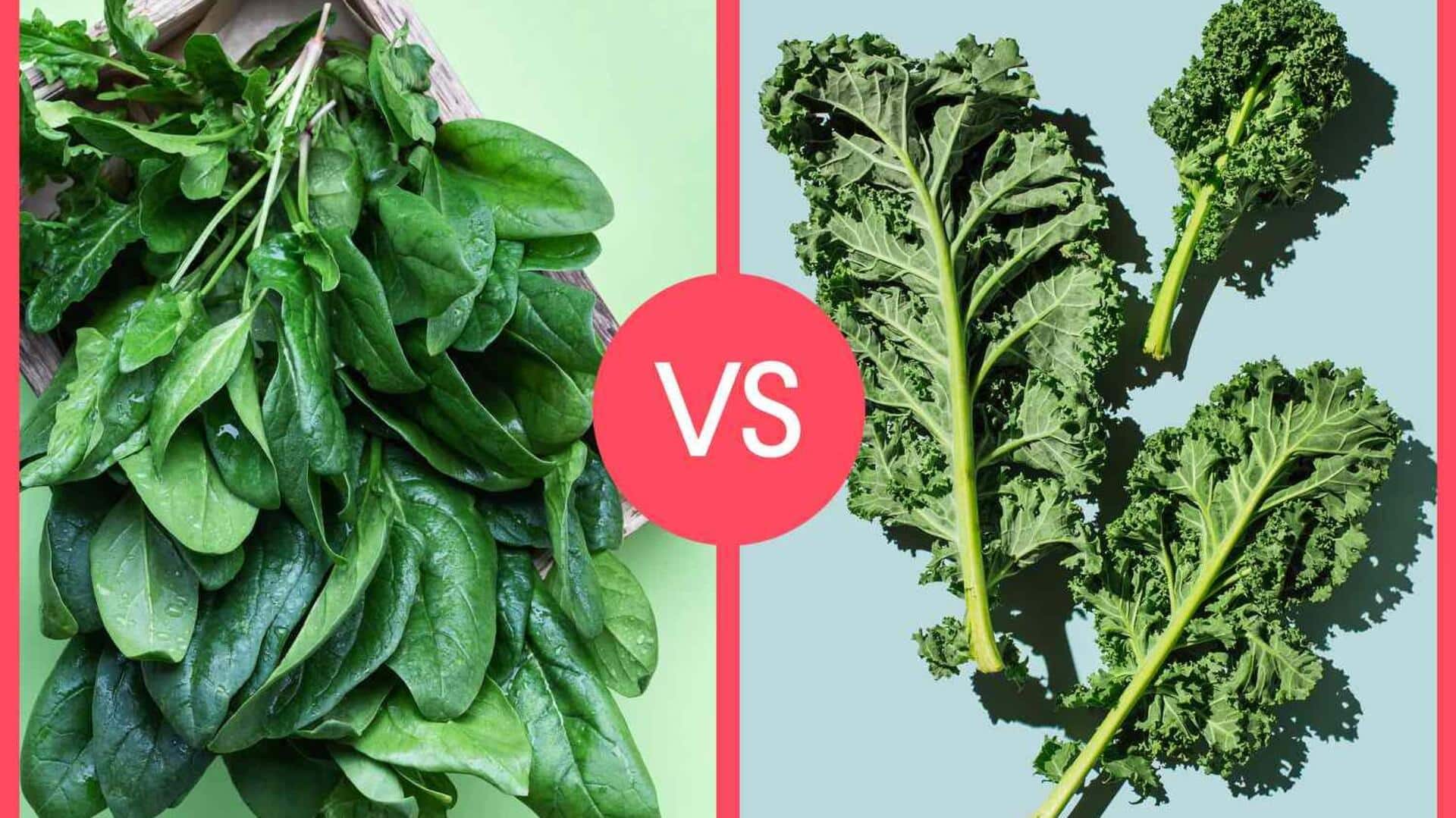
Spinach v/s kale: Which is better for you?
What's the story
Spinach and kale are two of the most popular leafy greens, famous for their nutritional benefits. Both are loaded with vitamins, minerals, and antioxidants, making them a great addition to a balanced diet. Although they may look similar, they differ in their nutritional profiles. Here's a look at the nutrition of spinach and kale, and how they can benefit your health.
#1
Vitamin content comparison
Spinach is known for its high vitamin A content, providing more than 100% of the daily recommended intake per serving. It is also rich in vitamin K and folate.
Kale, on the other hand, is also high in vitamins A and C but has more vitamin K than spinach.
Both greens are great sources of essential vitamins that help with vision, bone health, and immune function.
#2
Mineral richness explored
When it comes to minerals, spinach has a higher iron content than kale. This makes it an excellent option for those looking to increase their iron intake.
However, kale provides more calcium than spinach, which is important for bone health.
Both greens also provide magnesium and potassium, which are important for muscle function and maintaining blood pressure levels.
#3
Antioxidant powerhouse
Both spinach and kale are packed with antioxidants that fight oxidative stress in the body.
Spinach has lutein and zeaxanthin, which are good for eye health.
Kale is rich in quercetin and kaempferol, two potent antioxidants that have anti-inflammatory properties.
Adding either of these greens to your diet can help you fight free radicals and promote overall well-being.
Tip 1
Fiber content analysis
Fiber is essential for digestive health, and both spinach and kale provide a good amount of it.
Spinach has slightly more fiber than kale per serving, which helps keep you regular and promotes gut health.
Eating fiber-rich foods like these leafy greens can help you maintain a healthy weight by keeping you fuller for longer without adding too many calories to your diet.