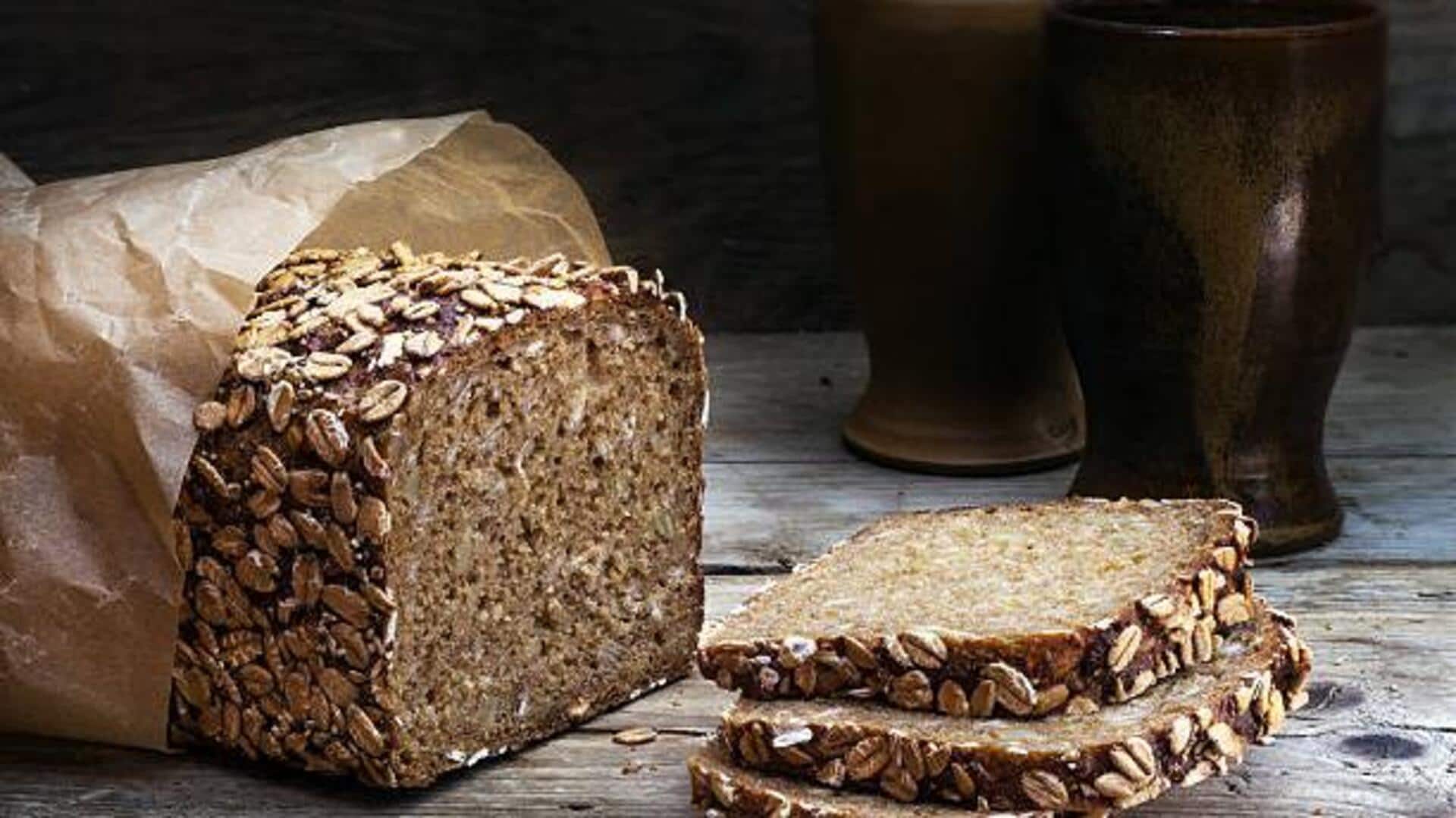
Why nutritionists are talking about sprouted bread
What's the story
Sprouted bread is taking the health-conscious world by storm, and for good reason. This bread is made from whole grains that have been sprouted, thus boosting its nutritional profile. The process of sprouting makes the grains easier to digest, and it increases their vitamin and mineral content. This article delves into the various benefits of sprouted bread and why you should add it to your diet.
#1
Enhanced nutrient absorption
Sprouting breaks down the antinutrients present in grains, which inhibits the absorption of essential nutrients. This process increases the bioavailability of vitamins and minerals, such as iron, zinc, and magnesium. As a result, your body can absorb these nutrients better than in unsprouted grains.
#2
Improved digestive health
The fermentation process that occurs during sprouting makes the fiber in the grains more soluble, which helps in digestion. This can help in alleviating digestive issues, such as bloating or constipation. Plus, sprouted bread usually has a lower glycemic index than regular bread, which means it does not spike blood sugar levels as much.
#3
Higher protein content
Sprouted grains have a higher protein content than their unsprouted counterparts. The process of germination increases the amino acid profile of the grain, making it a better source of protein for vegetarians and vegans. This can help in muscle repair and growth, making it an ideal choice for fitness enthusiasts.
#4
Lower gluten levels
For those sensitive to gluten but not celiac, sprouted bread may be a better option, as it has lower gluten levels than regular bread. The sprouting process partially breaks down gluten proteins, making them easier to digest for some people with mild sensitivities.