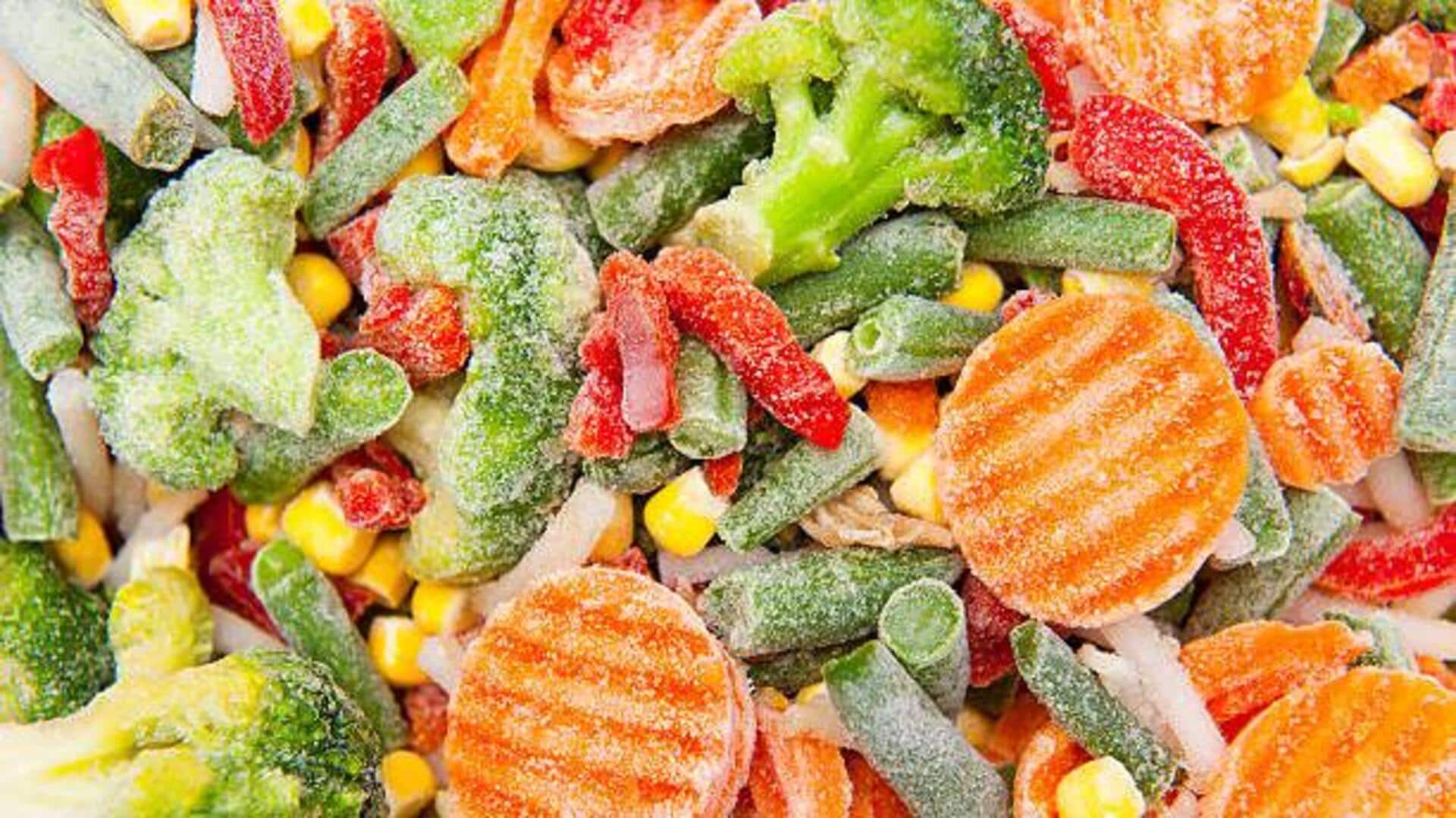
5 frozen vegetables that don't lose their goodness
What's the story
Frozen vegetables are a staple in many kitchens, providing a quick and easy way to add nutrition to meals. They are convenient, cost-effective, and have a long shelf life. However, not all frozen vegetables are created equal when it comes to health benefits. Some varieties can be more nutritious than others depending on how they are processed and stored. Here are five frozen vegetables that stand out for their health benefits.
Spinach
Spinach: A nutrient powerhouse
Frozen spinach is packed with vitamins A and C, iron, and calcium.
The freezing process preserves most of its nutrients, making it a great option for those looking to boost their nutrient intake without fresh produce.
Spinach is also low in calories but high in fiber, which helps with digestion and weight management.
Adding frozen spinach to smoothies or soups can be an easy way to enhance your diet.
Broccoli
Broccoli: Rich in antioxidants
Broccoli is famous for its antioxidant properties, courtesy of compounds like sulforaphane. These antioxidants help fight oxidative stress in the body.
Frozen broccoli retains most of its antioxidants as compared to fresh ones that may lose some during storage and transport.
This vegetable is also a good source of vitamin K and folate, which are essential for bone health and cell function.
Peas
Peas: High in protein
Frozen peas pack a surprising protein punch for a vegetable, containing about five grams per cup.
They are also rich in vitamins B1 and C, as well as manganese. These nutrients help with energy production and immune function.
The natural sweetness of peas makes them a versatile addition to many dishes, from salads to casseroles.
Bell peppers
Bell peppers: Packed with vitamin C
Bell peppers are famous for their high vitamin C content, which is essential for boosting immunity and skin health.
Freezing bell peppers helps retain this vitamin content, while also making them available year-round at a fraction of the cost of fresh ones out of season.
Add frozen bell peppers to stir-fries or fajitas for an extra burst of color and nutrition.
Carrots
Carrots: Good source of beta-carotene
Carrots are famous for being high in beta-carine, which the body converts into vitamin A—a nutrient essential for good vision and skin health.
Freezing carrots ensures that they keep their beta-carine levels intact, while also providing you with a convenient option for quick meal prep.
Add them into stews, or roast them with other veggies for a delicious side dish option.