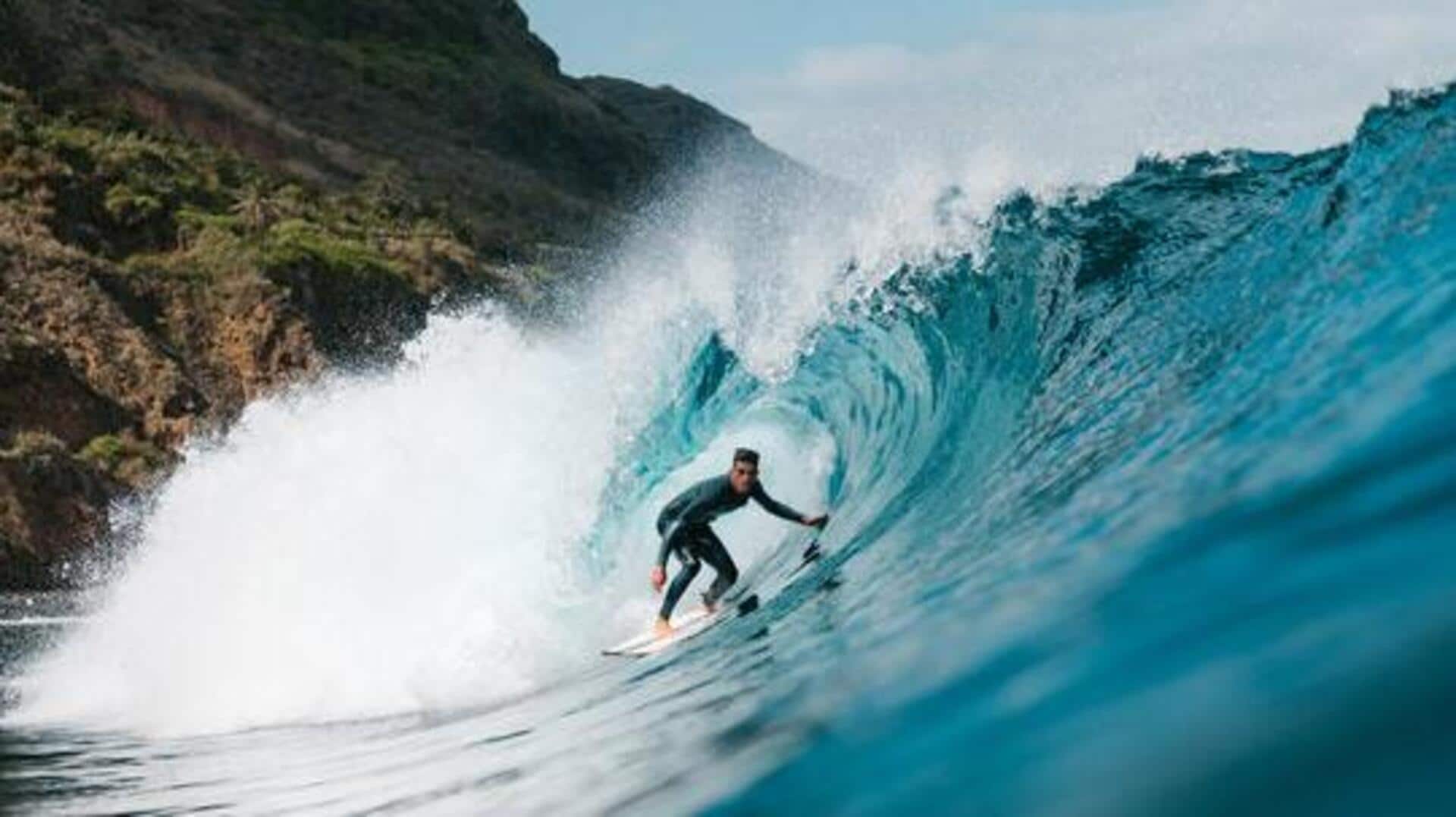
Surfing enthusiasts, this coastline is a true challenge
What's the story
The Skeleton Coast in Namibia is one of the most enigmatic and remote places on Earth. Famous for its desolate beauty and treacherous waters, the region is a surfer's paradise. However, surfing here isn't just about catching waves; it's about understanding the unique challenges and opportunities this wild coastline offers. From navigating shifting sands to unpredictable currents, surfers must be prepared for an adventure unlike any other.
#1
Understanding local conditions
The Skeleton Coast is notorious for its harsh conditions. Strong winds and unpredictable currents make it a challenging spot for surfers.
It is essential to check weather forecasts and tide schedules before heading out.
The best time to surf usually coincides with the cooler months, when winds are more favorable.
Being aware of local conditions can help surfers make informed decisions and ensure safety.
#2
Navigating shifting sands
The shifting sands along the Skeleton Coast create ever-changing surf breaks.
These changes can affect wave formation and consistency, making it difficult to predict where the best waves will be at any given time.
Surfers should be prepared to adapt quickly to new conditions and be willing to explore different spots along the coastline.
Flexibility is key when surfing in this dynamic environment.
#3
Safety first: Beware of wildlife
While surfing on the Skeleton Coast, you must be mindful of the wildlife that inhabits this remote region.
Seals are common along the shorelines, and sharks have been spotted in these waters.
Although shark attacks are rare, you must exercise caution and be aware of your surroundings at all times.
Respecting wildlife habitats ensures a safer experience for everyone involved.
Tip 1
Essential gear for Skeleton Coast surfing
Given the unique challenges of surfing on the Skeleton Coast, having the right gear is essential.
A wetsuit is a must due to the cold water temperatures all year round.
Also, surfboards with durable fins are recommended, as they are more resistant to damage from rocky outcrops or submerged objects in these waters.
Investing in quality gear can enhance both performance and safety while surfing here.