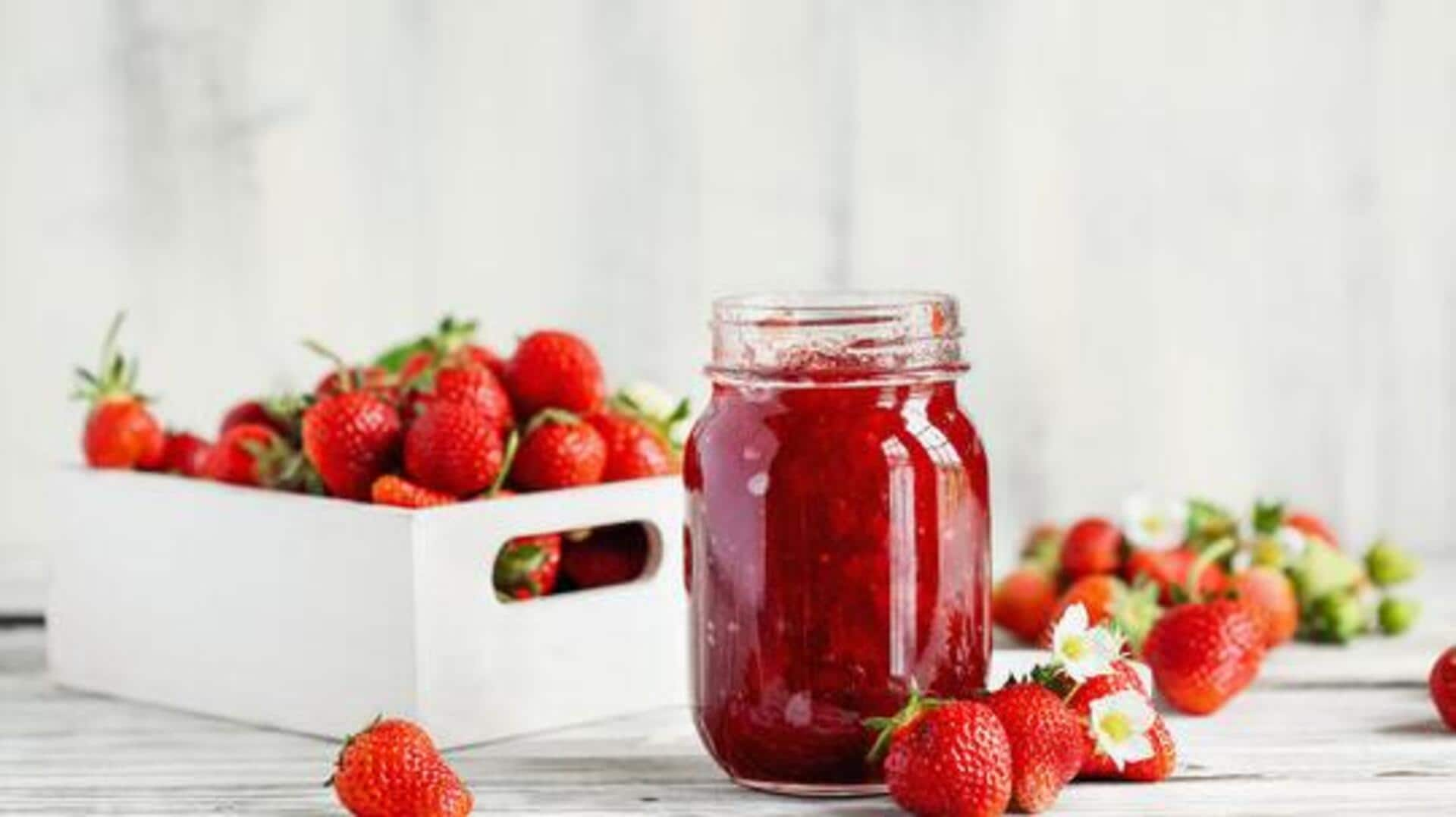
Surprising facts about fruit preserves
What's the story
Fruit preserves are a staple in many households, serving as a sweet addition to breakfast or a snack. However, there are several misconceptions about these delightful spreads. From their nutritional value to the methods of making them, understanding the truth behind fruit preserves can enhance your appreciation for this timeless treat. Here are five surprising facts that might change how you view fruit preserves.
Sugar insight
Not all sugars are bad
Many people think that all sugars in fruit preserves are bad. However, the sugar in fruit preserves is usually essential for preservation.
It helps inhibit the growth of bacteria and molds, extending shelf life without refrigeration.
Plus, natural sugars from fruits provide energy and can be part of a balanced diet when consumed in moderation.
Homemade benefits
Homemade can be healthier
While store-bought fruit preserves are convenient, homemade versions can be healthier.
When you make preserves at home, you have control over the ingredients.
You can reduce added sugars or use natural sweeteners like honey or agave syrup.
This way, you can customize the recipe to suit dietary needs without compromising on taste.
Pectin purpose
Pectin isn't just for jams
Pectin is a natural fiber found in fruits and is commonly used as a gelling agent in jams and jellies.
Many think pectin is only for jams, but it can also be used in other recipes like jellied salads or desserts.
Its ability to thicken liquids makes it versatile beyond traditional spreads.
Nutritional boost
Fruit preserves can boost nutrition
Fruit preserves can also add nutrients like vitamins and antioxidants from the fruit itself.
Although the cooking process may reduce some nutrients compared to fresh fruit, preserves still provide dietary fiber and essential vitamins like vitamin C and A.
They can be an easy way to add more fruit into your diet.
Storage advice
Storage tips extend shelf life
Proper storage of fruit preserves is key to keeping them fresh for longer.
Keeping opened jars in the refrigerator slows down spoilage, while unopened jars can be stored in a cool, dark place away from direct sunlight.
This way, you can prevent color changes or loss of flavor over time.