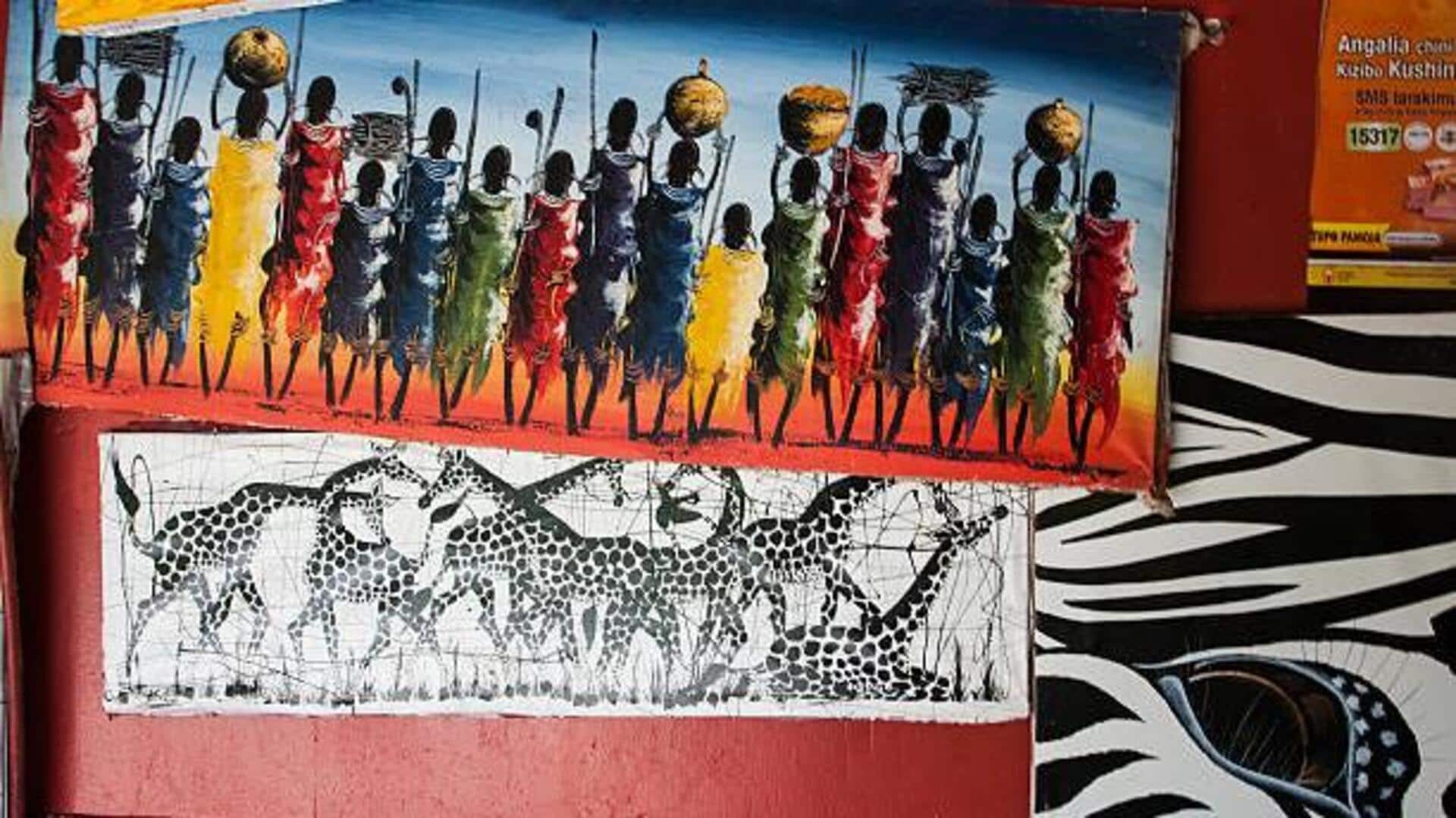
How Tinga Tinga art is evolving in the digital age
What's the story
Swahili Tinga Tinga paintings, a vibrant art form from East Africa, are now being reimagined through digital art. This fusion of traditional and modern techniques is bringing new life to the iconic style. Characterized by bold colors and whimsical themes, Tinga Tinga art is now accessible to a global audience via digital platforms. Artists are exploring new possibilities while preserving the essence of this cultural heritage.
#1
The origins of Tinga Tinga art
Tinga Tinga art originated in Tanzania in the late 20th century. Named after Edward Saidi Tingatinga, who started this movement with his unique painting style. Using enamel paints on masonite board, Tinga Tinga's work was characterized by bright colors and naive perspectives. The art form quickly gained popularity for its distinctive look and storytelling ability, depicting everyday life and folklore.
#2
Digital transformation of Tinga Tinga
The digital transformation has allowed artists to explore new dimensions in Tinga Tinga paintings. Using software like Adobe Photoshop or Procreate, they can experiment with textures, layers, and effects that were not possible with traditional mediums. This evolution has opened up new avenues for creativity, while making the art more accessible to people around the world.
#3
Preservation of cultural heritage
While embracing digital tools, many artists are also focused on preserving the cultural heritage of Tinga Tinga. They continue to draw inspiration from traditional themes and motifs, while incorporating modern techniques. This balance ensures that the essence of the original style is maintained, even as it evolves with contemporary influences.
#4
Economic impact on local communities
The rise of digital Tinga Tinga has also had an economic impact on local communities in East Africa. Artists can now reach wider audiences through online platforms such as social media and e-commerce sites. This exposure often leads to increased sales opportunities without geographical limitations. It helps boost local economies by promoting cultural exports globally.