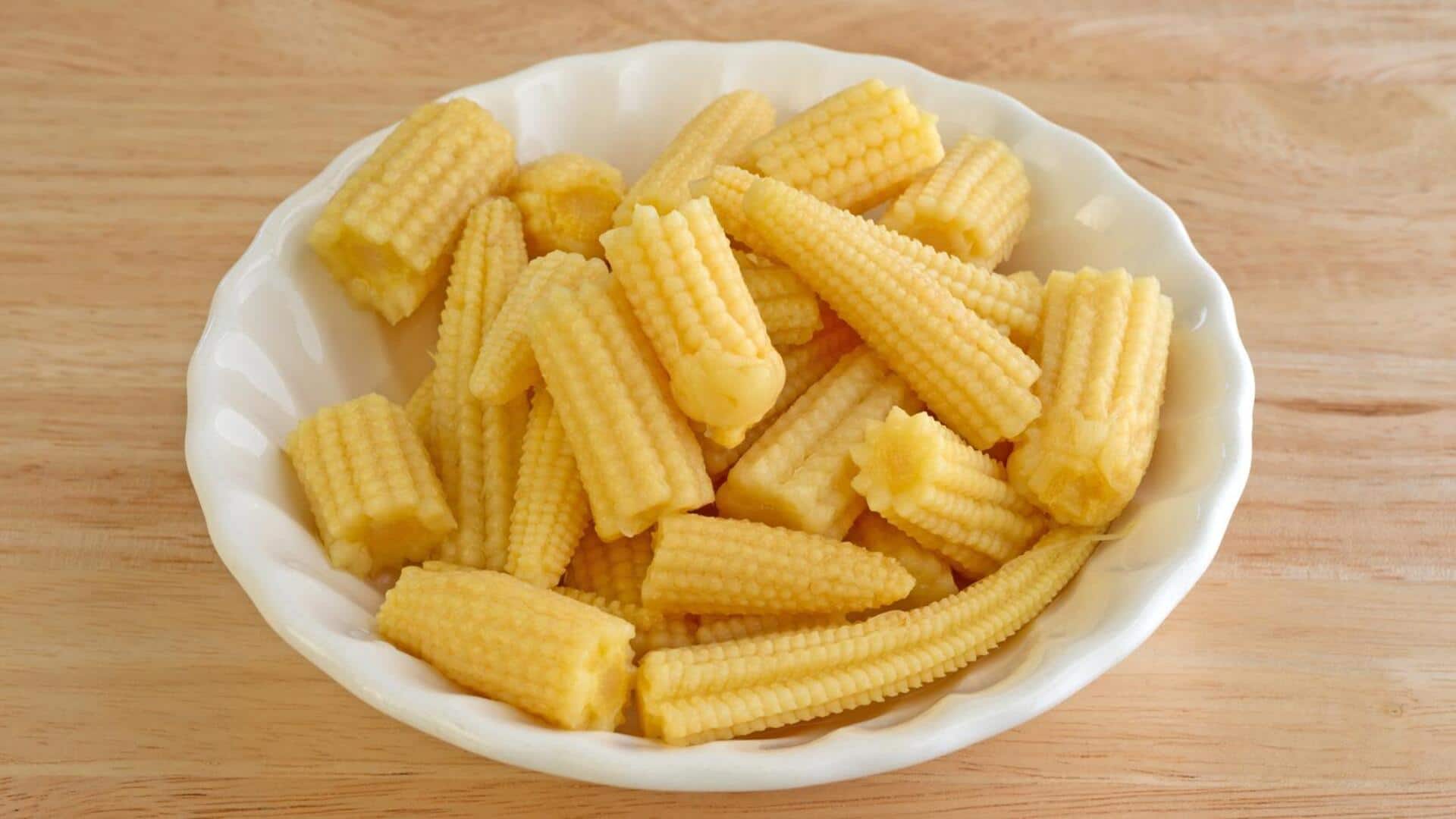
Sweet corn v/s baby corn: Which has more vitamins?
What's the story
Sweet corn and baby corn are two popular varieties of maize, both offering unique culinary experiences. While sweet corn is often enjoyed for its juicy kernels, baby corn is prized for its tender texture and mild flavor. Both have their own nutritional benefits, making them appealing choices for different dietary needs. In this article, we will explore the vitamin content of sweet corn and baby corn, highlighting their distinct contributions to a balanced diet.
#1
Vitamin C content in corn varieties
Sweet corn is known for its vitamin C content, providing about 7% of the daily recommended intake per cup. Vitamin C is essential for immune function and skin health.
On the other hand, baby corn also offers a decent amount of vitamin C but in smaller quantities due to its size.
Despite this, baby corn still contributes to overall vitamin intake when included in meals.
#2
Folate levels in sweet and baby corn
Folate is another important nutrient found in both sweet and baby corn.
Sweet corn provides around 10% of the daily recommended intake per cup, making it a good source for those looking to boost folate levels.
Baby corn also contains folate but in lesser amounts than its mature counterpart.
Folate is important for cell division and DNA synthesis, making it especially important during pregnancy.
#3
Fiber content comparison
Fiber content is another important factor when comparing these two corn varieties.
Sweet corn has more fiber than baby corn owing to its mature kernels. A cup of sweet corn gives about 18% of the daily fiber requirement, which helps with digestion and keeps you full.
Baby corn has less fiber but is still helpful in adding bulk to your meals without adding too many calories.
#4
Antioxidant properties explored
Both sweet and baby corn are rich in antioxidants such as lutein and zeaxanthin, which are good for eye health.
Sweet corn has more of these antioxidants owing to its maturity, while baby corn still provides a good amount of these compounds.
Including either type in your diet can help protect cells from oxidative stress, thanks to their antioxidant properties.