
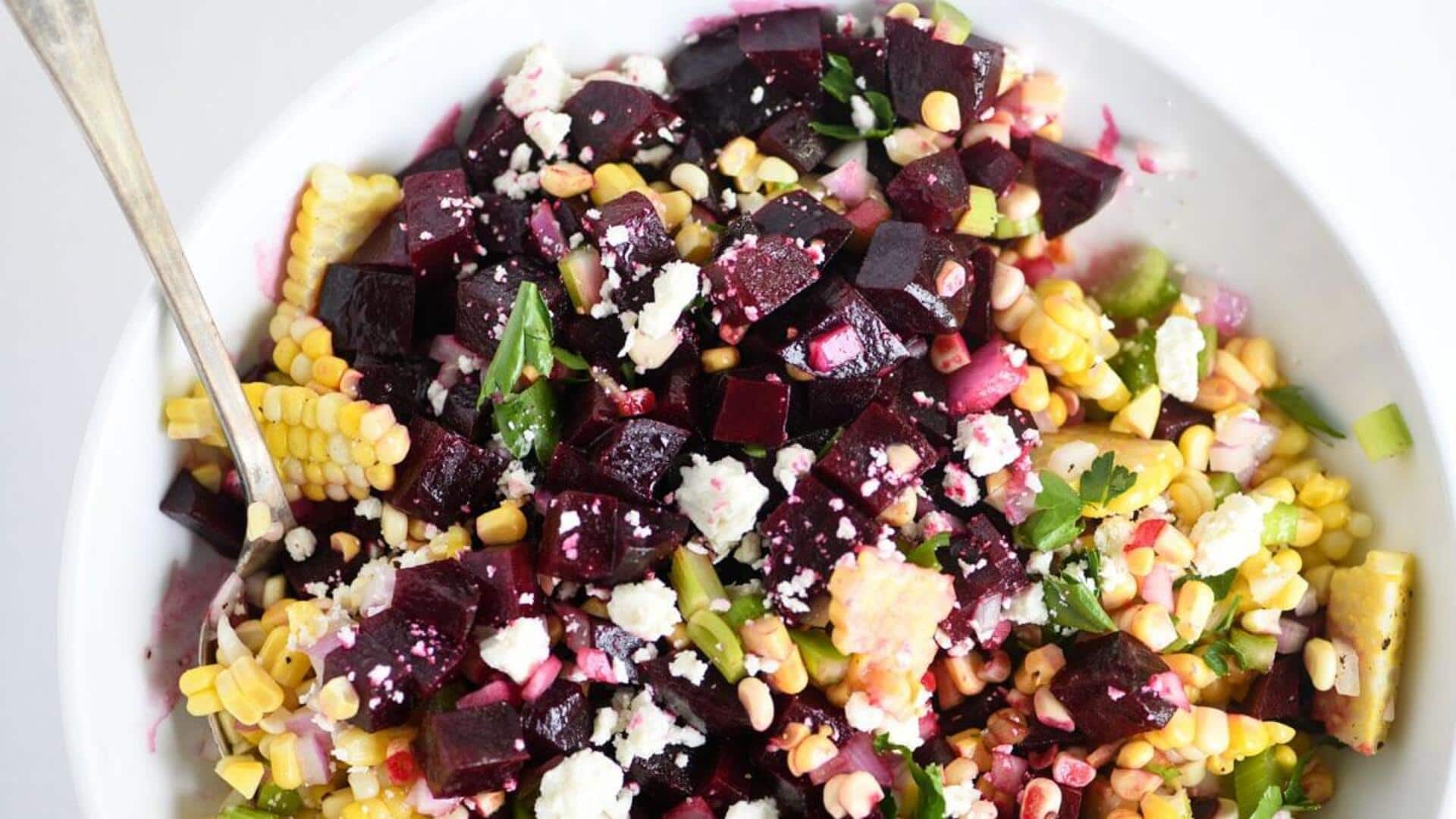
Sweet corn v/s beetroot: Which is better for folate?
What's the story
Sweet corn and beetroot are two popular vegetables, each offering unique nutritional benefits. One of the key nutrients they provide is folate, an important B vitamin that supports cell division and the production of DNA. Knowing how much folate these vegetables provide can help you make informed dietary choices. Here's a look at the folate content in sweet corn and beetroot, and how they compare.
#1
Folate content in sweet corn
Sweet corn makes for a tasty and nutritious addition to your diet, offering around 19 micrograms of folate per 100 grams. This makes it a good source of this important vitamin, making it a great addition to meals for those looking to up their folate intake. Sweet corn can be eaten in various ways, be it boiled, grilled, or added to salads, making it versatile.
#2
Folate content in beetroot
Beetroot is famous for its rich color and nutritional benefits, offering around 109 micrograms of folate per 100 grams. This makes beetroot one of the best sources of folate among vegetables. Eating beetroot can help you meet your daily folate requirements easily. It can be eaten raw in salads or cooked as a side dish.
#3
Comparing folate levels
When comparing sweet corn and beetroot for folate content, beetroot clearly wins with its higher levels of the vitamin. While sweet corn gives a decent amount of folate, beetroot's higher concentration makes it more effective for those specifically looking to boost their intake of this nutrient. Both vegetables have their own benefits, but beetroot may be better for those who want more folate.
Tip 1
Tips for incorporating these vegetables
To reap the benefits of these vegetables, include them in your diet regularly. Add sweet corn to your soups or stews for texture, or mix it with beans for a protein-rich meal. Use grated beetroot as a topping on sandwiches, or blend it into smoothies for an earthy flavor boost.