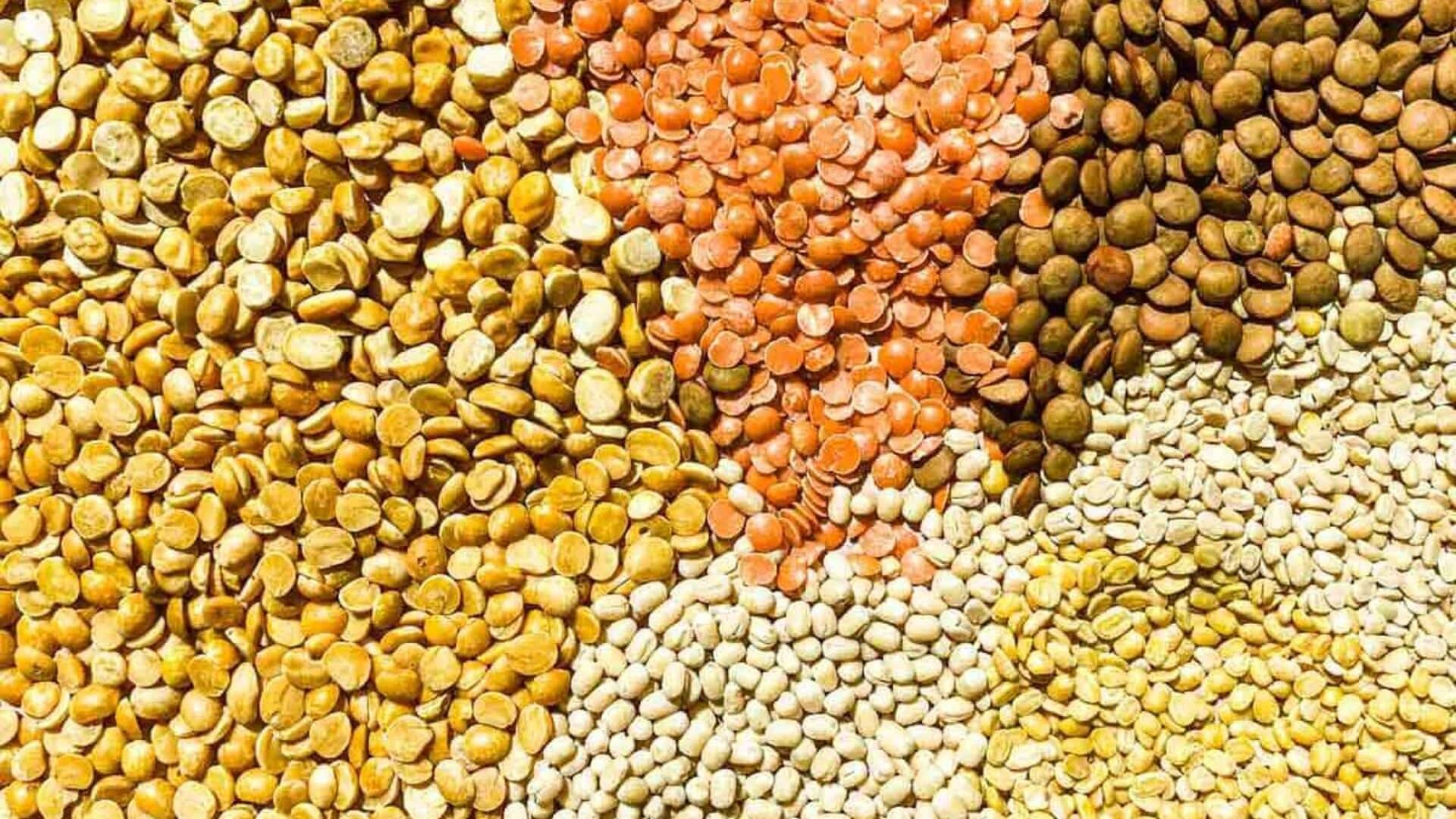
Toor dal v/s masoor dal: Comparing their nutrition
What's the story
Toor dal and masoor dal are two of the most popular pulses in Indian kitchens. Both are rich in protein and other nutrients, making them an important part of vegetarian diets. However, they differ in terms of nutritional content and health benefits. Knowing these differences can help you make better dietary choices. Here's a look at the nutritional differences between toor dal and masoor dal.
#1
Protein content comparison
Both toor dal and masoor dal are excellent sources of plant-based protein.
Toor dal has about 22% protein by weight, while masoor dal has about 26% protein by weight.
The higher protein content in masoor dal makes it a better option for those looking to up their protein intake.
However, both provide sufficient amounts of protein to support muscle maintenance and overall health.
#2
Fiber richness in pulses
Fiber is essential for digestion and keeping cholesterol levels in check.
Masoor dal has a higher fiber content than toor dal, with about 8% fiber by weight as compared to toor's 7%.
The additional fiber in masoor dal can help improve digestive health and keep you fuller for longer, making it an ideal choice for those looking to manage their weight.
#3
Vitamin and mineral content
Both pulses are rich sources of essential vitamins and minerals, but they differ slightly in their offerings.
Toor dal is a good source of folate and magnesium, while masoor dal is richer in iron and potassium.
The iron content in masoor makes it a good option for those who want to improve their hemoglobin levels or prevent iron deficiency.
Tip 1
Glycemic index considerations
The glycemic index (GI) indicates how quickly foods raise blood sugar levels after consumption.
Masoor dal has a lower GI than toor dal, making it a better choice for those managing diabetes or looking to stabilize blood sugar levels.
The lower GI of masoor means it releases glucose more slowly into the bloodstream, preventing spikes in blood sugar levels after meals.