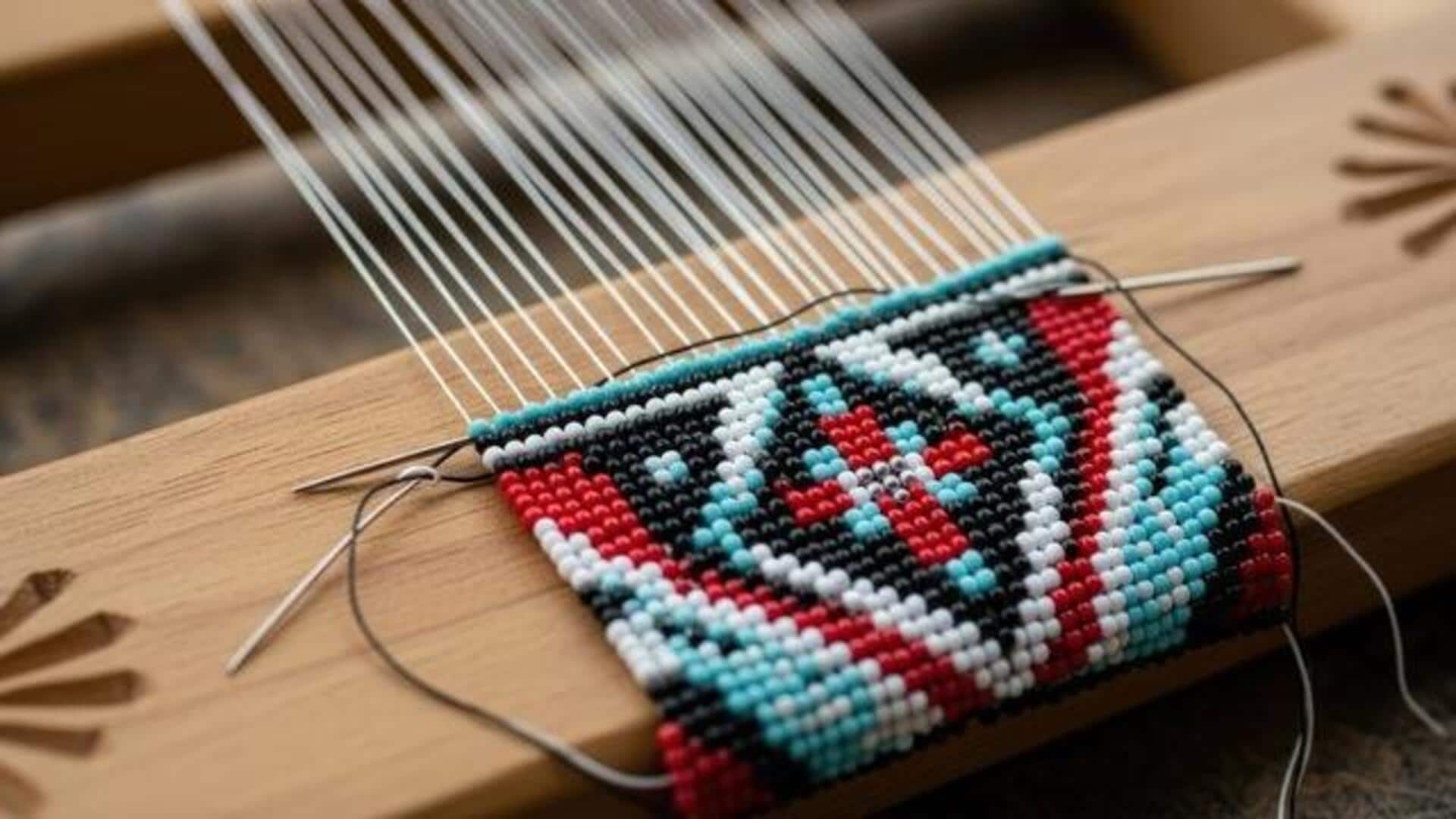
How sustainable fibers are transforming traditional weaving
What's the story
Kente weaving is a traditional craft from West Africa, particularly Ghana, which is famous for its vibrant patterns and cultural significance. This ancient art can be transformed by using eco-friendly fibers like pineapple leaves, banana fibers, and organic cotton. These materials not only preserve the environment but also give a unique texture and appearance to the woven pieces. Here's how Kente weaving can be made sustainable with these fibers.
#1
Pineapple leaves as a sustainable fiber
Pineapple leaves are a great source of strong and durable fibers. The extraction process of these fibers is eco-friendly, as it uses the waste from pineapple farming.
The fibers are then processed to be used in weaving, providing a sustainable alternative to synthetic materials.
Using pineapple leaves in Kente weaving can reduce waste and promote sustainable agricultural practices.
#2
Banana fibers for unique textures
Banana fibers are extracted from the pseudostems of banana plants after harvesting the fruit.
These fibers are strong yet flexible, making them perfect for intricate Kente designs.
The use of banana fibers not only supports local banana farmers but also reduces environmental impact by minimizing waste from banana production.
#3
Organic cotton for eco-friendly weaving
Organic cotton is grown without synthetic pesticides or fertilizers, making it an eco-friendly choice for Kente weaving.
This fiber supports healthier soil and reduces water pollution compared to conventional cotton farming.
By opting for organic cotton, artisans can contribute to sustainable agriculture while maintaining high-quality standards in their woven products.
#4
Benefits of using eco-friendly fibers
Using eco-friendly fibers in Kente weaving has several benefits. It promotes sustainability, supports local economies, and offers unique textures that enhance traditional designs.
These materials attract environmentally conscious consumers who value ethical production methods.
Artisans adopting these practices can differentiate their products in the market while contributing positively to environmental conservation efforts.