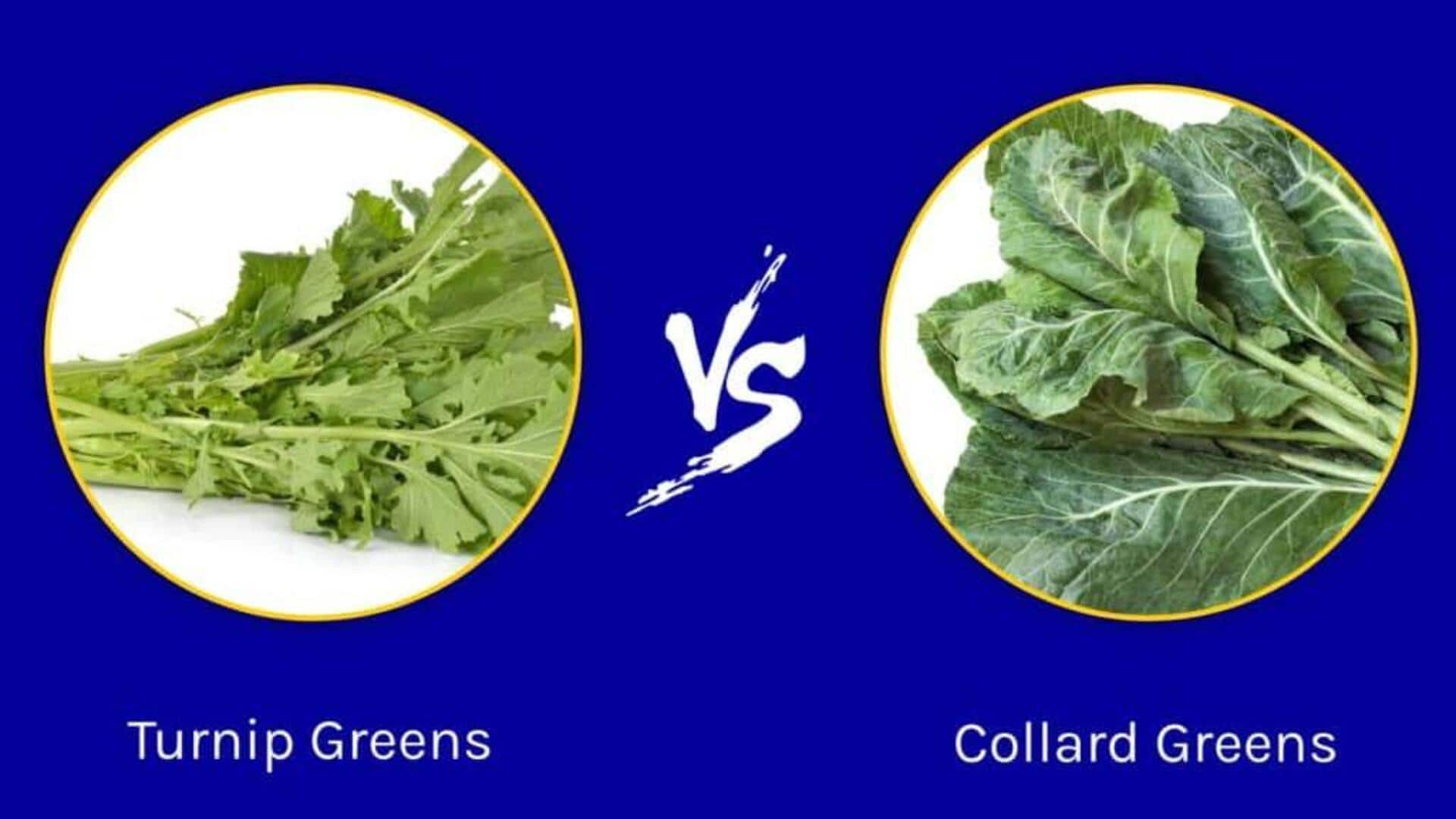
Turnip greens v/s collard greens: Which has more antioxidants?
What's the story
Turnip greens and collard greens are two popular leafy vegetables often compared for their nutritional benefits. Both are rich in vitamins, minerals, and antioxidants, making them a healthy addition to any diet. However, they differ in terms of taste, texture, and nutrient composition. Knowing these differences can help you make informed dietary choices. Here's a look at the nutritional profiles of turnip greens and collard greens.
#1
Vitamin content comparison
Turnip greens are also a great source of vitamin K, offering more than 500% of the daily recommended intake per serving. They also provide decent amounts of vitamins A and C.
Collard greens also have high vitamin K content but offer more vitamin A than turnip greens.
Both leafy vegetables are excellent sources of these essential vitamins that promote bone health and immune function.
#2
Mineral richness analysis
When it comes to minerals, both turnip greens and collard greens are rich in calcium and iron.
However, collard greens have a slight edge in calcium content, which is important for bone health.
Turnip greens provide more iron per serving than collards, which is important for transporting oxygen in the body.
Both greens can contribute to your daily mineral requirements.
#3
Antioxidant properties explored
Antioxidants are essential for fighting oxidative stress in the body.
Turnip greens are rich in lutein and zeaxanthin, which are good for eye health.
Collard greens also have these antioxidants, but in lesser amounts than turnip greens.
Adding either of the two to your diet can help you get antioxidants that are essential for your health.
Tip 1
Culinary uses and flavor profiles
The flavor profile of turnip greens is slightly peppery, with a tender texture when cooked properly.
This makes them ideal for sauteing or adding to soups, where they can absorb flavors well without losing their texture completely.
Collards have a milder taste, with thicker leaves that stand up well under longer cooking times, like braising or steaming.
This makes them versatile across various cuisines worldwide.