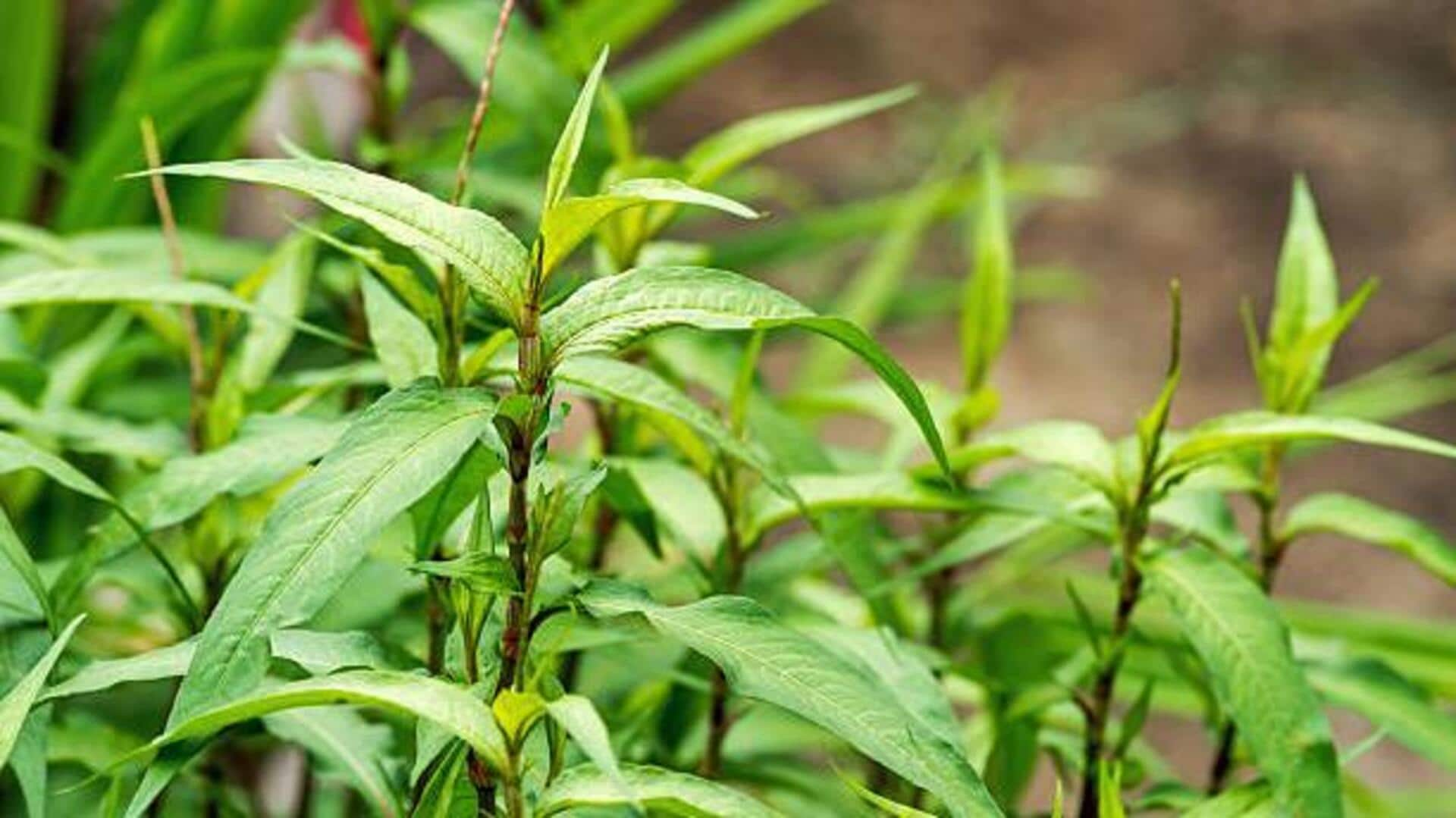
How to grow Vietnamese coriander at home
What's the story
Vietnamese coriander, or rau ram, is a fragrant herb that adds a unique flavor to many dishes. Growing this herb at home can be a rewarding experience, giving you fresh ingredients for your culinary creations. With the right conditions and care, you can cultivate Vietnamese coriander successfully in your garden or indoors. Here are some practical tips to help you grow this versatile herb effectively.
Tip 1
Choosing the right location
Vietnamese coriander flourishes in warm, humid conditions with indirect sunlight.
Choose a location that gets partial shade, as direct sunlight can burn the leaves.
If you're growing it indoors, keep it near a window where it gets filtered light.
The perfect temperature range is between 20 to 30 degrees Celsius.
Tip 2
Preparing the soil
Well-draining soil is essential for Vietnamese coriander to thrive.
Use a potting mix with organic matter like compost or peat moss to improve drainage and nutrients.
The soil pH should be slightly acidic to neutral (around six to seven).
Make sure the soil is moist but not waterlogged.
Tip 3
Watering techniques
Consistent moisture is key to growing Vietnamese coriander successfully.
Water the plant regularly, but avoid overwatering as it can lead to root rot.
A good rule of thumb is to check the top inch of soil; if it feels dry, it's time to water again.
Using mulch can help retain soil moisture and regulate temperature.
Tip 4
Pruning and harvesting tips
Regular pruning encourages bushier growth and prevents the plant from becoming leggy.
Trim back leaves as needed, but avoid removing more than one-third of the plant at once.
Harvesting can be done throughout the growing season by snipping off leaves or stems at the base when required for cooking purposes.