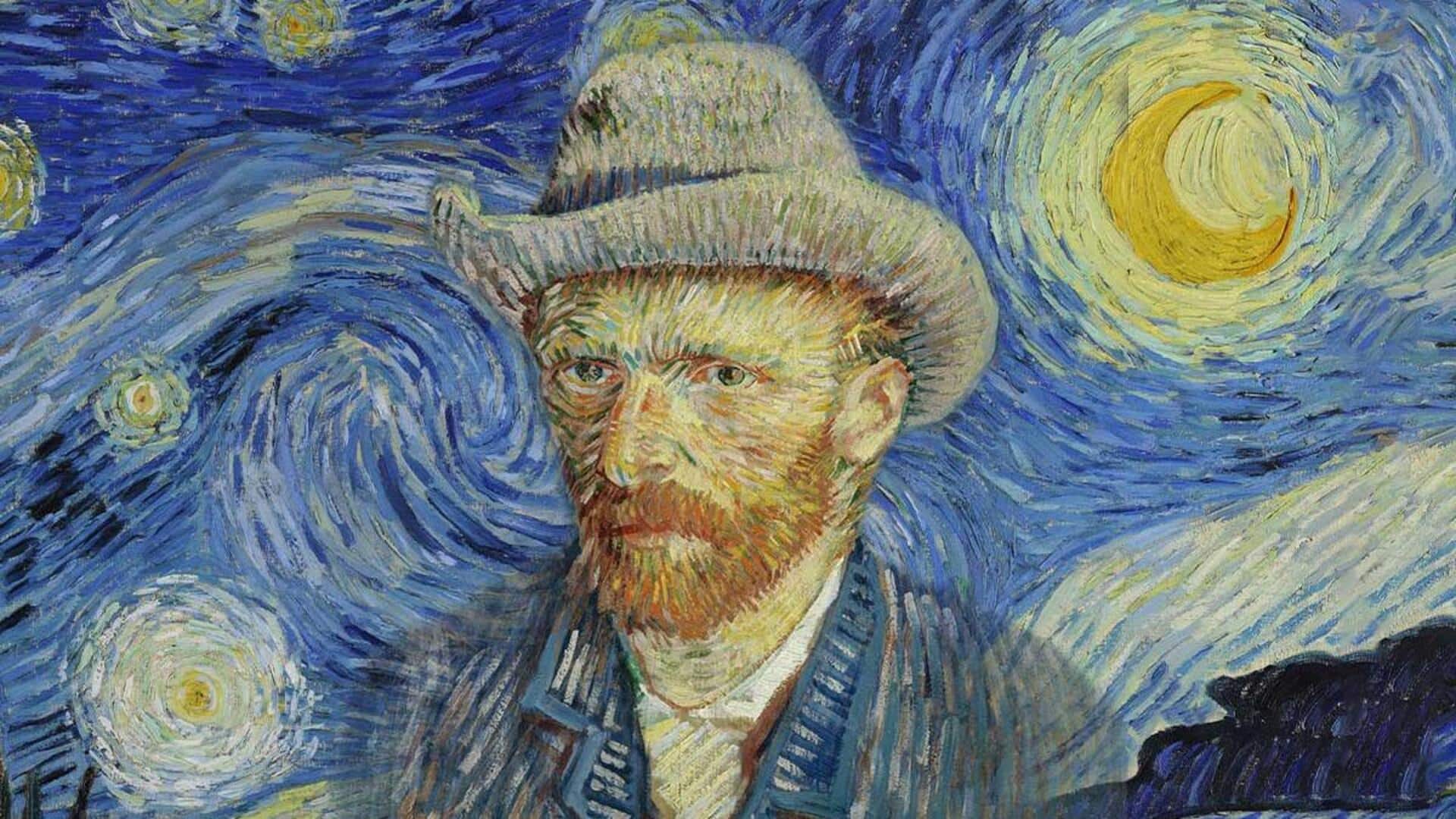
Admire Vincent van Gogh? Celebrating 5 of his iconic artworks
What's the story
Vincent van Gogh, the Dutch post-impressionist painter, is famous for his vivid works and emotional depth. His paintings have left an indelible mark on the art world, with their bold colors and expressive brushwork. While most of us know his iconic pieces such as Starry Night and Sunflowers, there are several lesser-known artworks that give us a glimpse into his genius. Here are five of them.
#1
The Potato Eaters: A glimpse into peasant life
The Potato Eaters is one of Van Gogh's early works, painted in 1885.
The painting depicts a group of peasants sharing a meal of potatoes, showcasing their rough hands and somber expressions.
This piece highlights Van Gogh's interest in portraying the harsh realities of everyday life.
The earthy tones used in this artwork reflect the humble existence of its subjects.
#2
Irises: A study in color and form
Painted while he was at the asylum in Saint-Remy-de-Provence, Irises is one of Van Gogh's most colorful paintings.
The piece features a close-up view of irises blooming in the garden of the asylum.
With its vibrant blues and purples, it highlights Van Gogh's ability to capture the beauty of nature with simple forms.
#3
Wheatfield with Crows: A haunting landscape
Wheatfield with Crows is often considered one of Van Gogh's last works before his death in 1890.
The painting features a dramatic sky filled with crows over a wheat field, symbolizing turbulence and foreboding.
The use of dark colors creates an intense atmosphere, making it one of his most powerful landscapes.
#4
Cafe Terrace at Night: A nocturnal scene
Cafe Terrace at Night was painted by Van Gogh in Arles in 1888. It depicts an outdoor cafe under a starry sky, illuminated by gaslight from nearby lamps.
This piece showcases Van Gogh's fascination with nighttime scenes, capturing both warmth from artificial light and coolness from twilight hues.
#5
Self-Portrait with Bandaged Ear: Introspection through art
Self-Portrait with Bandaged Ear was painted after Van Gogh famously cut off part of his ear during a period of mental distress.
In this work, he depicts himself wrapped in bandages but still focused on painting himself introspectively through art.
It shows how he used creativity as therapy during turbulent times.