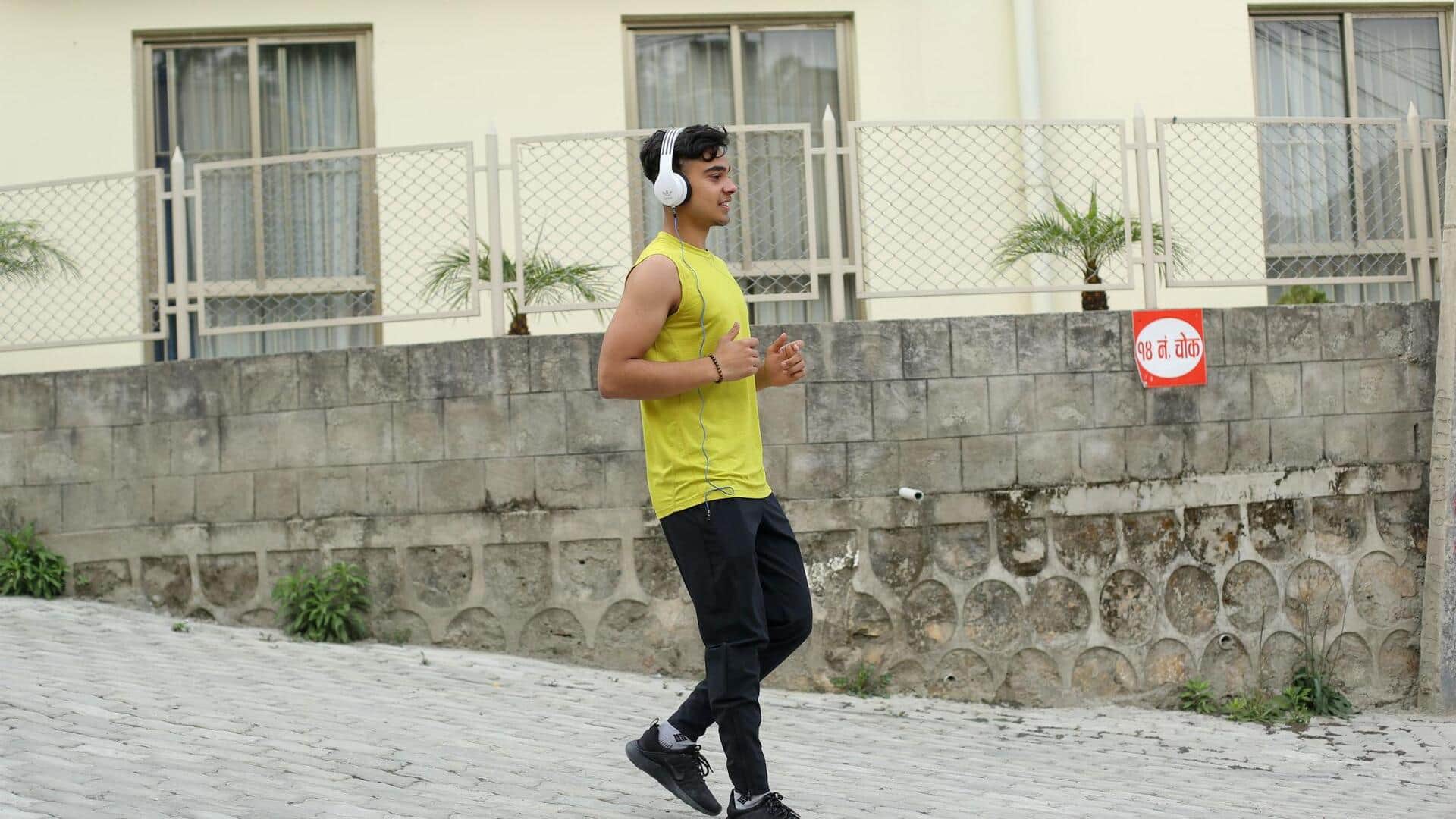
Why walking backward is an awesome exercise
What's the story
Walking backward, or retro walking, is a lesser-known form of exercise gaining attention for its unique benefits. This activity, which may seem unusual at first, can offer a range of physical and mental advantages. Not only does it engage different muscle groups than forward walking, but it also challenges your balance and coordination in new ways. Here are five surprising benefits of retro walking.
#1
Enhances balance and coordination
Retro walking requires more focus and coordination than forward walking.
As you move backward, your body has to adjust constantly to maintain balance, which improves your overall stability over time.
This enhanced coordination can translate into better performance in other physical activities and sports.
#2
Strengthens leg muscles differently
Walking backward activates different muscles in the legs compared to regular walking.
It emphasizes the calves and hamstrings more, providing a well-rounded workout for the lower body.
This variation can help build muscle strength more evenly across the legs, improving overall leg power.
#3
Burns more calories
Surprisingly, retro walking can burn more calories than traditional forward walking.
The increased effort required to maintain balance, and the use of different muscle groups makes it a more intense workout.
This means you could potentially burn more calories in a shorter amount of time.
#4
Improves cardiovascular health
Like any form of aerobic exercise, retro walking is good for cardiovascular health.
It increases heart rate and improves circulation as you engage in this unique activity.
Doing it regularly could improve heart health and endurance levels over time.
#5
Boosts mental focus
The need for concentration while retro walking also gives a mental workout, along with physical benefits.
The brain has to work harder to process spatial awareness and movement direction changes, which can improve cognitive function over time.
This mental engagement helps reduce stress levels as well.