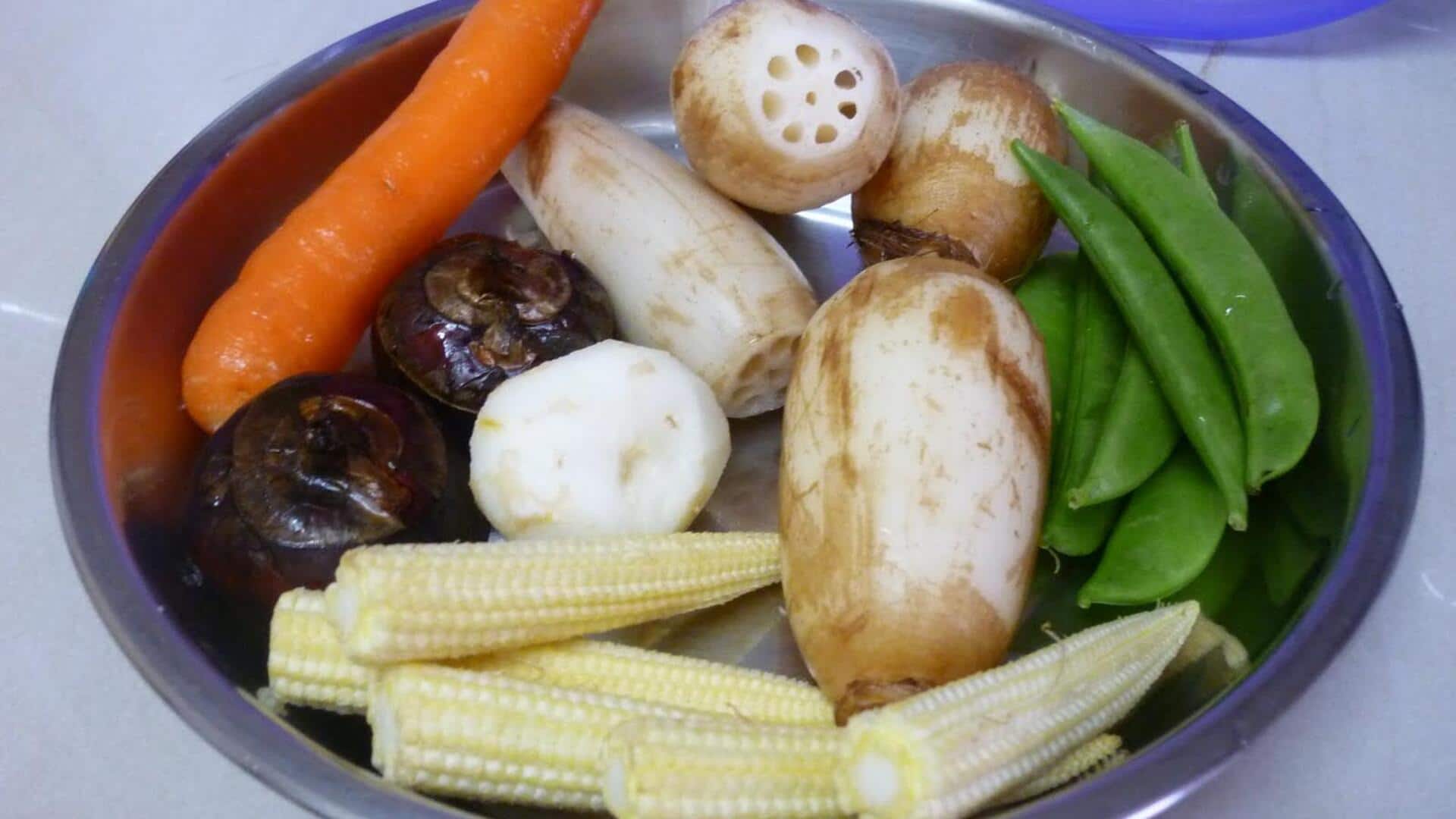
Water chestnut v/s lotus root: Comparing their nutrition
What's the story
Water chestnut and lotus root are two popular aquatic vegetables, both of which are known for their unique nutritional profiles. While both are used in a variety of cuisines, they also offer different health benefits. Knowing the nutritional differences between the two can help you make informed dietary choices. Here, we look at the nutritional aspects of water chestnut and lotus root, and how they can be beneficial to your health.
#1
Caloric content and carbohydrates
Water chestnuts are low in calories, making them an ideal choice for those watching their weight.
A 100-gram serving has roughly 97 calories with around 23 grams of carbohydrates.
Lotus root has a similar caloric content with around 74 calories per 100 grams but has a higher carbohydrate content of around 17 grams per serving.
Both vegetables can be included in a balanced diet without adding too many calories.
#2
Fiber content for digestive health
Fiber is important for digestive health, and both water chestnuts and lotus roots provide a good amount of it.
Water chestnuts have about three grams of fiber per serving, while lotus root has about four grams per 100-gram serving.
Including these vegetables in your meals can help improve digestion and keep you regular.
#3
Vitamins and minerals
Water chestnuts are a good source of vitamin B6, which is important for brain health and metabolism. They also provide potassium, which helps maintain blood pressure levels.
Lotus root, on the other hand, is rich in vitamin C, which boosts the immune system and promotes skin health. It also contains manganese and copper, which are important for bone health.
Tip 1
Antioxidant properties
Lotus root is known for its high antioxidant content due to the presence of flavonoids and phenolic compounds that help fight oxidative stress in the body.
Water chestnuts also have antioxidants like ferulic acid that help protect cells from damage by free radicals.
Including these vegetables in your diet may help reduce inflammation and lower the risk of chronic diseases.