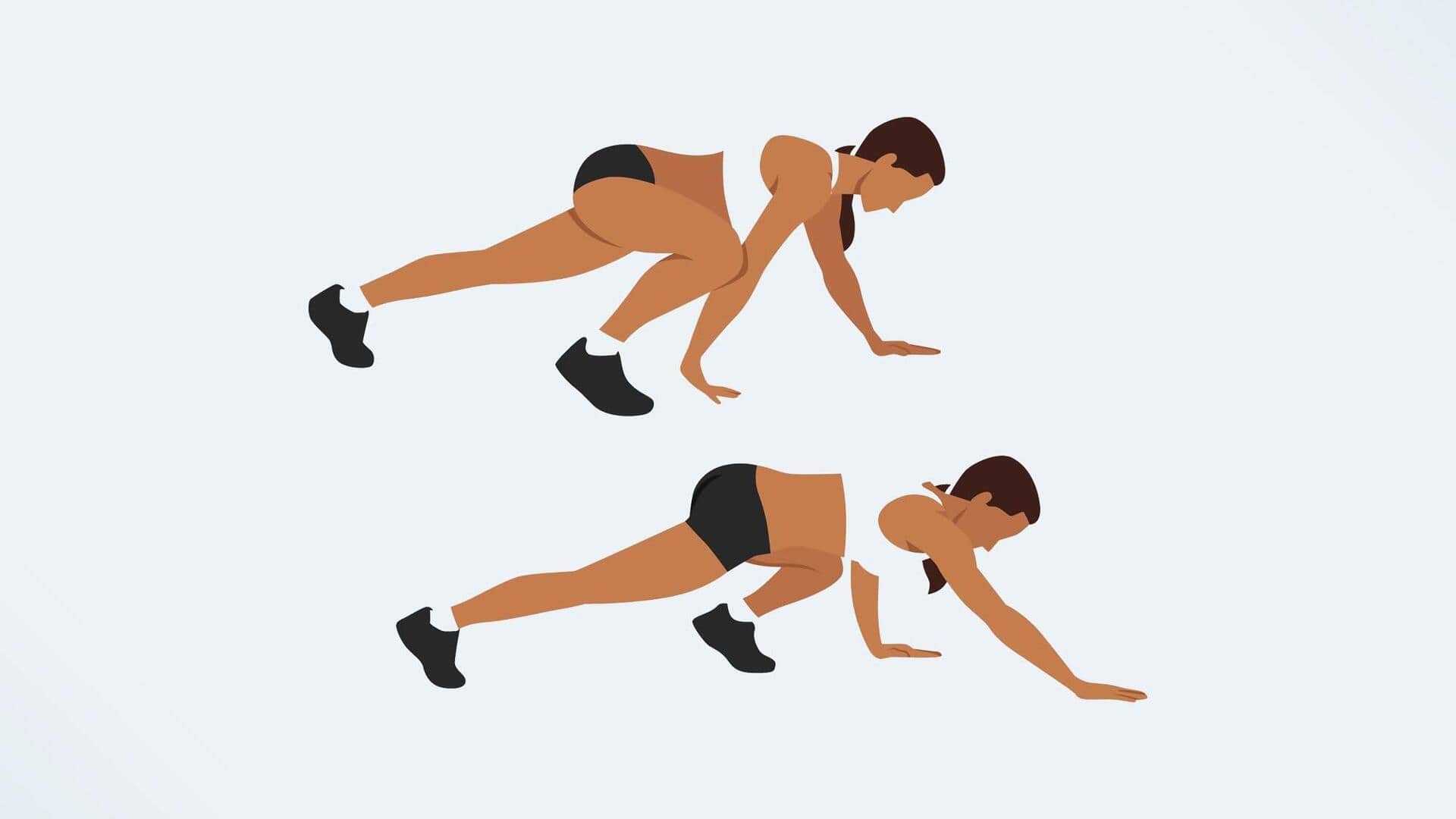
Why animal crawls are considered the ultimate full-body exercise
What's the story
Animal crawls are a unique exercise that mimics the movement patterns of various animals. They engage multiple muscle groups, improve coordination, and enhance mobility. By incorporating animal crawls into your workout routine, you can achieve a full-body workout that improves strength and flexibility. This article delves into different animal crawl techniques and their benefits, giving you insights to master this dynamic exercise.
Bear crawl
Bear crawl technique
The bear crawl is a basic, yet effective move that works on the shoulders, core, and legs.
To do this, start on all fours with your hands directly under your shoulders and knees under your hips.
Lift your knees off the ground so that only your hands and feet touch the floor.
Move forward by alternating opposite hands and feet while keeping your back flat.
Crab walk
Crab walk benefits
The crab walk works on the triceps, chest, and glutes while improving your coordination.
Sit on the ground with your knees bent and feet flat on the floor.
Place your hands behind you with fingers pointing toward your body for support.
Lift your hips off the ground into a bridge position, and walk forward by moving opposite hands and feet together.
Frog jump
Frog jump power
Frog jumps build explosive power in the legs while also working on flexibility in the hips and ankles.
Start by standing with feet shoulder-width apart, before squatting down until thighs are parallel to the ground.
Place both hands on the floor between your legs, before jumping forward like a frog would do—landing softly with bent knees to absorb impact.
Lizard crawl
Lizard crawl flexibility
The lizard crawl improves flexibility in the shoulders, hips, and spine, while working on the core muscles.
Start by getting into a plank position with your hands under your shoulders.
Lower one knee towards its corresponding elbow, while keeping the other leg extended behind you.
Alternate sides as you move forward slowly, like a lizard would do across rocks or branches.