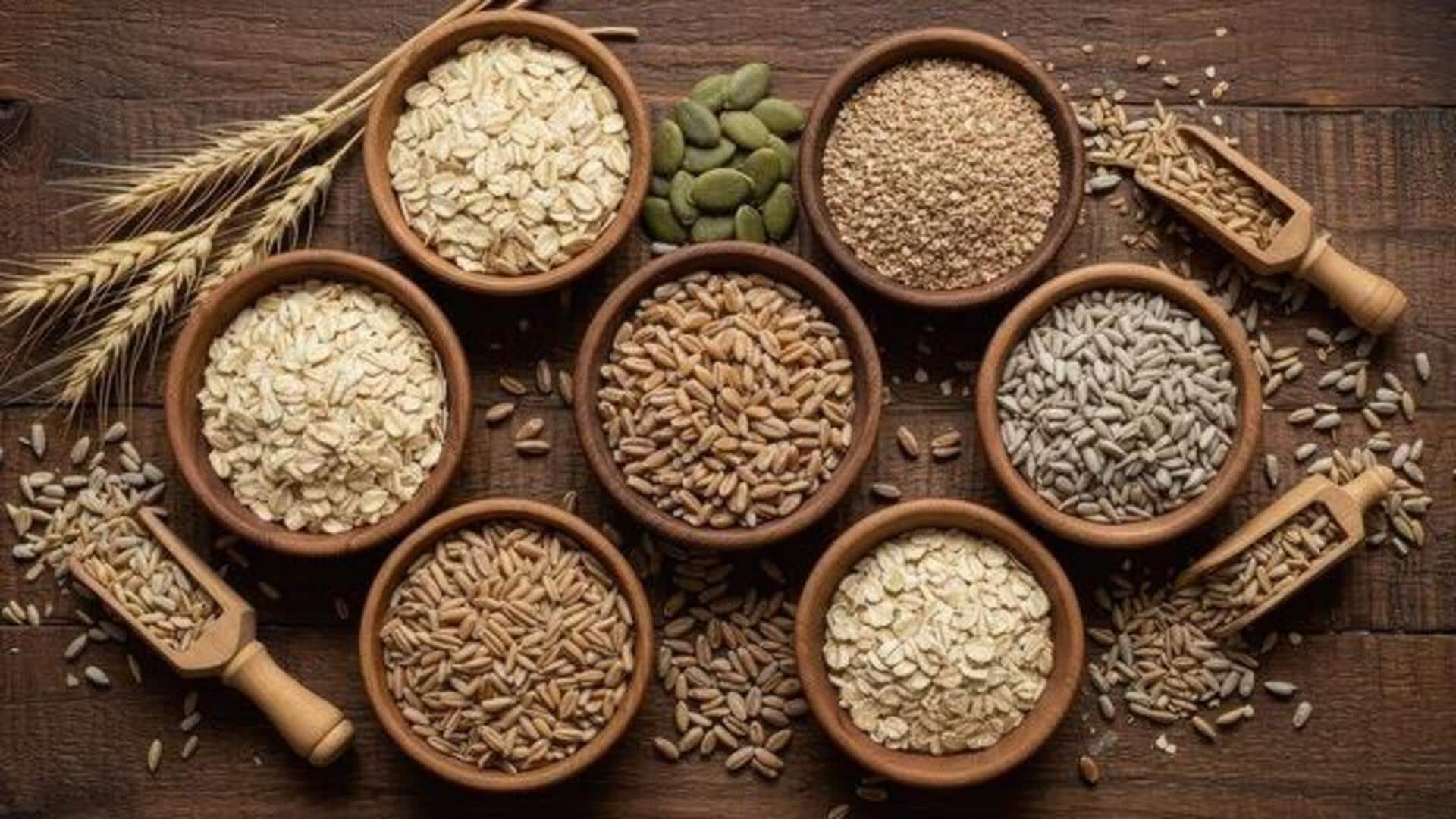
Upgrade your meals with these ancient grains
What's the story
African grains are becoming increasingly popular for their health benefits and versatility in cooking. These grains, which have been a staple in many African diets for centuries, are now being recognized globally for their nutritional value. They are rich in fiber, protein, and essential nutrients, which can contribute to a balanced diet. As more people look for healthy alternatives to conventional grains, African grains provide an exciting option.
Sorghum
Sorghum: The versatile grain
Sorghum is a drought-resistant grain widely cultivated across Africa.
It is high in fiber and antioxidants, making it a great option for anyone looking to improve their digestive health.
Sorghum can be used in a variety of dishes, from porridge to bread, and even as a thickening agent in soups.
Its versatility makes it an ideal choice for anyone looking to add variety to their diet.
Teff
Teff: Tiny grain with big benefits
Teff, an ancient Ethiopian grain, is famous for its tiny size but huge nutritional profile. It is packed with protein, iron, and calcium, making it an ideal choice for vegetarians and vegans.
Teff flour is often used in baking because of its mild flavor and ability to retain moisture.
This makes it perfect for making pancakes or injera, a traditional Ethiopian flatbread.
Fonio
Fonio: The quick-cooking supergrain
Fonio is one of the fastest cooking grains available. It cooks in just five minutes, which is why it is so convenient for busy people.
Rich in amino acids such as methionine and cysteine that are rarely found in other grains, fonio is also gluten-free. This makes it suitable for people with gluten intolerance or celiac disease.
Fonio's light texture makes it perfect for salads or as a side dish.
Millet
Millet: Nutrient-rich ancient grain
Millet has been cultivated in Africa for thousands of years as a staple food source.
It is rich in magnesium, phosphorus, and B vitamins, which are essential for energy production within the body.
Millet can be cooked like rice or quinoa, but its slightly nutty flavor makes it an interesting addition when added into pilafs or casseroles.