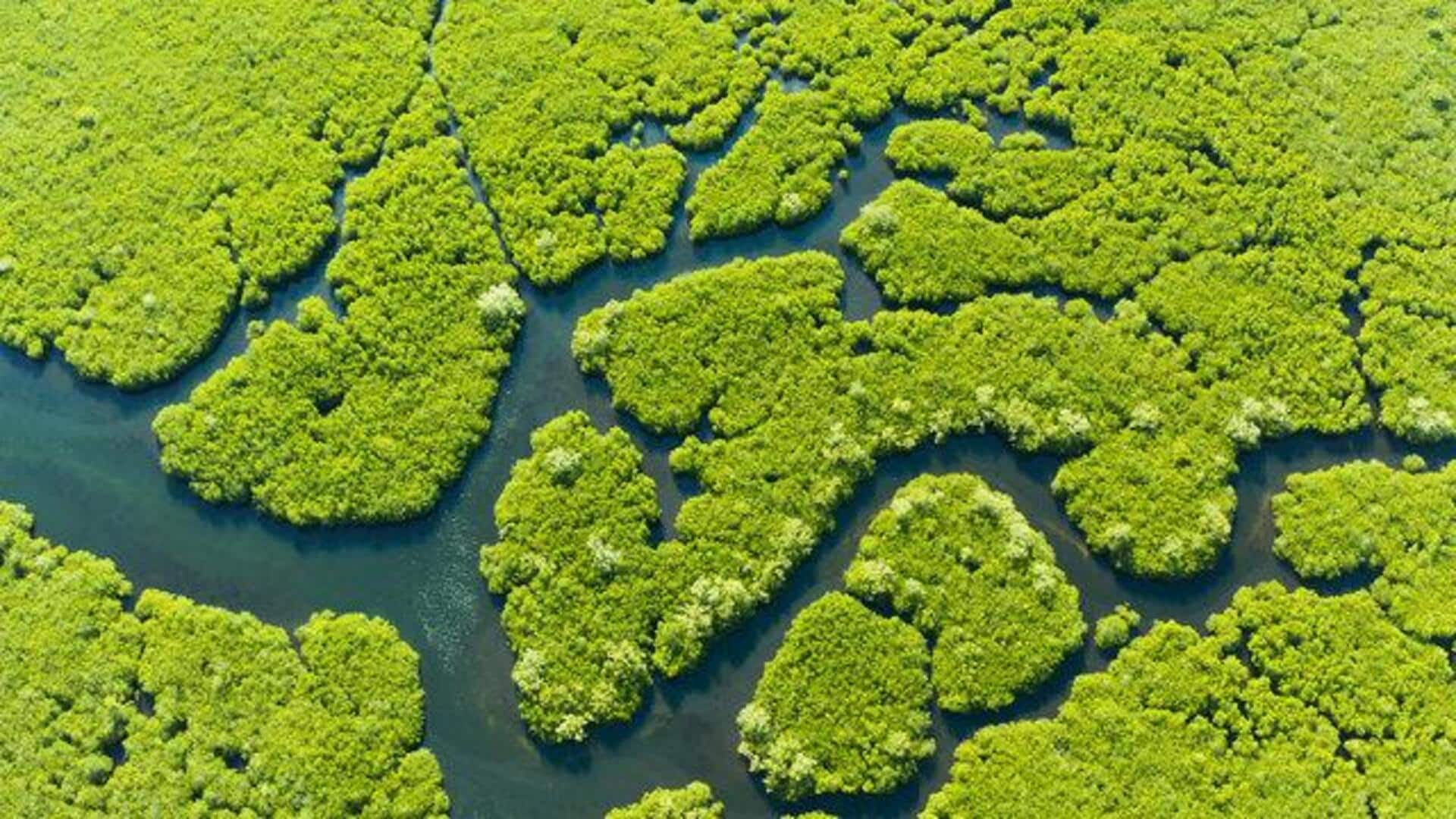
World Wildlife Day: Why mangroves matter for biodiversity
What's the story
World Wildlife Day highlights the importance of protecting ecosystems that sustain life on Earth. Among these vital ecosystems are mangrove forests, found along tropical and subtropical coastlines. Mangroves play a critical role in preserving wildlife, supporting biodiversity, and protecting coastal communities. Their unique structure and ecological functions make them essential for environmental balance.
#!
Natural nurseries for marine life
Mangroves serve as breeding and nursery grounds for numerous marine species.
Their tangled roots provide shelter for young fish, crabs, and shrimp, protecting them from predators. Many commercial fish species depend on mangroves during early development stages.
By supporting marine populations, mangroves strengthen aquatic food chains and sustain both wildlife and fishing communities.
#2
Safe habitat for diverse species
Mangrove forests provide food, shelter, and nesting grounds for birds, reptiles, and mammals.
Migratory birds rest and feed in these coastal habitats, while reptiles and small mammals find protection among dense roots.
This rich biodiversity makes mangroves crucial ecosystems that support a wide range of wildlife species across coastal regions.
#3
Protection against climate change
Mangroves play a powerful role in combating climate change.
They absorb and store significant amounts of carbon in their roots and soil, helping reduce greenhouse gases.
Their dense vegetation also protects coastlines from erosion, storm surges, and flooding, preserving habitats for wildlife while safeguarding nearby human settlements.
#4
Supporting coastal food chains
Mangroves contribute organic matter, such as fallen leaves and nutrients, to surrounding waters.
This supports plankton and small organisms that form the base of aquatic food chains.
As a result, larger fish, birds, and marine animals thrive.
Healthy mangrove systems ensure balanced ecosystems and sustained biodiversity in coastal environments.
#5
The need for conservation
Mangroves face increasing threats from urban expansion, pollution, deforestation, and climate change, putting countless species at risk.
Loss of these coastal forests leads to shrinking habitats and declining wildlife populations.
Protecting and restoring mangrove ecosystems is essential for maintaining ecological balance and enhancing coastal resilience.
This World Wildlife Day, it is vital to recognize their value and promote collective action for their conservation.