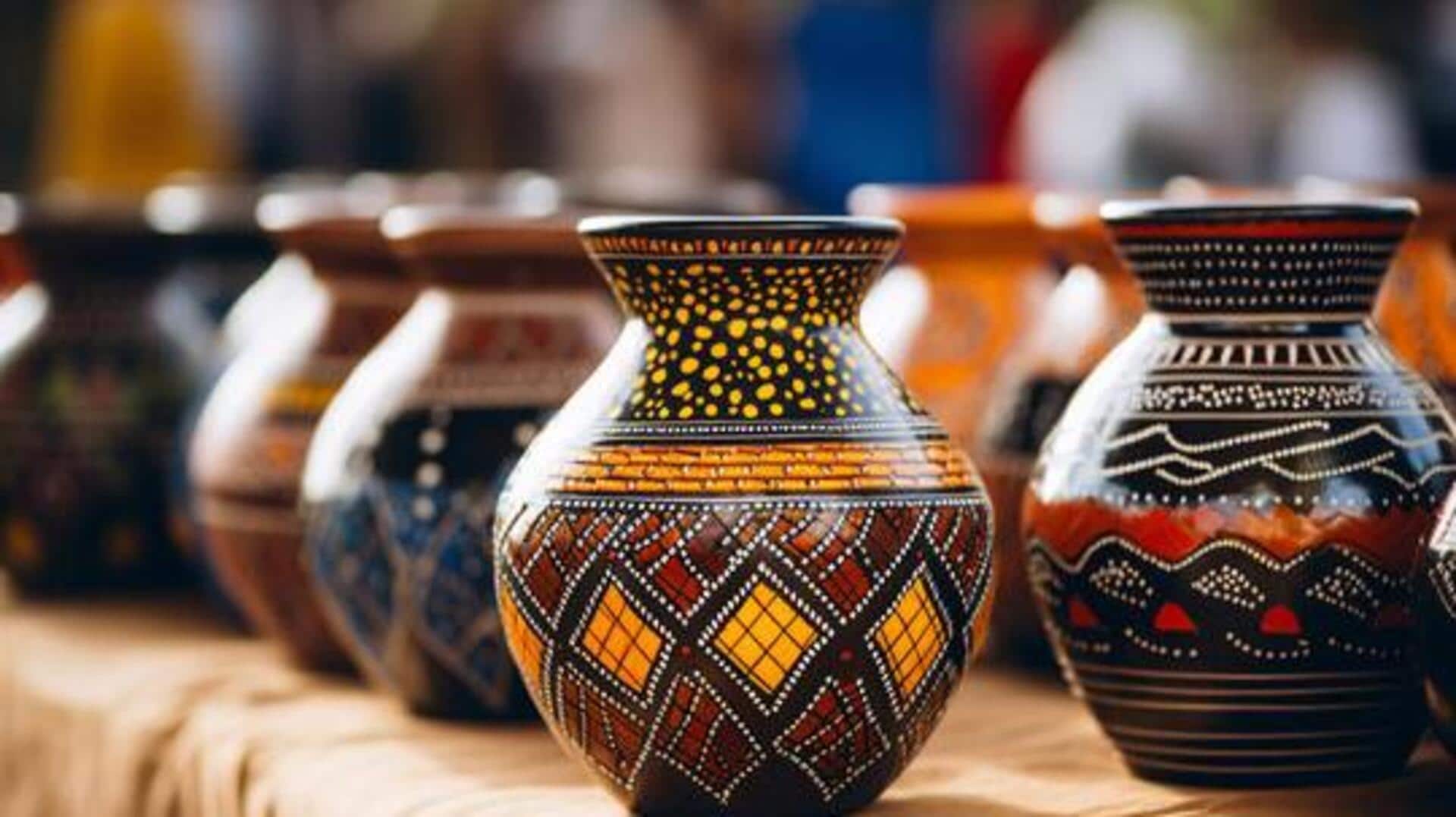
All about Yoruba crown pottery
What's the story
Yoruba crown pottery is an exquisite art form that marries tradition with creativity. It is characterized by intricate designs and cultural significance, making it a unique expression of Yoruba heritage. The pottery is not just an artistic endeavor but also a reflection of the community's values and history. The craftsmanship involved in creating these pieces showcases the skill and dedication of the artisans.
#1
Historical significance of Yoruba crown pottery
Yoruba crown pottery has a rich history that dates back centuries.
Traditionally, these pieces were used in ceremonies and rituals, highlighting their importance in cultural practices.
The designs often feature symbols that tell stories or represent deities, making each piece a narrative in itself.
The historical significance adds depth to the art form, making it more than just decorative items.
#2
Techniques used in crafting
The techniques used in creating Yoruba crown pottery have been passed down through generations.
Artisans use hand-building methods to shape the clay, ensuring each piece is unique.
The intricate patterns are carved or painted on the surface before firing it in traditional kilns.
This process ensures durability while preserving the detailed artistry that characterizes this pottery.
#3
Cultural symbolism embedded in designs
Each design element on Yoruba crown pottery carries cultural symbolism.
Common motifs include geometric shapes, and figures representing ancestral spirits or natural elements like water and trees.
These symbols are not merely decorative but convey important messages about identity, spirituality, and community values within Yoruba culture.
Tip 1
Modern adaptations and influence
While rooted in tradition, modern adaptations of Yoruba crown pottery have emerged as artists experiment with new forms and materials.
Some incorporate contemporary aesthetics while maintaining traditional techniques to appeal to a broader audience, without losing cultural significance.
This evolution showcases how this art form continues to adapt while honoring its rich heritage.