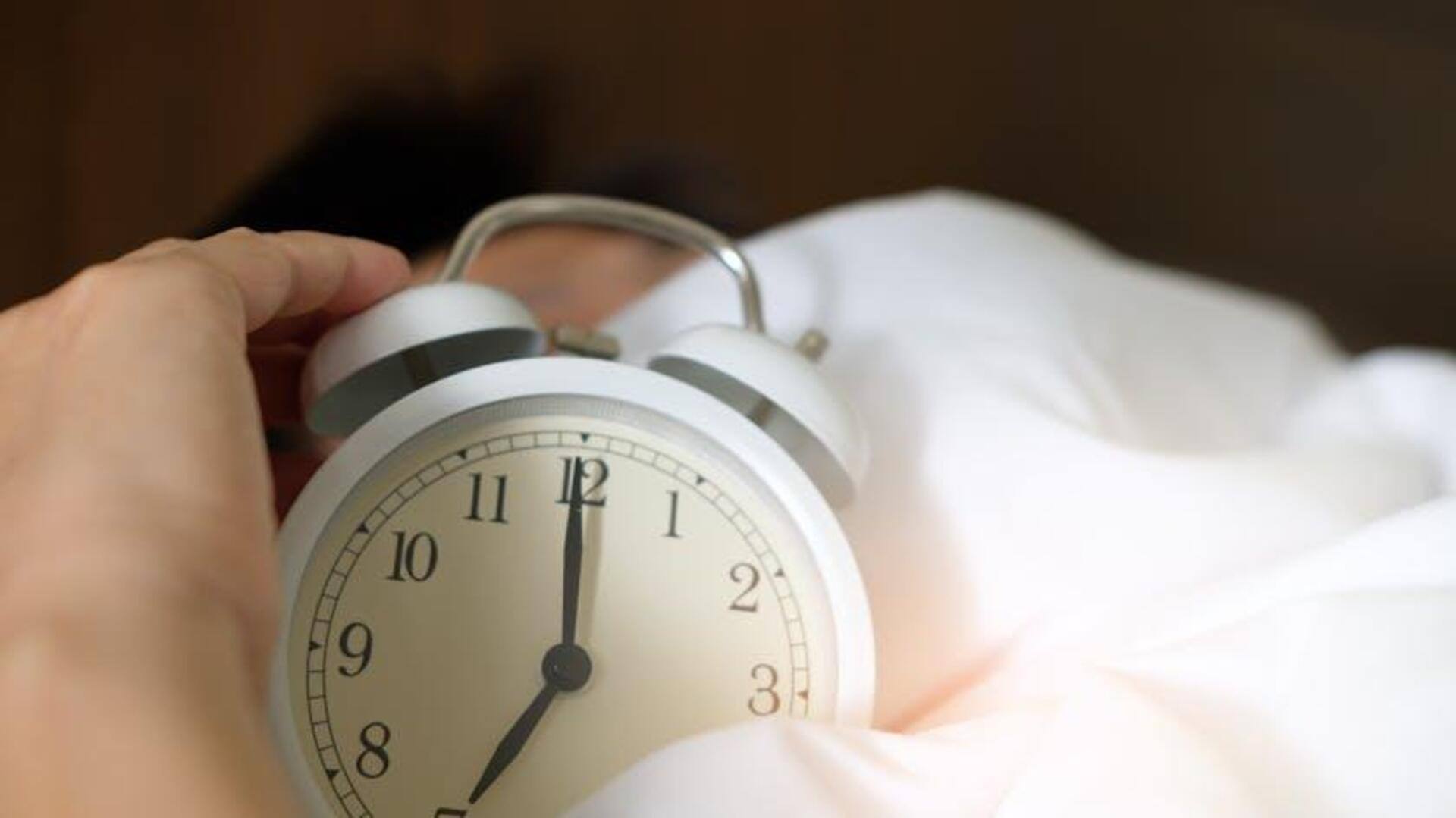
How to determine how much sleep you really need
What's the story
As the holiday season approaches, many of us are struggling to get enough sleep. While most sleep experts recommend seven to nine hours of sleep for adults, quality is as important as quantity. Dr. Tony Cunningham, a clinical psychologist and director at Boston's Center for Sleep and Cognition, told CNN that both sleep pressure and circadian rhythms dictate our sleep quality.
Sleep dynamics
Sleep pressure and circadian rhythms: Key to quality sleep
Sleep pressure, or sleep drive, builds up the longer you're awake and decreases while you sleep. It makes you feel tired after being awake for a long time.
Your circadian rhythm is your body's internal clock that can be influenced by external factors like light but is primarily controlled by your brain.
For optimal sleep quality, these two elements should work in harmony.
Routine importance
Establishing a sleep routine for better quality
Dr. Cunningham suggests that establishing a consistent sleep routine can help regulate sleep pressure and circadian rhythm.
He stresses the importance of waking up at the same time every day, as this can be more effective than going to bed at the same time every night.
Once you have a consistent routine, your body will naturally start to find its ideal sleep duration.
Personalization
Individual sleep needs vary: Finding your ideal duration
Dr. Cunningham notes that while seven to nine hours of sleep is a good average, not everyone needs exactly eight hours.
Some people may only need five or six hours for optimal functioning, while others may require up to 11 hours per night.
To determine your ideal sleep duration, maintain a consistent bedtime and observe how long it takes you to fall asleep within 20-30 minutes of feeling sleepy.
Trial
Experimenting with sleep duration for optimal rest
Dr. Cunningham also recommends experimenting with your sleep duration by sleeping until you wake up naturally, without an alarm. This can help you identify your ideal sleep time.
He warns that in the first few days, you may end up sleeping more than usual as your body catches up on lost sleep pressure.
But after a few days of this catch-up period, you'll know you've found your ideal sleep time when you wake up at the same time for several consecutive days without any external cues or alarms.