
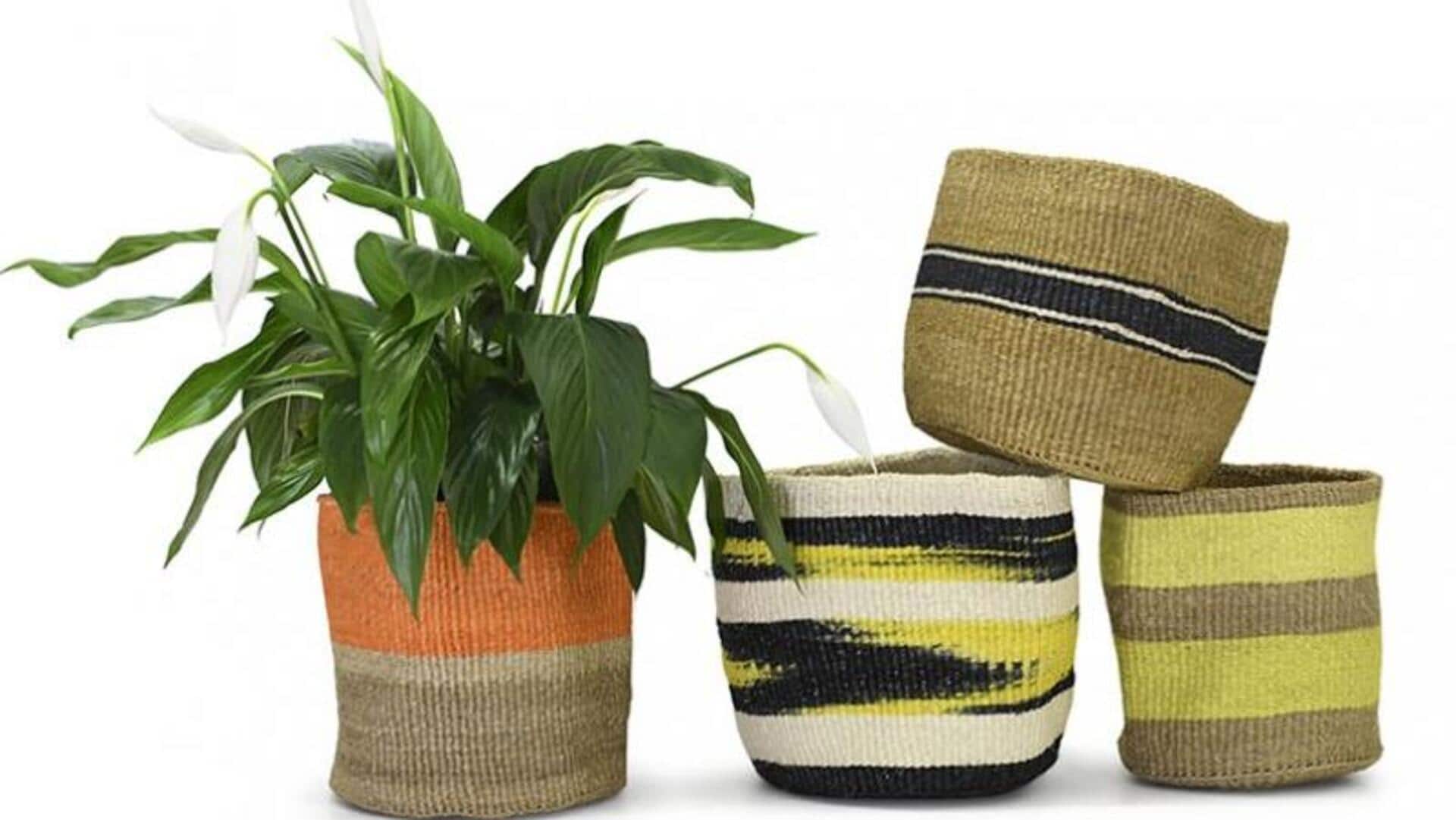
DIY: How to make Zulu-style planters at home
What's the story
African Zulu basket weaving is an ancient craft. It has inspired many modern-day home decor items, including planters. The intricate patterns and vibrant colors of these baskets lend a unique touch to any living space. By incorporating elements of this traditional art, you can create a beautiful and functional planter. This addition adds character to your home. Here are some insights on how to achieve this.
#1
Choosing the right materials
Selecting appropriate materials is key to replicating Zulu basket weaving in planters. Natural fibers like sisal, raffia, or jute are commonly used for their durability and eco-friendliness. These materials not only mimic the traditional look but also ensure the planter is sturdy enough to hold soil and plants. Using weather-resistant coatings can further enhance longevity if the planter is kept outdoors.
#2
Understanding traditional patterns
Zulu baskets are famous for their geometric patterns, which can be replicated in your planters. Take time to study these designs, as they often have symbolic meanings. By adding these patterns into your planter's design, you not only pay homage to the culture but also make your planter visually stunning. This way, you get to keep the essence of Zulu art while making it functional.
#3
Incorporating vibrant colors
Color plays a major role in Zulu basket weaving, with bright hues adding life and energy to the pieces. When designing your planter, think of adding similar colors like red, yellow, or green. These shades can be added through painted details or by using naturally colored fibers while weaving. The use of vibrant colors will make your planter stand out as a focal point in any room or garden.
#4
Ensuring functionality and drainage
While aesthetics are important, functionality should not be compromised when creating Zulu-inspired planters. Ensure that each planter has adequate drainage holes at the bottom to prevent waterlogging that could damage plant roots. Consider adding an inner liner made from waterproof material if needed while maintaining airflow between layers of soil within the planter itself.