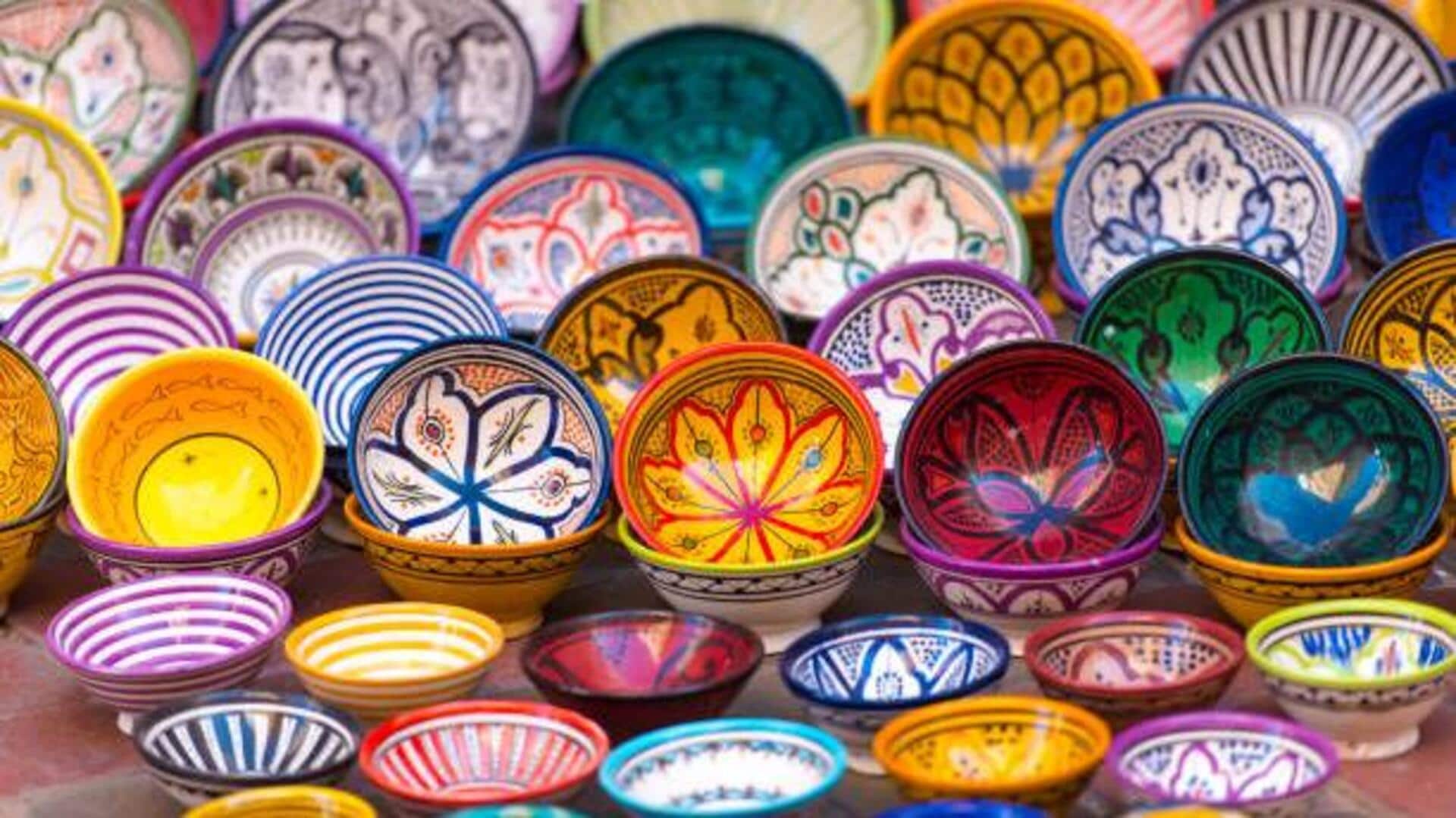
How artisans are reinventing the iconic Zulu pottery
What's the story
Zulu pottery is a time-honored art that has been passed down through generations. Famous for its unique designs and cultural significance, this craft is a window into the rich heritage of the Zulu people. In recent years, modern glazes have added a new dimension to traditional Zulu pottery, giving artisans a new way to express themselves while preserving their roots. Here is a look at how these glazes are changing the game.
#1
The evolution of Zulu pottery
Zulu pottery has evolved over the years, from basic earthenware to more sophisticated designs.
Traditionally, these pots were used for practical purposes like storage and cooking. Today, they are also appreciated as decorative pieces.
The introduction of modern glazes has allowed artisans to experiment with colors and textures, while still keeping the essence of traditional designs.
#2
Impact of modern glazes
Modern glazes have revolutionized Zulu pottery by introducing new colors and finishes that were previously unavailable.
These glazes are easy to apply and dry quickly, allowing artisans to play around with their creations without having to wait long.
The result is a more vibrant and diverse range of products that appeal to both local and international markets.
#3
Preserving cultural heritage
While modern glazes bring innovation, many artisans are committed to preserving the cultural heritage of Zulu pottery.
This means that traditional techniques are still used alongside new methods.
By blending old and new, artisans ensure that their work remains rooted in tradition while also appealing to contemporary tastes.
#4
Economic opportunities for artisans
The use of modern glazes has opened up new economic opportunities for Zulu potters.
With the increased demand for unique and colorful pieces, many artisans have been able to expand their businesses beyond local markets.
Some even export their work internationally, contributing to economic growth within their communities.