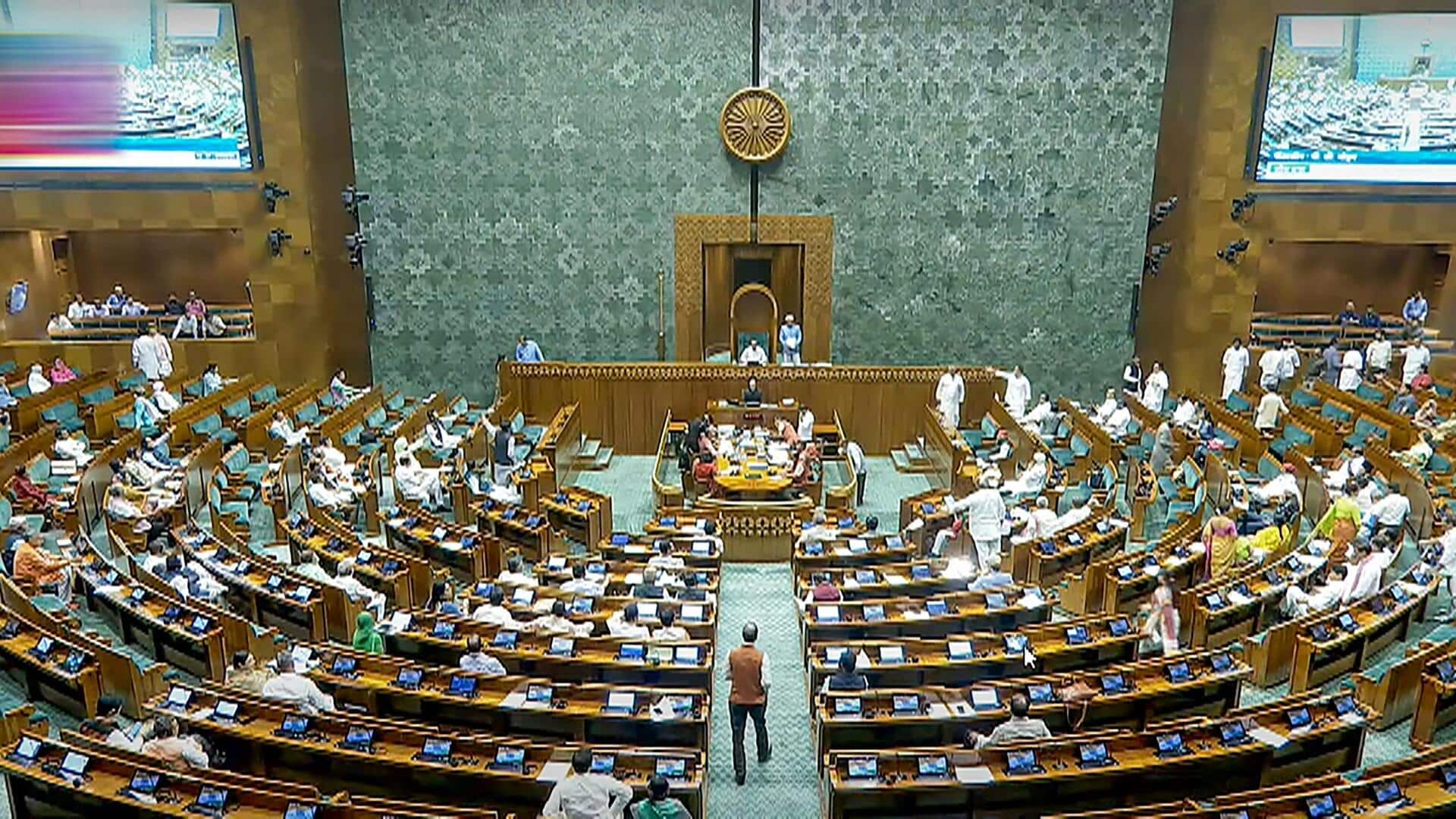
G Ram G Bill, replacing MGNREGA, clears Lok Sabha
What's the story
The Viksit Bharat—Guaranteed for Rozgar and Ajeevika Mission (Gramin), or VB—G Ram G Bill, 2025, has been passed in Lok Sabha amid massive protests from the opposition. The House was adjourned until 11:00am on Friday, the last day of the Winter Session of Parliament. The bill seeks to repeal the United Progressive Alliance-era Mahatma Gandhi National Rural Employment Guarantee Act (MGNREGA), the world's largest such guarantee for 100 days of work in rural areas.
Opposition
It was only NREGA: Minister
Opposition members, who wanted the bill sent to a standing committee, protested in the Well and tore up papers after the Speaker stated that the legislation had been thoroughly discussed.
Defending the bill, Union minister Shivraj Singh Chouhan claimed Mahatma Gandhi's name was added to the NREGA, eyeing the 2009 elections.
"Initially it was NREGA and Mahatma Gandhi's name was not included...Later, when the 2009 general elections came, Bapu came to mind of Congress to get votes," Chouhan said.
Employment terms
Bill promises increased wage employment and unemployment allowance
The Union government has defended the Viksit Bharat-G RAM G Bill, 2025, as a "comprehensive statutory overhaul of MGNREGA."
The Centre said it is in response to changing rural India and the long-term vision of Viksit Bharat 2047.
The government argues that while MGNREGA helped stabilize rural incomes for nearly two decades, its structure had become outdated with falling poverty levels and digitalization.
The new bill promises "125 days of wage employment per rural household in each financial year."
Twitter Post
Details on new bill
Viksit Bharat- G RAM G Bill 2025: Reforming MGNREGA for Viksit Bharat
— PIB India (@PIB_India) December 18, 2025
Rural employment has been a cornerstone of India’s social protection framework for nearly two decades. Since its enactment in 2005, the Mahatma Gandhi National Rural Employment Guarantee Act (MGNREGA) played a… pic.twitter.com/tyso3uRj5B
Infrastructure emphasis
Bill focuses on durable rural infrastructure
It also guarantees an unemployment allowance if work is not provided within 15 days.
The Centre also said the scheme now focuses on "durable rural infrastructure" in four priority areas: water security, core rural infrastructure, livelihood infrastructure and special works for extreme weather events.
This is a shift from village-by-village asset creation to a national infrastructure strategy.
The government plans to integrate gram panchayat plans into a "Viksit Bharat National Rural Infrastructure Stack," aligned with platforms like PM Gati Shakti.
Funding and tech
New funding structure and technology use in governance
The new bill also proposes a centrally sponsored structure with an estimated annual requirement of ₹1.51 lakh crore.
The central share is about ₹95,692 crore, with states sharing costs in a 60:40 ratio for most states.
Union Territories without legislatures will get 100% central funding.
The Centre claims this won't burden state finances but improve predictability and accountability through "normative funding."
Opposition backlash
Opposition criticizes G RAM G Bill's intent and design
However, opposition parties have slammed the G RAM G Bill.
Congress leaders say it "attacks the soul of rights-based guarantee" by replacing it with an allocation-based framework.
Priyanka Gandhi also criticized the shift to a 60:40 funding pattern as weakening legal employment rights and increasing burdens on states.
Shashi Tharoor called it "a deeply regrettable and retrograde step."
The Bill will now be tabled in the Upper House.