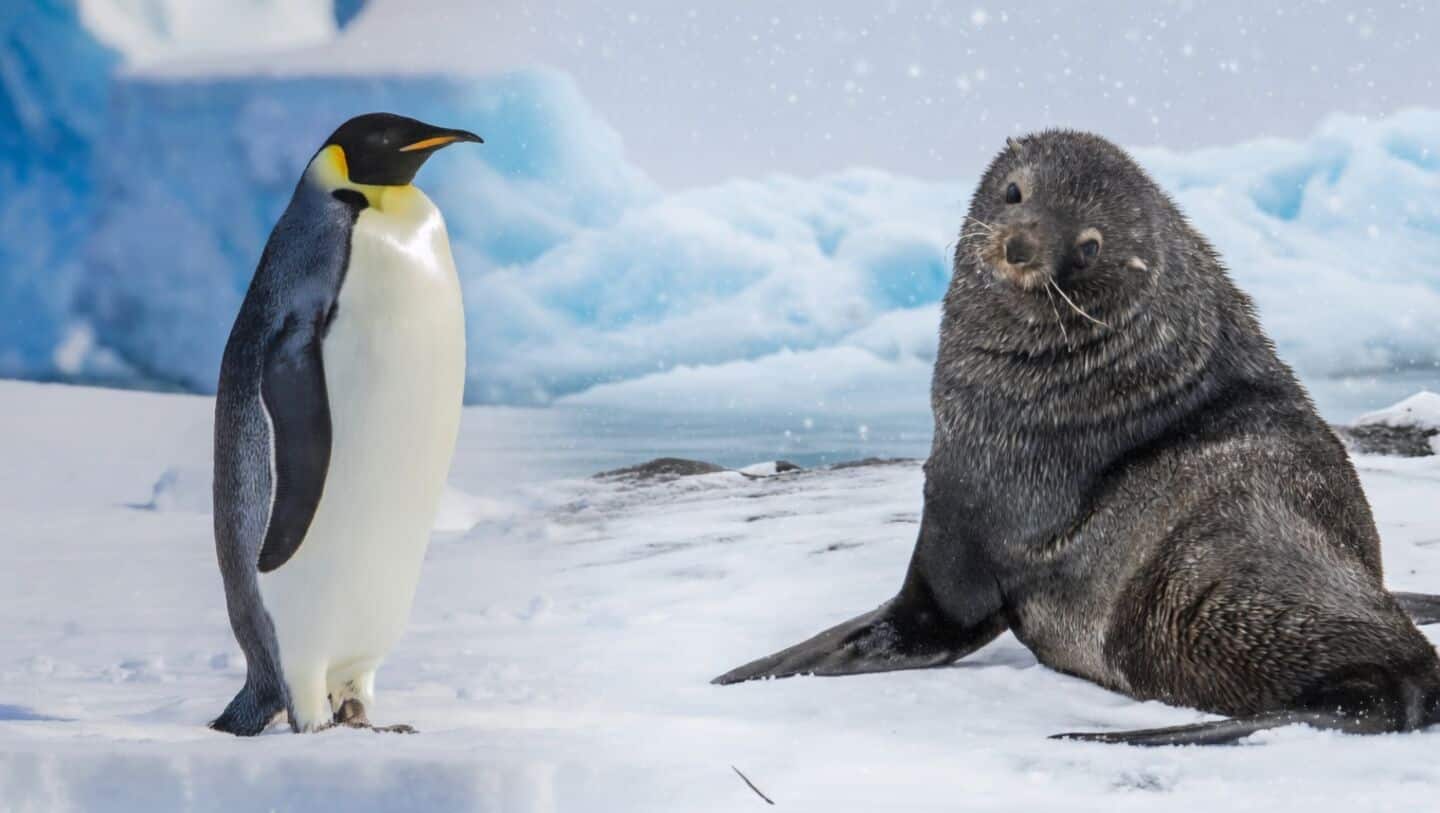
Emperor penguins, fur seals declared endangered due to climate change
What's the story
The International Union for Conservation of Nature (IUCN) has added the emperor penguin and Antarctic fur seal to its list of endangered species. The assessment highlights climate change as a major factor in their decline, with warming ocean temperatures, melting sea ice, and reduced food availability threatening these iconic Antarctic animals. The IUCN Red List is an authoritative inventory of species at risk and the reasons behind their decline.
Population decline
Penguin population projected to halve by 2080s
The IUCN Red List assessment reveals that the emperor penguin's status has changed from "Near Threatened" to "Endangered." This is due to projections that its population could be halved by the 2080s.
Satellite data shows a nearly 10% decline in their numbers between 2009 and 2018, translating to over 20,000 adult penguins lost.
Climate change-related early breakup and loss of sea ice are the primary drivers behind this decline.
Habitat risk
Seasonal sea ice decline leading to breeding failures
Philip Trathan, a member of the IUCN working group that assessed the penguin's status, emphasized that sea ice is their primary habitat.
He told CNN, "For emperor penguins, sea ice is their primary habitat. They molt on fast ice or...on ice floes. They feed within the sea ice in polynyas, leads and cracks in the ice."
The decline in seasonal sea ice in Antarctica since 2016 has led to breeding failures in nearly half of all known colonies across Antarctica.
Seal's plight
Fur seals also facing similar threats
The IUCN has also upgraded the status of the Antarctic fur seal from "Least Concern" to "Endangered." This comes after a staggering more than 50% decline in its population between 1999 and 2025.
The decline is also linked to climate change, which is affecting krill availability, their primary food source.
As surface water temperatures near Antarctica rise, krill are moving further offshore and into deeper waters for colder habitats.