Amazon to add 2M NVIDIA GPUs to its data centers
What's the story
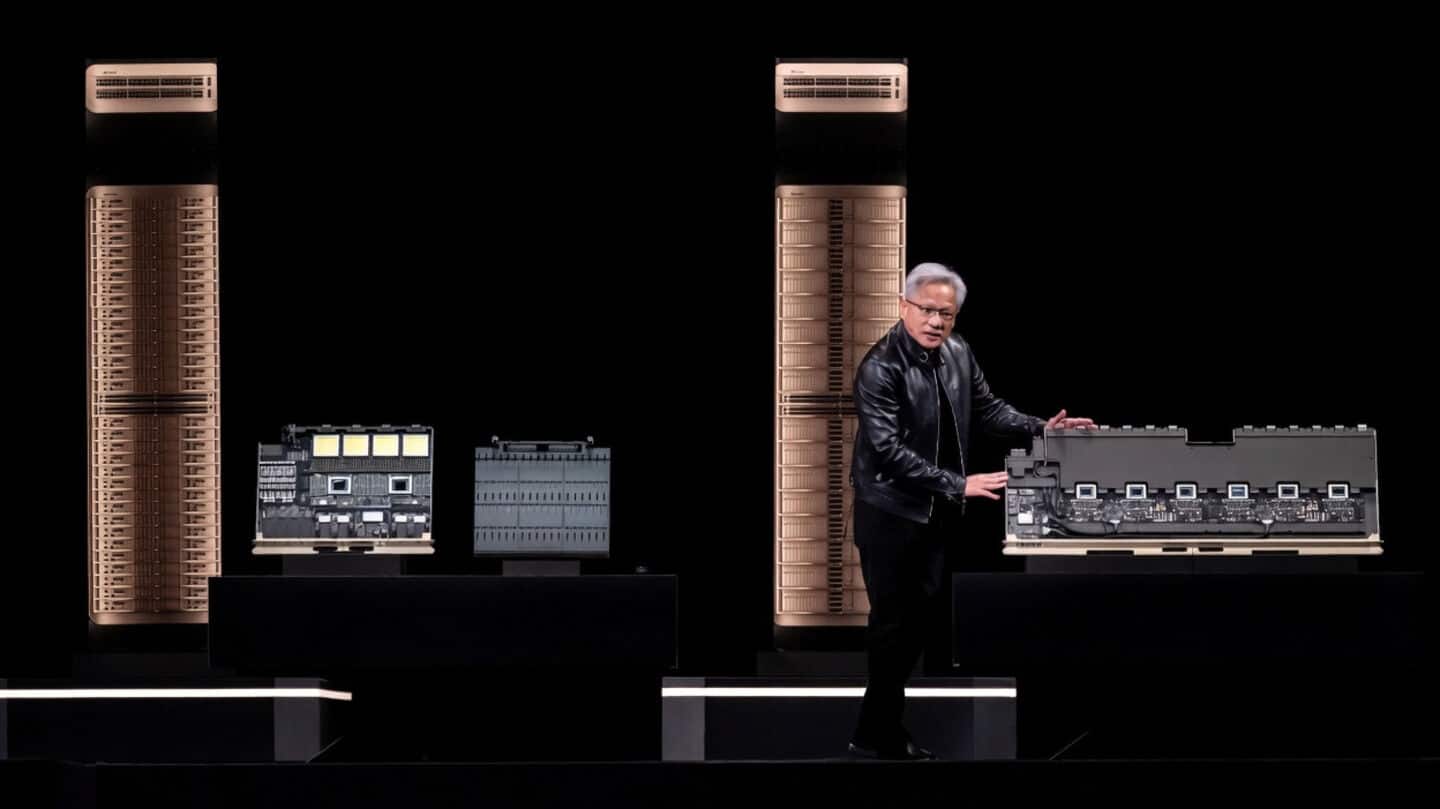
Amazon has announced an expanded partnership with NVIDIA, which will see the addition of another two million NVIDIA GPU chips into Amazon's data centers. The GPUs, including the Blackwell Ultra, Rubin, and Rubin Ultra models, are designed to meet the heavy computational requirements of training and running artificial intelligence (AI) models. They will be deployed in Amazon Web Services (AWS)'s data centers between 2027 and 2028.
Tech integration
Integration of Amazon's technology into AWS
The expanded partnership isn't just about Amazon buying more NVIDIA chips.
The tech giant also plans to integrate its technology into AWS, including networking hardware that connects thousands of GPUs into one system, open models, CPUs, data processing software, and robotics platform.
This decision was influenced by "surging demand" from startups, enterprises, AI labs, and even governments.
Chip development
Amazon's chip efforts to reduce dependence on NVIDIA
The expanded partnership comes as Amazon accelerates its own AI chip efforts, especially with CPUs.
These processors are the general-purpose chips at the heart of servers.
Amazon has been developing its own chips to reduce dependence on NVIDIA and even compete with the chip giant.
AWS is also in talks to sell its Trainium chips, which directly compete with NVIDIA's H100 or Blackwell chips for deep learning workloads.
CPU deployment
Vera CPUs to be integrated with Rubin chips
Along with the two million GPU chips, NVIDIA also plans to send an unspecified number of Vera CPUs to AWS. Some of these will be integrated with Rubin while others will be standalone.
"We expect Vera to be deployed by every major hyperscaler, neocloud, AI lab, and system OEM," said NVIDIA CFO Colette Kress.
The company has already started shipments to lead partners like Oracle and SpaceXAI.
AI integration
Adoption of NVIDIA's full physical AI stack by Amazon
Amazon plans to adopt NVIDIA's full physical AI stack to power its fleet of robots.
The stack includes Omniverse (simulation and digital twin platform), Cosmos (world model platform), Isaac (robotics development platform), and Jetson (computing hardware for robots and edge AI).
This week, NVIDIA also announced a new version of Jetson as an accessible robotics computer for "entry-level edge AI."
Financial outlook
NVIDIA's Q2 sales beat analyst estimates
NVIDIA reported sales of $96.2 billion for the second quarter, beating analyst estimates.
Data center revenue accounted for most of NVIDIA's sales at $89 billion, up 117% from a year ago.
The company expects revenue to reach $108 billion in Q3, partly from its next-gen Rubin GPUs, which it started production shipments this quarter.