EU mandates labels for AI-generated content and deepfakes
What's the story
The European Union (EU) has implemented new rules aimed at improving transparency in artificial intelligence (AI). The regulations, which came into effect on August 2, require companies to clearly indicate when users are interacting with AI models or when content has been created or modified by them. The guidelines apply to both providers, those who develop and market these systems, and deployers, platforms and services that use those AI systems.
Compliance categories
Providers and deployers have different responsibilities
The new rules differentiate between providers and deployers.
Providers are required to build AI systems that clearly inform users when they're interacting with an AI instead of a human, unless it's obvious.
They also have to add machine-readable labels on synthetic audio, images, videos, and text so it can be identified as artificially created or altered.
Deployers, on the other hand, have to label any AI-generated or manipulated image, audio, and video deepfake content that's designed to look real.
Misinformation prevention
Guidelines issued amid rise of generative AI
The European Commission has issued these transparency guidelines in light of the rapid development of generative and interactive AI systems.
The Commission said, "The rapid development of generative and interactive AI systems is making it increasingly difficult to distinguish AI interactions and AI-generated content from human-created and authentic content."
It added that people should know when they're interacting with an AI or exposed to its content, which will help them make informed decisions.
Disclosure labels
New disclosure labels introduced
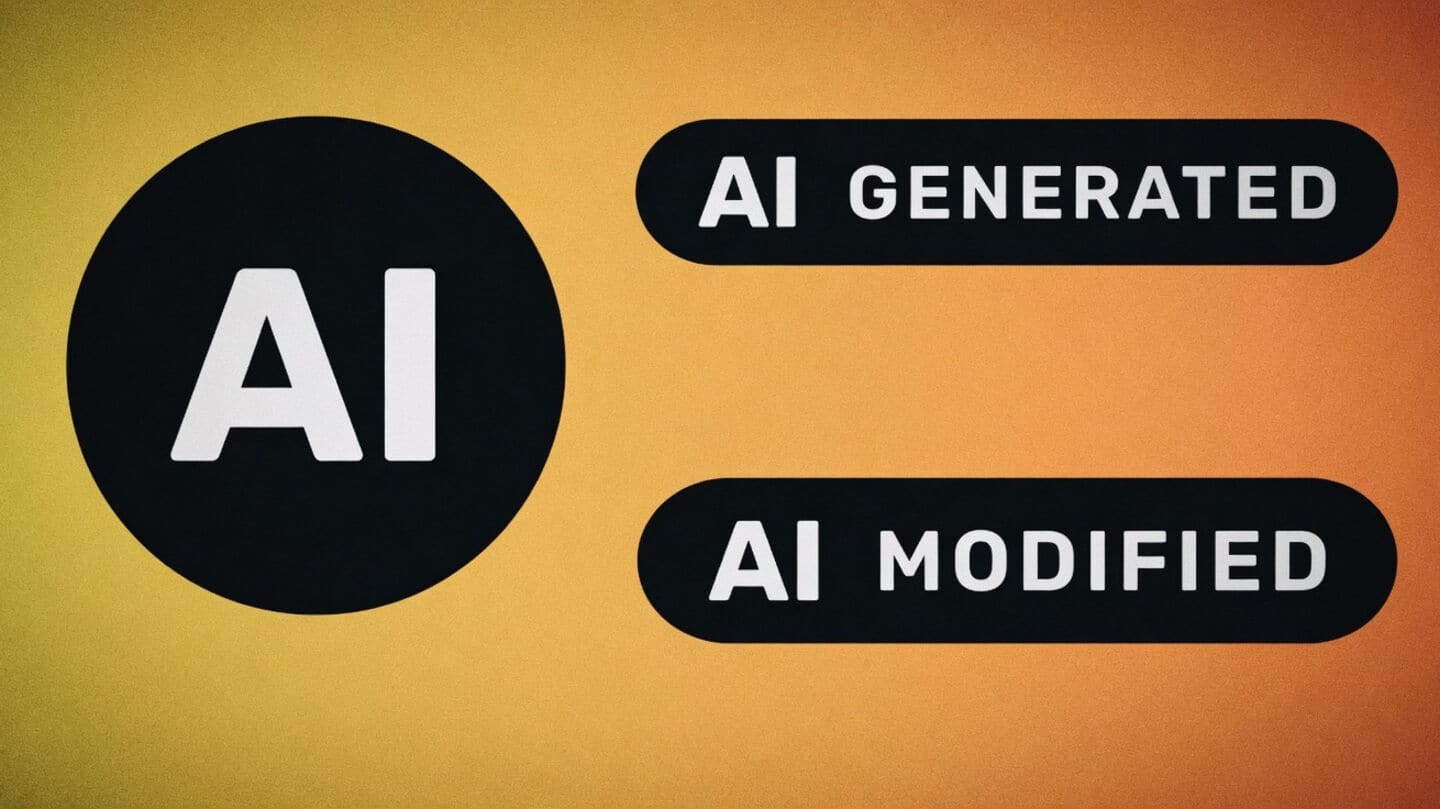
The European Commission has also introduced a set of AI disclosure labels that tech platforms can use in line with the AI Act rules.
These are similar to those already used by TikTok, Instagram, and Facebook.
The EU-made icons are meant to save platforms from creating their own, and while their use is optional, the Commission stresses its labeling requirements "are not."
Penalties for non-compliance
Companies could face hefty fines for non-compliance
Companies that do not comply with the new transparency rules could face fines as high as €15 million ($17.2 million), or 3% of their global annual turnover.
The new rules are immediately enforceable for new AI systems, but models and services launched before August 2 have a four-month grace period until December 2 to comply.