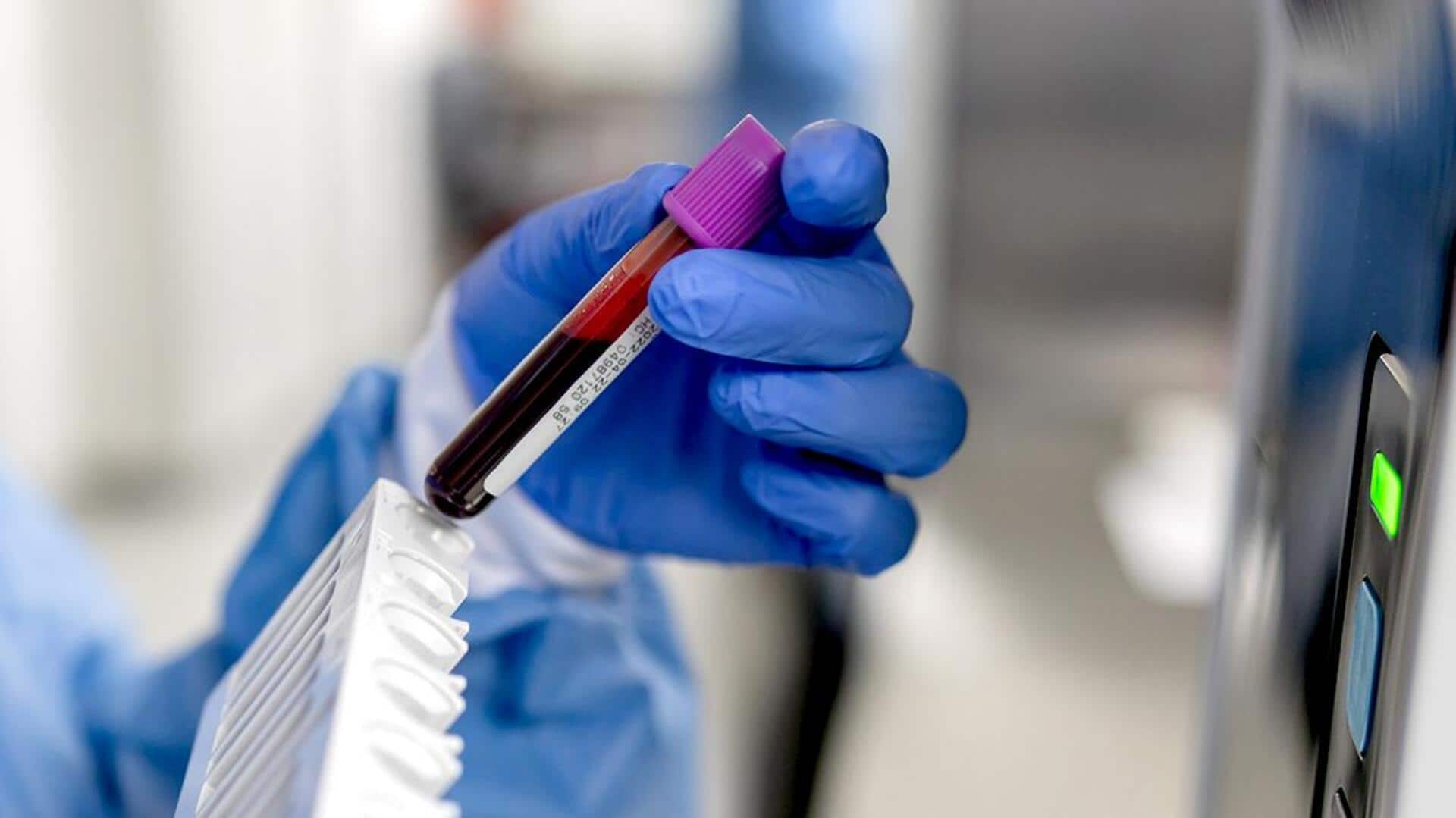
New blood test can predict risk of heart disease
What's the story
A team of scientists from Harvard and Oxford universities is developing a simple blood test to predict the risk of complications from hypertrophic cardiomyopathy (HCM), the most common inherited heart condition. The disease, which affects millions globally, is caused by genetic changes and usually runs in families. While some people with HCM experience no symptoms or mild ones, others may face severe complications like heart failure or cardiac arrest.
Risk assessment
Blood test could identify high-risk patients
The blood test, which measures levels of a protein called N-terminal Pro-B-type natriuretic peptide (NT-Pro-BNP), could help identify patients at high risk of complications.
This would allow for closer monitoring or life-saving treatment.
The study involved measuring NT-Pro-BNP levels in the blood of 700 HCM patients and found that those with higher levels had poorer blood flow and more heart changes that could lead to atrial fibrillation or heart failure.
Potential impact
Test could revolutionize care for HCM patients
The blood test has the potential to transform care for millions of people with HCM.
Study leader Prof Carolyn Ho from Harvard Medical School said, "Continued studies on blood biomarkers will lead to better understanding of HCM so that, in future, we can offer our patients a blood test to identify who is at high versus low risk."
She added this could help target life-saving treatments effectively and avoid unnecessary ones for low-risk patients.
Patient perspective
Personal stories highlight need for risk assessment
Lara Johnson, a 34-year-old from Southampton, UK, who was diagnosed with HCM eight years ago, said a simple blood test could help identify future risks earlier.
"It could give people like me a chance to prepare and adjust our lifestyles as needed," she said.
"That kind of clarity wouldn't only help me, it would make a world of difference for my whole family."
Global impact
Test could benefit patients worldwide
Prof Bryan Williams, Chief Scientific and Medical Officer of the British Heart Foundation which funded the research, said the test "could benefit patients around the world."
He added that measuring different proteins in blood could help predict heart function and future risk of complications from heart disease.
This new method may also provide insights into how HCM affects heart structure and function, potentially leading to new treatment strategies.