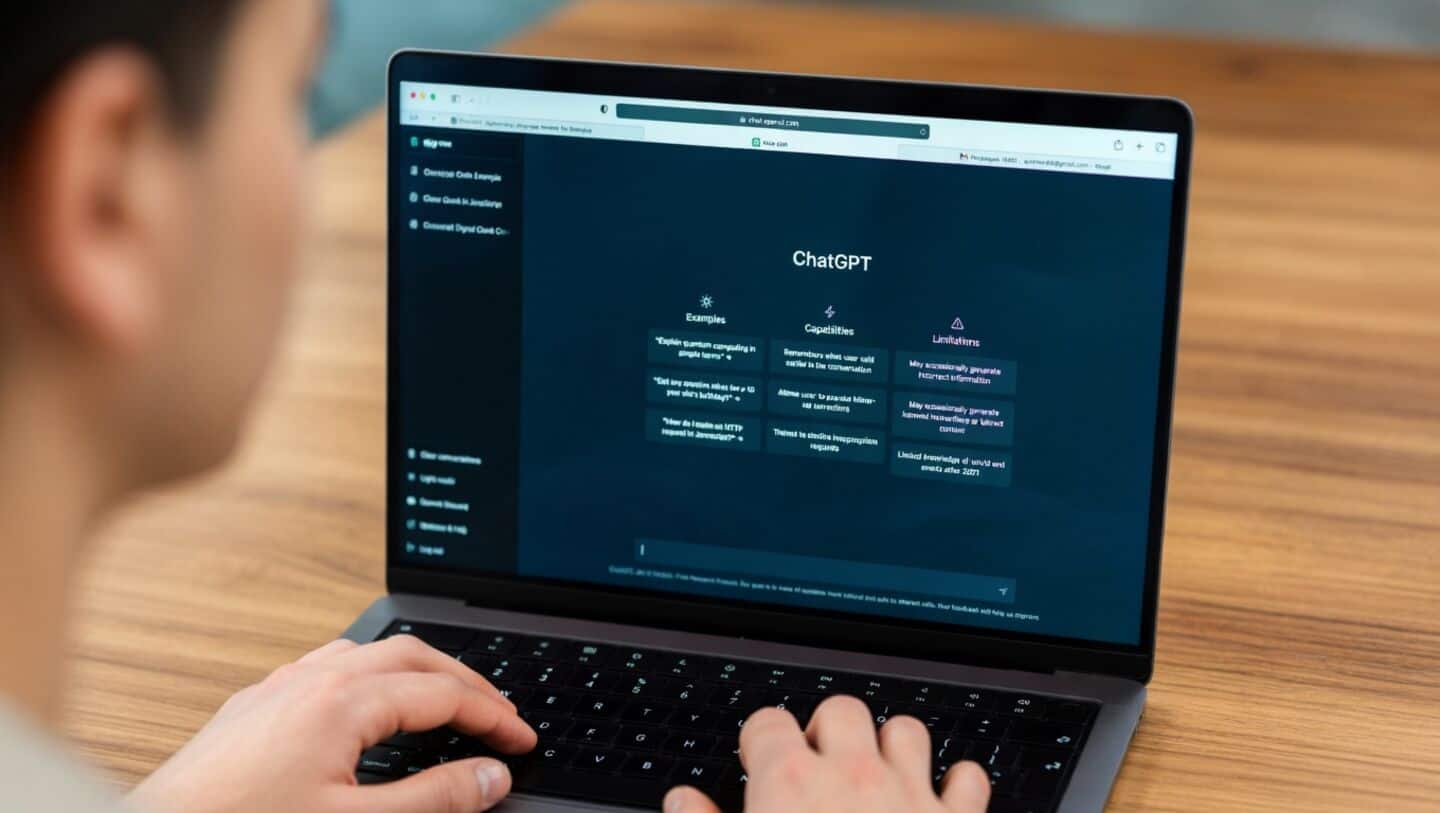
Study reveals how people actually use AI chatbots like ChatGPT
What's the story
A recent study by the National Bureau of Economic Research (NBER) has revealed how people use AI chatbots like ChatGPT in their daily lives. The research, titled "How People Use ChatGPT," is based on anonymized conversations collected between May 2024 and June 2025. It provides a comprehensive look at real-world generative AI usage at scale, offering insights into both work-related and personal uses of the technology.
User behavior
Majority of queries are non-work related
The NBER study found that most ChatGPT usage occurs outside of work. Non-work queries increased from 53% in mid-2024 to over 70% by mid-2025.
This suggests that while AI is often associated with productivity, users are increasingly turning to it for everyday tasks such as advice, learning, and general queries.
The change is driven not only by new users but also existing ones expanding their use cases for the tool.
Usage patterns
Writing takes up bulk of work-related usage
The study identified three main use cases that together account for nearly 80% of all conversations: practical guidance (how-to advice, tutoring, problem-solving), seeking information (facts, products, current events), and writing (emails, summaries).
Among these, writing is the most common work-related activity accounting for around 40% of professional usage.
Most writing tasks involve editing or improving existing text rather than creating new content from scratch.
Functionality
Coding forms small share of usage
Interestingly, the study found that coding forms a small share of usage with only about 4.2% of conversations involving programming tasks.
Instead, ChatGPT is mainly used for decision support. Nearly half of all messages involve users asking for information or advice while about 40% involve getting tasks done such as drafting or generating content.
This shows a shift from AI being an automation tool to one that aids thinking and problem-solving.
User profile
Shifts in user demographics and global adoption
The NBER study also highlighted changing user demographics. Early adopters were mostly men, but by 2025, the gender gap had largely closed.
Younger users dominate usage with nearly half of all messages coming from people under 26.
Adoption is also growing faster in lower and middle-income countries, indicating global expansion beyond early tech-heavy markets.
Users with higher education levels are more likely to use ChatGPT for work-related tasks, especially in knowledge-intensive professions.