This is what happens to sunscreen and mayonnaise in space
What's the story
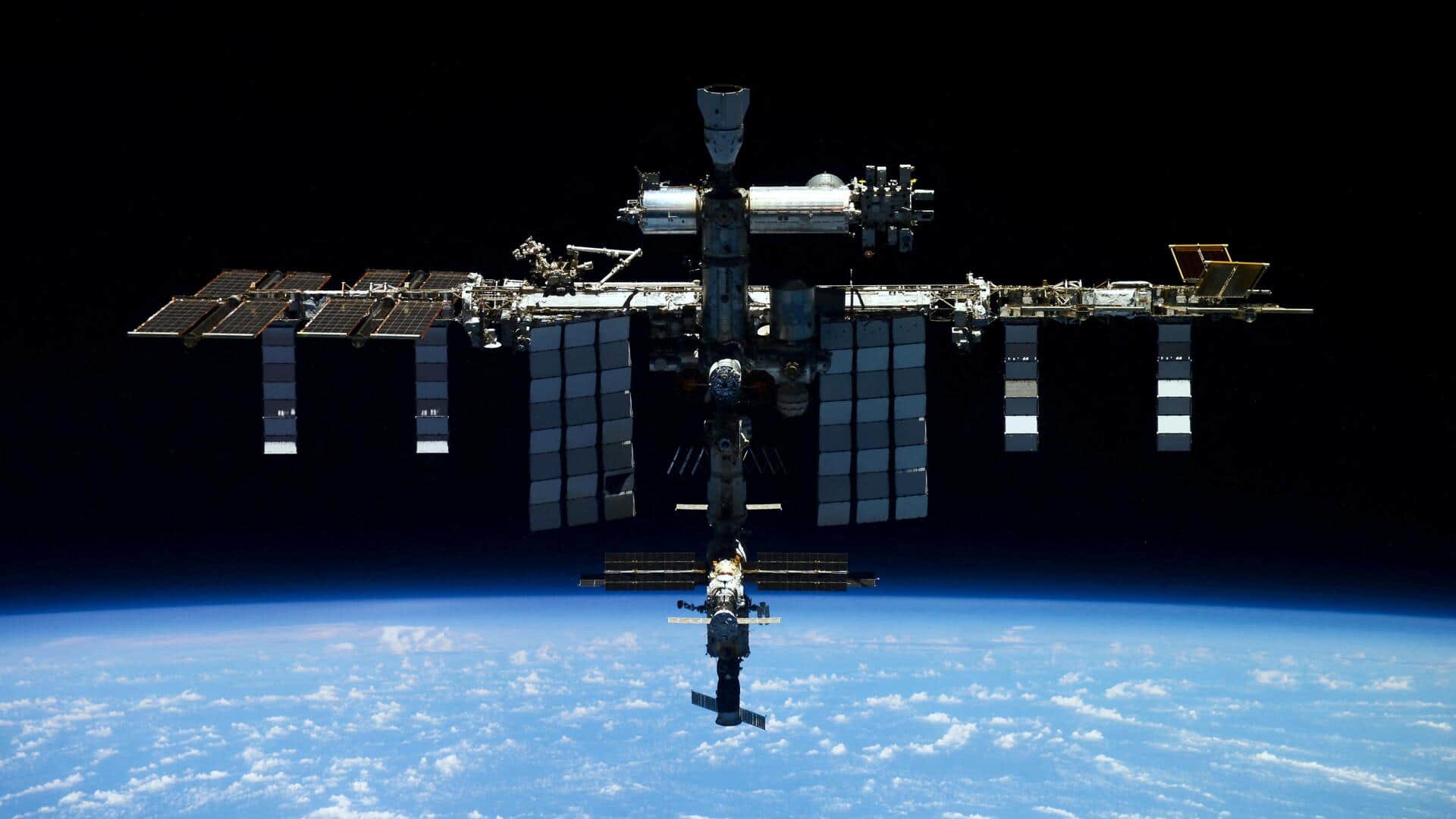
A team of European scientists has studied the behavior of soft materials, which include everyday products like sunscreen and mayonnaise, in space. The research was conducted at COLIS, a new space laboratory on the International Space Station (ISS). The facility is dedicated to studying how gels, creams, colloids, and soft materials age and change without the influence of gravity.
Research facility
COLIS: A unique platform for soft matter research
COLIS (Colloids in Space) is a cutting-edge science facility operating on the ISS under ESA's "Colloids in Space" program.
It was developed by physicists Luca Cipelletti and Roberto Piazza over 25 years of scientific collaboration.
The facility is the first of its kind to study the long-term behavior of soft and complex materials in microgravity, using techniques like dynamic light scattering, speckle pattern analysis, correlation imaging, polarization fluctuation measurements, and temperature-controlled stimulation.
Microgravity effects
Gravity's hidden influence on material behavior
The researchers discovered that gravity has a much bigger impact on soft matter than previously thought, affecting its internal structure in ways that can last for months or even years.
This could explain why products sometimes separate, lose effectiveness, degrade or crystallize unexpectedly.
In space, scientists can observe these processes occurring naturally without Earth's constant pull obscuring the details.
Research potential
COLIS's journey and future implications
COLIS was launched to the ISS aboard NASA's Cygnus NG-21 cargo craft and is already studying nanoparticle-based samples to see how they reorganize in microgravity.
Cipelletti said, "Bringing soft matter physics to the ISS opens new frontiers." He added that this research will help design better materials and improve quality of life on Earth.