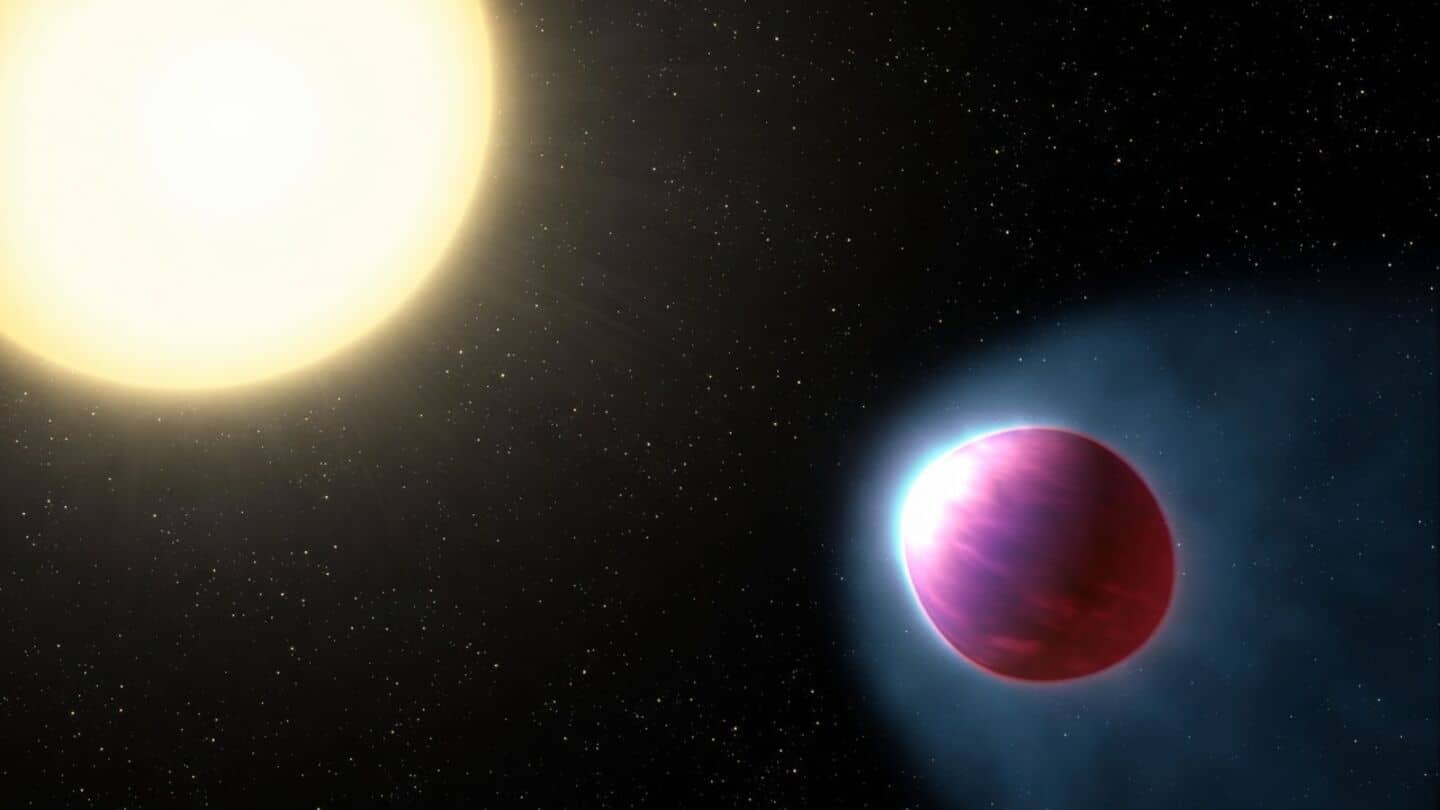
JWST reveals metal vapor and possible gemstone rain on WASP-121b
The James Webb Space Telescope just gave us a close look at WASP-121b, an "ultra-hot Jupiter" that's seriously intense.
This planet orbits its star in just over a day and gets stretched into a football shape by tidal forces.
Its dayside is so scorching that metals turn to vapor, while the cooler nightside might see metallic rain: think rubies and sapphires falling from the sky.
WASP-121b shows temperature and chemistry changes
By watching how starlight filters through WASP-121b's atmosphere, JWST found big temperature differences between morning and evening sides.
Strong winds push heat around, making evenings hotter than mornings.
Plus, shifts in water vapor and carbon monoxide hint at wild changes in atmospheric chemistry: water molecules break apart on the hot side, while mineral clouds could form on the cooler side.