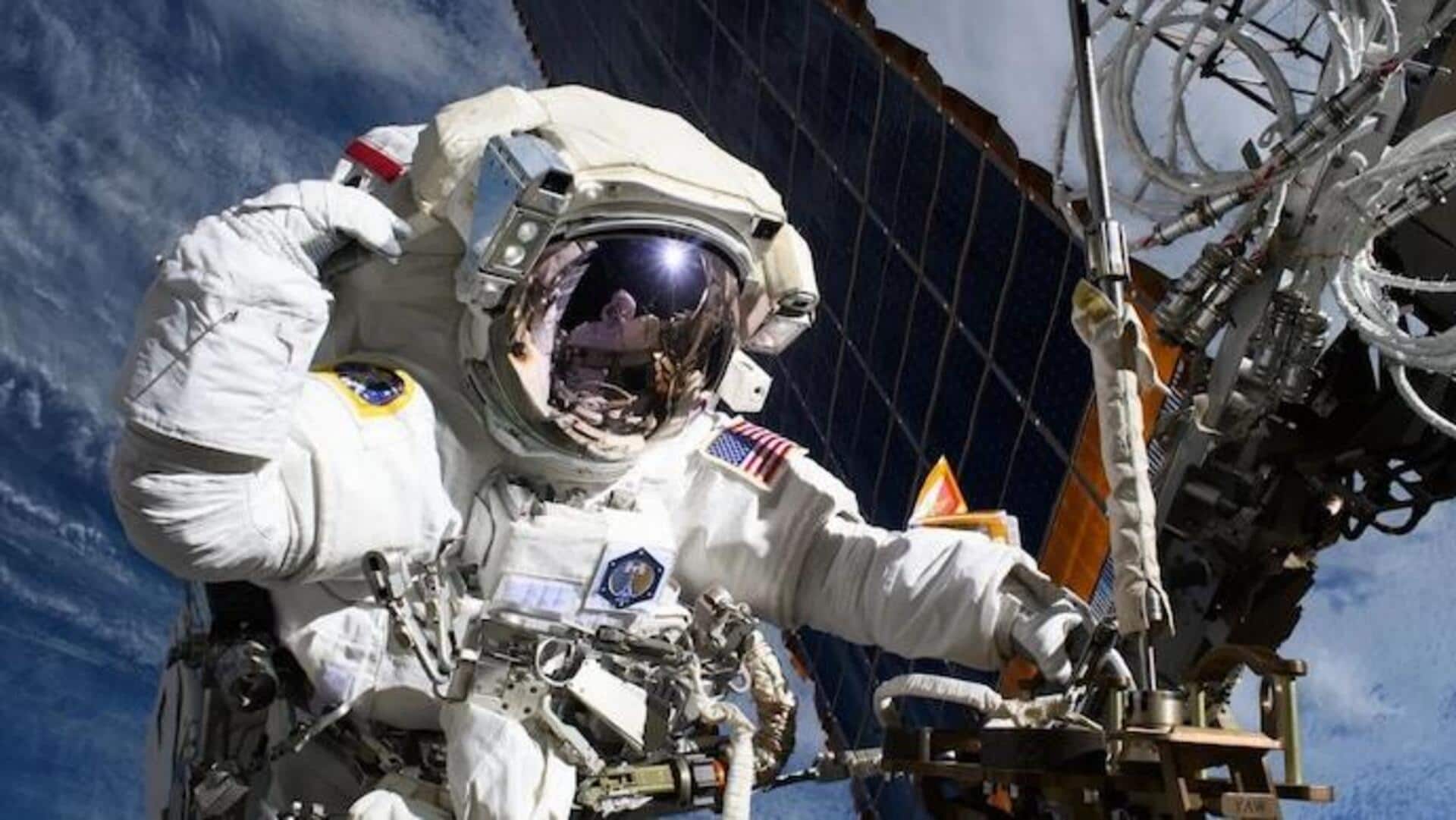
NASA astronauts can now carry smartphones on upcoming space missions
What's the story
In a groundbreaking move, NASA has announced that its astronauts will be allowed to bring their smartphones into space for the first time. The change will be implemented in the upcoming Crew-12 and Artemis II missions. The Crew-12 mission is scheduled to launch toward the International Space Station (ISS) next week. The highly anticipated Artemis II mission, which will take humans around the Moon for the first time since the 1960s, has been delayed until March.
Mission objectives
NASA's historic journeys
NASA Administrator Jared Isaacman said the agency is giving its crews "the tools to capture special moments for their families and share inspiring images and video with the world."
The astronauts will be able to use the latest iPhones and Android devices for more spontaneous image and video gathering.
This could make these upcoming missions some of NASA's most well-documented journeys yet.
Content possibilities
Astronauts becoming TikTok stars in 0 gravity
The idea of astronauts becoming TikTok stars in zero gravity or taking ultra-wide-angle selfies inside the spacecraft is both exciting and amusing.
A NASA representative also highlighted the rapid approval process for this rule change, saying, "Just as important, we challenged long-standing processes and qualified modern hardware for spaceflight on an expedited timeline."
He added that this operational urgency would benefit NASA as it pursues high-value science and research in orbit and on the lunar surface.
Past technology
A significant shift for NASA
Previously, the newest cameras that were supposed to go on these missions were decade-old Nikon DSLRs and GoPros, according to Ars Technica.
While not outdated, using a smartphone brings a more spontaneous and whimsical element to the table.
This change marks a significant shift in how NASA plans to document its space journeys in the future.
Twitter Post
Take a look at Isaacman's post
NASA astronauts will soon fly with the latest smartphones, beginning with Crew-12 and Artemis II. We are giving our crews the tools to capture special moments for their families and share inspiring images and video with the world. Just as important, we challenged long-standing…
— NASA Administrator Jared Isaacman (@NASAAdmin) February 5, 2026