Researchers link missing sulfur in star-forming clouds to rapid reactions
A group of researchers think they've figured out why there's way less sulfur than expected in star-forming clouds, only about 1% of what scientists predicted.
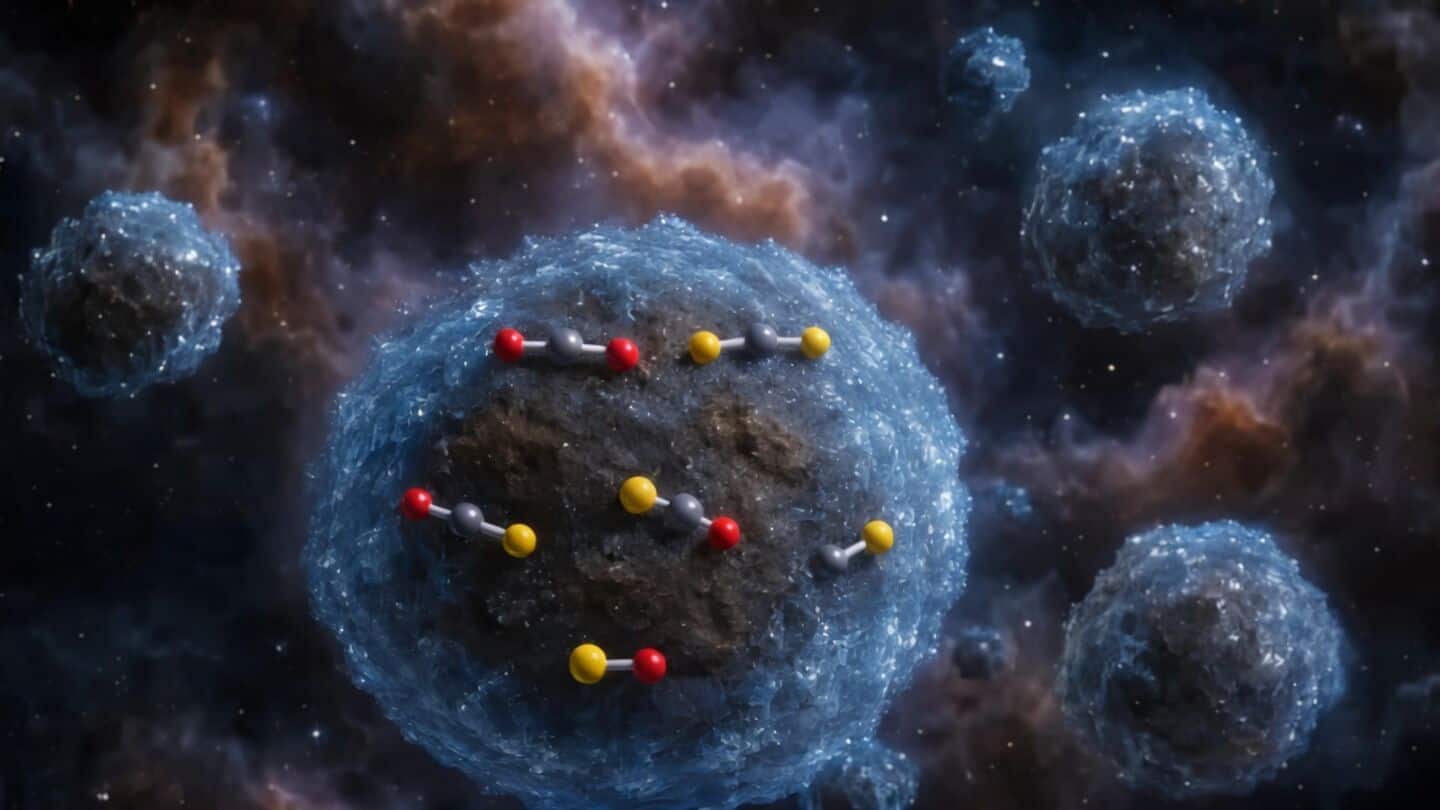
Using a cool simulation, they recreated how carbon dioxide and carbon disulfide ice react when blasted with UV light at super-low temperatures (think -263 Celsius).
Turns out, the usual chemistry didn't explain things, but quick reactions right after atoms are released did.
Study finds sulfur forms chains
Their work shows UV light can reach pretty deep into icy layers, up to 100 layers, which affects how much sulfur sticks around.
Instead of floating as single molecules, sulfur seems to bunch up into chains.
Since sulfur is key for building blocks of life (like amino acids), figuring out where it hides could help us understand both star formation and the search for life beyond Earth.
The team says the study lays out a promising route for further observations with the help of the James Webb Telescope.