These AI tools have made data analysis easy
What's the story
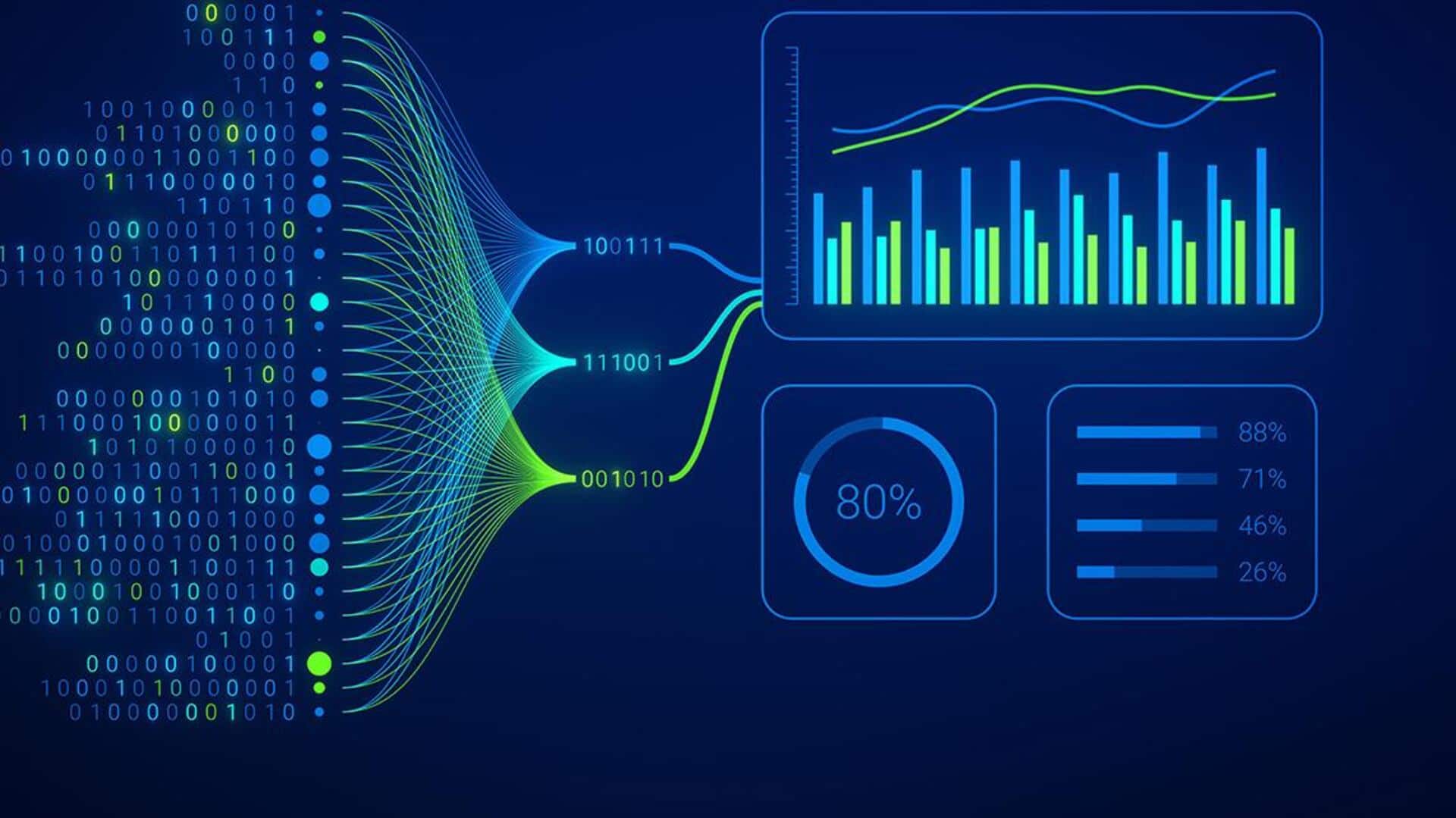
In 2026, data analytics has come a long way, thanks to the advent of cutting-edge AI tools. Gone are the days of traditional methods; today, AI-powered platforms autonomously deliver insights. This way, businesses are able to extract more value out of their data, respond to market opportunities faster, and democratize access to complex analytics. The shift to AI in data analytics is changing how organizations function and decide.
#1
The AI analytics revolution
Modern AI analytics tools leverage natural language processing and autonomous reasoning to make data access easy. Now, business users can simply ask questions in plain English, without requiring technical expertise in SQL or formulas. This accessibility expands the people who can draw insights from data, enabling organizations to respond quickly to market changes.
#2
Leading AI-powered platforms
Platforms such as Connecty AI integrate over 500 data sources, delivering a complete semantic layer solution. Microsoft Power BI provides an AI-native platform with *Copilot* for natural language querying. Databricks integrates machine learning infrastructure with business intelligence capabilities for large-scale analytics. ThoughtSpot's SpotIQ auto-insights automatically surface patterns, while Tableau is a champion in visual storytelling.
#3
AI-enhanced data science tools
DataRobot automates machine learning model development by testing several algorithms at once, guaranteeing efficiency and accuracy. Jupyter AI makes model creation easier, opening it to more people. With Zerve, you get context-aware agents that facilitate collaboration for individual users, as well as teams. Polymer cuts down visualization design time by a huge margin by automatically creating detailed dashboards, making data presentation and analysis simple.
Tip 4
Matching tools to your needs
The success of implementation depends on matching tools with exact workflows. Power BI or ThoughtSpot works for business users wanting quick insights, whereas Databricks or Zerve would be perfect for deep analysis at scale. Sisense enables embedded analytics capabilities, and DataRobot provides end-to-end automation for data scientists requiring predictive models quickly.