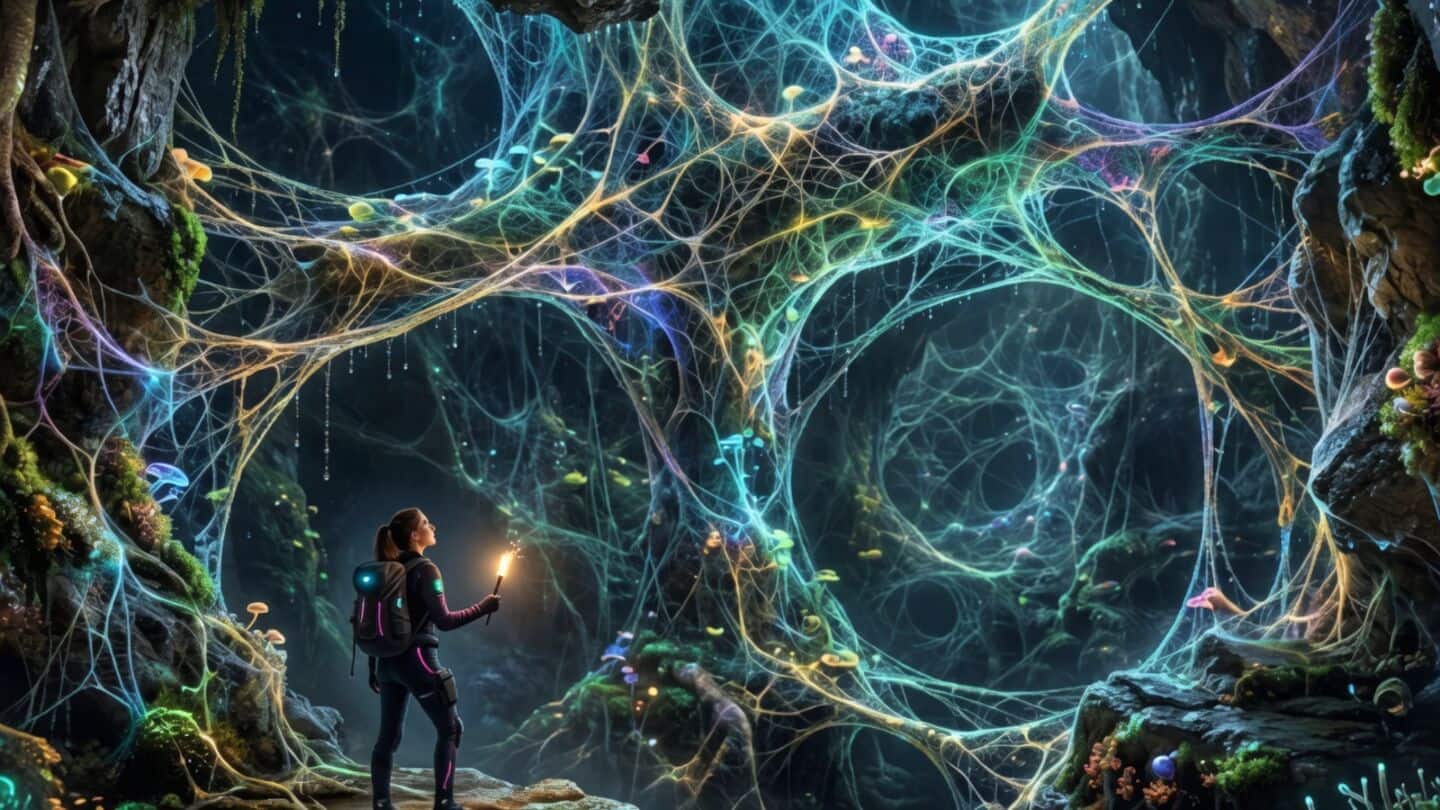
Scientists map 'wood wide web' linking 70% of land plants
Scientists have uncovered a massive underground fungal network: imagine 110 quadrillion kilometers of tiny threads linking about 70% of land plants.
This "wood wide web" lets plants swap nutrients and water, and plants may use it to transmit urgent distress signals.
The discovery comes from the most comprehensive map ever made of arbuscular mycorrhizal (AM) fungi, led by SPUN (Society for the Protection of Underground Networks), using over 16,000 soil samples.
Fungi capture 1bn tons carbon annually
These fungi aren't just plant helpers: they're climate heroes too.
The network acts like an extension of plant roots, helping them share resources and send distress signals.
It also traps up to 1 billion metric tons of carbon from the air each year.
High-density networks were found in untouched places like South Sudan's Sudd wetlands and Florida's Everglades, showing how vital they are for healthy ecosystems and fighting climate change.