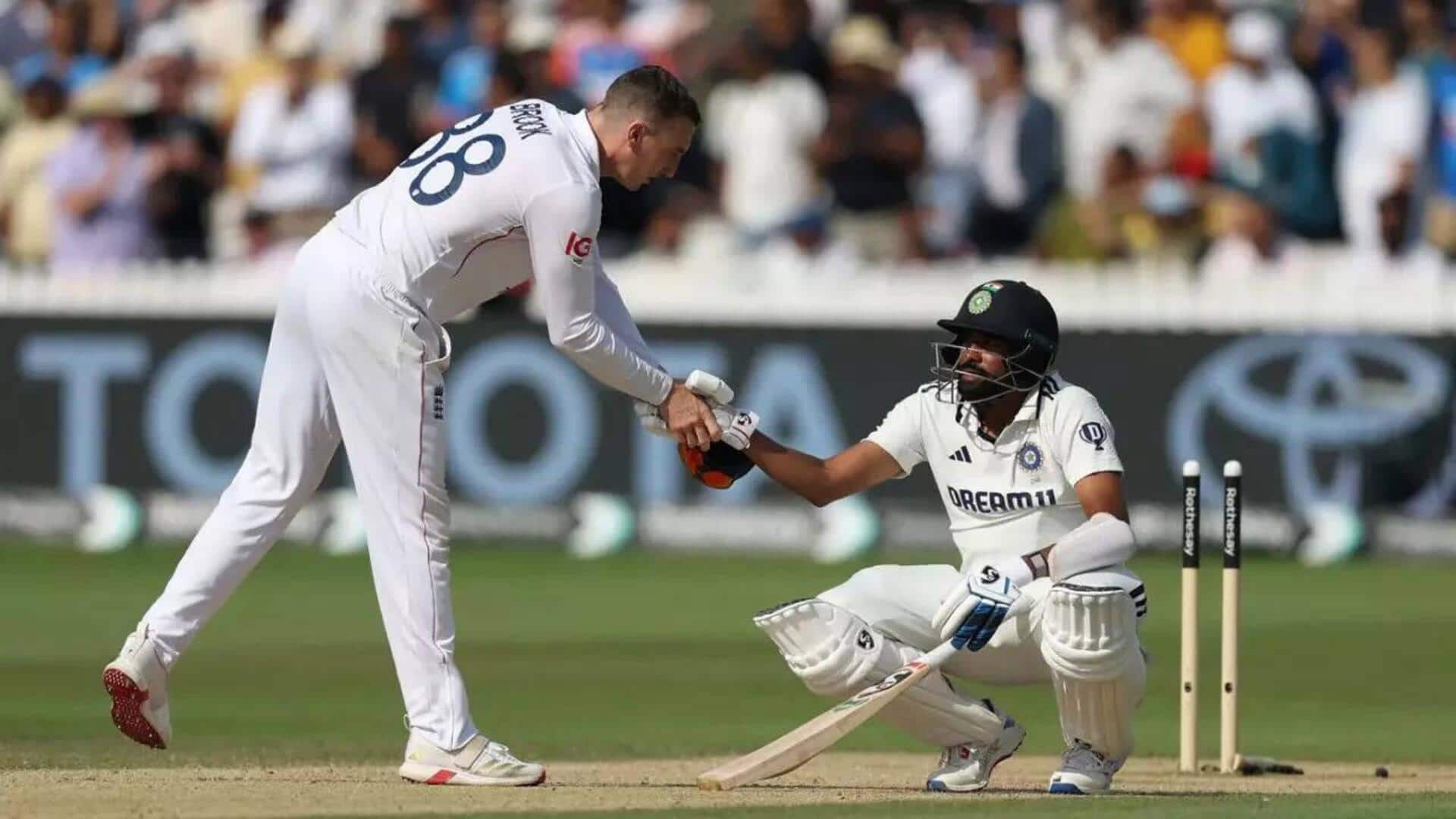
MCC's last-over law change in multi-day matches explained
What's the story
The Marylebone Cricket Club (MCC) has announced major changes to the Laws of Cricket, including allowing the last over of a day's play (multi-day match) to continue even if a wicket falls. The amendment, which was revealed on Tuesday, is part of the MCC's ongoing effort to modernize cricket regulations. The new rule will come into effect from October 1, 2026. Here's how it will work.
Context
Why does this story matter?
Under the current rule, if a wicket falls late in the day, umpires can call for stumps even with time remaining.
The MCC's proposed tweak will now allow the final over to continue regardless of wickets. This will ensure the final over's completion.
The current rule allows teams the liberty of sending in a nightwatchman to safeguard the specialist batters for the next morning.
However, the new rules could force the sides to revise this strategy.
Rule change
MCC's law sub-committee discusses significant change
The MCC's Laws sub-committee decided that the last over of a day's play in multi-day matches, including Tests, should not end if a wicket falls, as it takes away some "drama" from the match.
The committee said, "This is a significant change that will impact multi-day cricket."
They added, "It was felt unfair that if a fielding side takes a wicket in the final over of the day, the batting side does not have to send out a new batter."