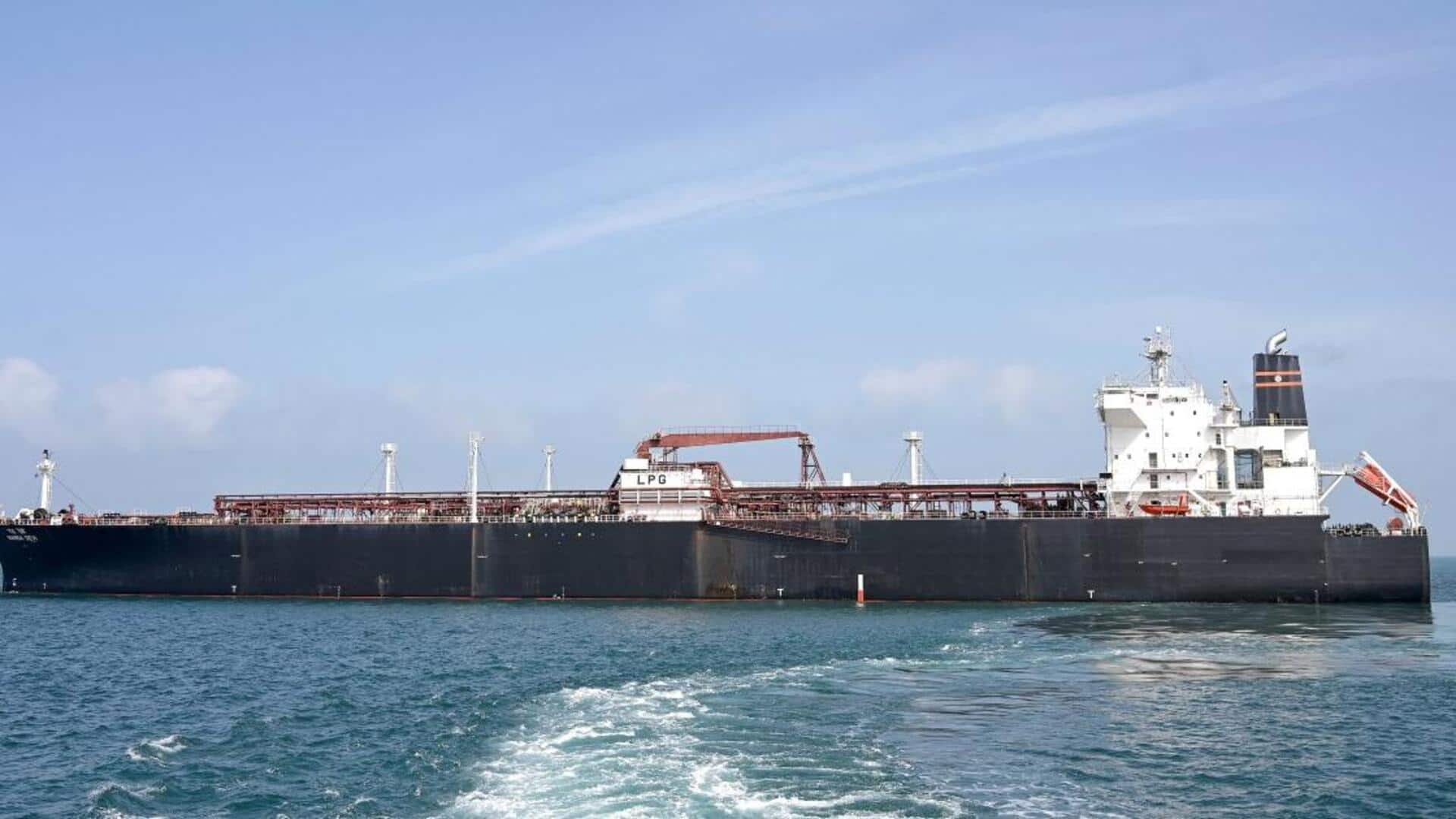
3 Omani ships escape Hormuz chokehold through new route
What's the story
Three Omani-managed vessels appeared to have successfully entered the Strait of Hormuz by hugging their home country's shoreline, indicating a different route than a northerly path through Iranian seas, Bloomberg reported. The vessels include two oil supertankers and a liquefied natural gas carrier. They were tracked entering the strait on Thursday through satellite signals. All three are managed by Oman Ship Management Company, according to Equasis marine database records.
Transit negotiations
Iran negotiating with Oman to monitor traffic
The Strait of Hormuz has been mostly blocked since the conflict began. However, Iran has started negotiating transit for a few vessels of friendly nations on a northerly route through its waters. Iranian Deputy Foreign Minister Kazem Gharibabadi on Thursday said Tehran is drafting a protocol with Oman to monitor traffic through the strait. Iran is also reportedly planning to introduce a tolling system, charging up to $2 million per voyage through the strait.
Journey uncertainty
Tracking of ships difficult due to signal jamming
The three vessels stopped broadcasting automated position signals around 9:30am London time as they neared Oman's Mussandam Peninsula. Bloomberg reported that the three ships were broadcasting that they were Omani when transiting. It is unclear if they completed their journeys, which usually take several hours. Tracking these ships has been difficult due to intense signal jamming and spoofing in the area.
Cargo details
Tankers carrying crude oil
The tankers are each carrying around two million barrels of crude oil, while the gas carrier appears empty. One tanker was loaded in Saudi Arabia in February with Kyaukpyu, Myanmar, as its destination. The other is transporting crude from Abu Dhabi to an undisclosed location. The vessels followed a route south of designated shipping lanes through the waterway, as opposed to the more northerly route chosen by most ships departing the Persian Gulf between Iran's Larak and Qeshm islands.