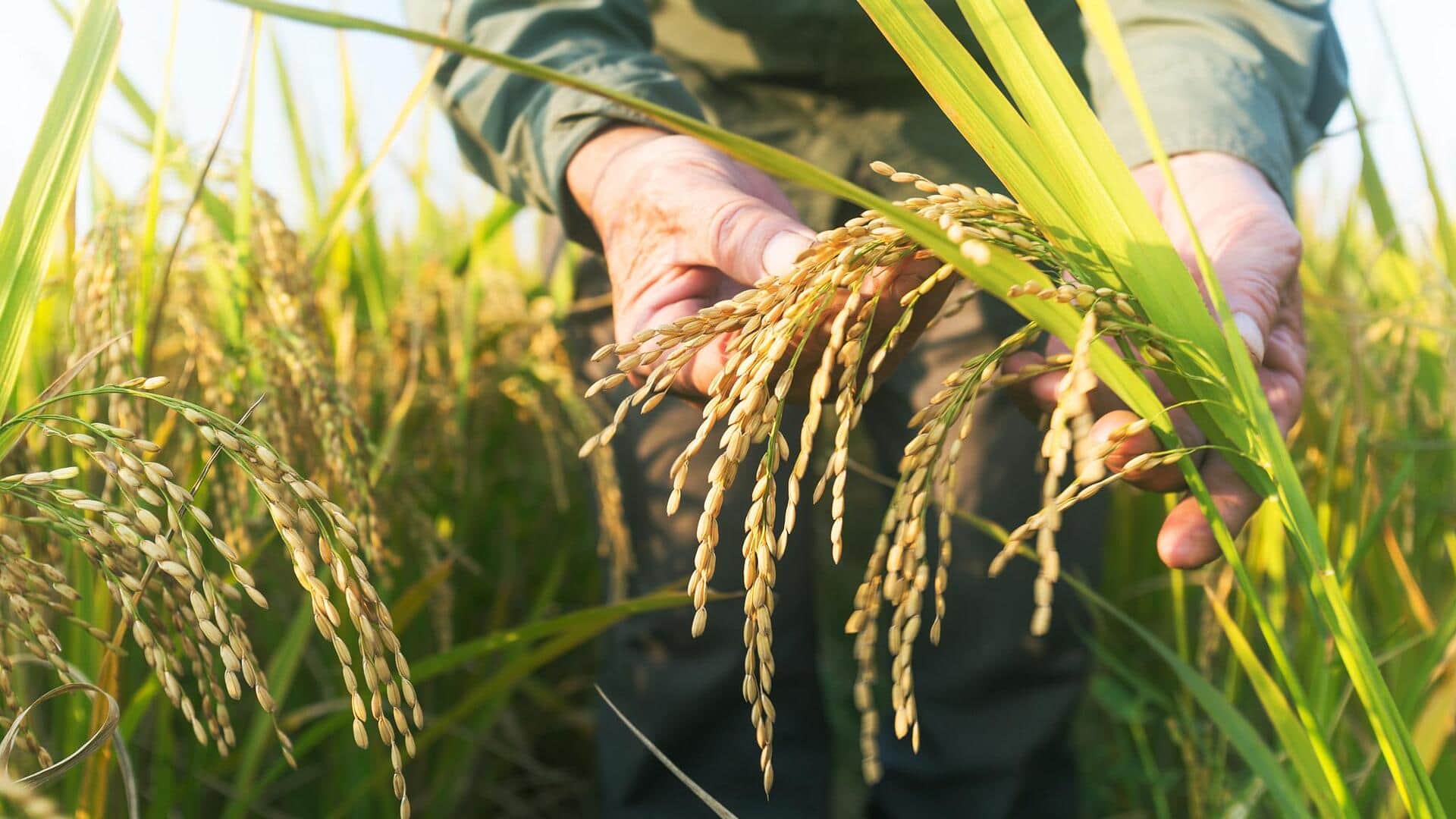
China creates high-yield rice that can clone its own seeds
What's the story
Chinese researchers have developed a revolutionary type of hybrid rice that can reproduce itself through clonal seeds. The new strain retains its high-yield characteristics from generation to generation, according to the research team. This breakthrough could change global agriculture by eliminating the need for farmers to buy expensive new hybrid seeds every season.
Agricultural impact
Hybrid rice: A solution to global food insecurity
Hybrid rice has been touted as a potential solution to global food insecurity, promising yields nearly four times higher than traditional varieties in some parts of Africa.
If adopted by all rice farmers, this new hybrid variant could theoretically double the world's rice production, according to industry estimates.
However, the high cost of hybrid seeds has been a major hurdle in its widespread adoption.
Seed issues
High cost and hybrid vigor loss: Challenges of hybrid rice
The price of hybrid seeds can go up to 200 yuan ($28) per kilogram in China, and even more in other countries.
This is up to 100 times more than regular rice seeds.
Plus, the offspring of these high-priced seeds lose their hybrid vigor—superior traits from crossbreeding—forcing farmers to buy new seeds every year.
Research achievement
China's breakthrough in hybrid rice reproduction
A research team led by Wang Kejian at the China National Rice Research Institute has developed this self-replicating hybrid rice.
The team used apomixis, a process where seeds develop without fertilization, to achieve near-perfect clonal reproduction.
This could be a game-changer for global agriculture and food security as it would eliminate the need for farmers to buy new seeds every season.