Japan warns NZ of diplomatic fallout over 'comfort women' statue
What's the story
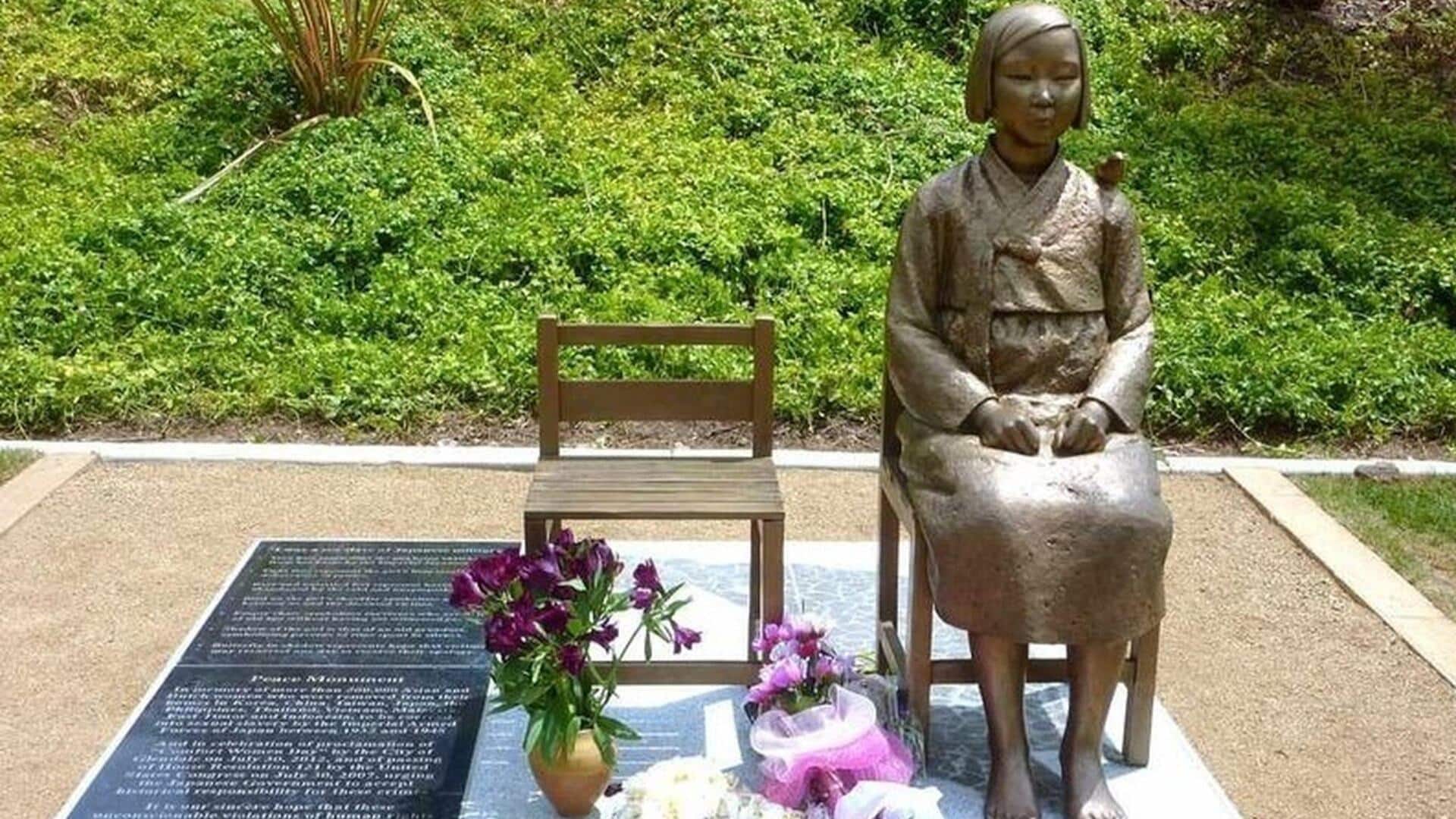
The Japanese embassy in New Zealand has warned that a proposed statue in Auckland could strain diplomatic ties between the two countries. The bronze statue, given to New Zealand by the Korean Council for Justice and Remembrance, symbolizes the thousands of women Japan allegedly forced into sexual slavery before and during World War 2. It depicts a seated girl next to an empty chair and is planned for installation at Barry's Point reserve's Korean cultural garden if approved by authorities.
History
200,000 women were forced into working in military brothels
According to some historians, between 1932 and 1945, up to 200,000 women were forced or misled into working in military brothels, most of whom were from Korea, but also from China, Southeast Asia, and a few from Japan and Europe.
They were euphemistically referred to as "comfort women."
The women captives were compelled to have sex with Japanese soldiers in front-line, makeshift brothels, with survivors testifying that they were forced to have sex with 10 to 30 men a day.
Diplomatic warning
Statue could create divisions in Japanese, Korean communities
In a submission to Auckland council, Japanese Ambassador to New Zealand, Makoto Osawa, cautioned that "needlessly stirring up interest" in the issue could burden cooperation between Japan and South Korea, as well as harm Japan-New Zealand relations.
A spokesperson from the Japanese embassy also warned that the statue could create division within Japanese and Korean communities and lead to Japanese cities severing ties with their New Zealand counterparts.
Historical context
Japan-Korea ties strained since early 1990s
Japan insists the "comfort women" issue was settled by a 2015 agreement between then-Prime Minister Shinzo Abe and South Korean President Park Geun-hye.
However, this agreement was effectively nullified in 2018 by President Moon Jae-in.
The relationship between Japan and South Korea has been strained since the early 1990s, when survivors first came forward with their stories, The Guardian reported.
Official response
Most submissions opposed to statue due to political implications
The New Zealand government has acknowledged the sensitivity of the proposed statue but said such matters are up to local governments and communities.
The Auckland council received 672 submissions on the proposal, with most opposing it due to concerns over its political implications, as per the report.
The Aotearoa New Zealand Statue of Peace committee, which is backing the project, says it aims to acknowledge violence against these women and keep their stories alive.