How Everest sherpas executed $20M rescue insurance scam
What's the story
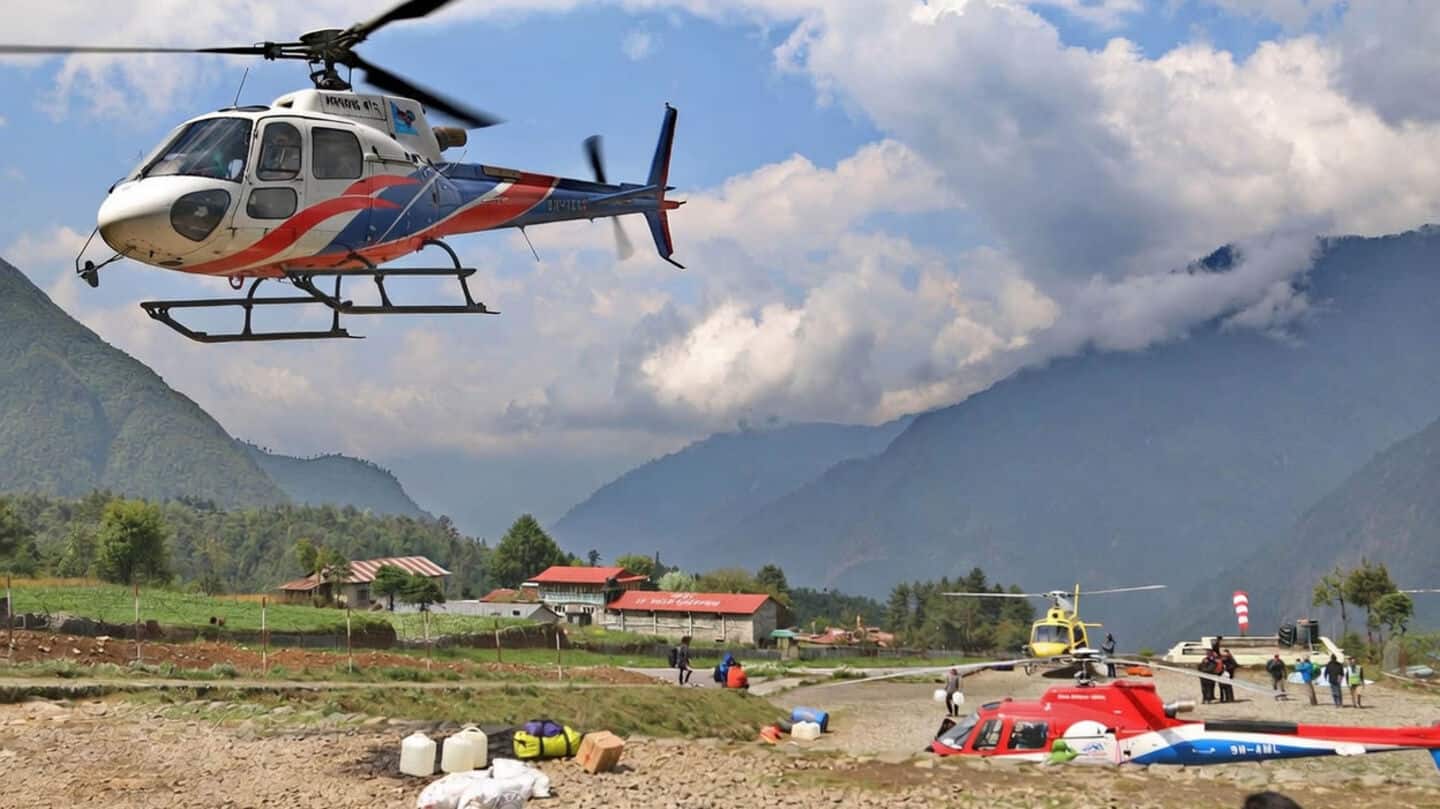
Nepal has been rocked by a sophisticated insurance fraud scheme involving fake helicopter rescues. The scam, which was first reported in 2018 by The Kathmandu Post, involved guides, trekking agencies, helicopter operators and medical staff deliberately inducing illness among international tourists on Mount Everest routes. The Central Investigation Bureau (CIB) of Nepal Police recently reopened the case and discovered that the fraud is still ongoing and growing, the Kathmandu Post reported.
Scam mechanics
How does the scam work?
The scam works by faking a medical emergency, calling a helicopter, checking a tourist into a hospital, and filing an insurance claim that doesn't match reality.
The CIB investigation found two main ways to create an emergency.
One involves tourists who don't want to walk back after completing a trek. Guides offer them an option: fake illness and get airlifted by helicopter.
Altitude sickness
Inducing fear in trekkers to justify a rescue call
The second method involves inducing fear in trekkers suffering from mild altitude sickness. Guides and hotel staff tell them they could die if not evacuated immediately.
In some cases, investigators found that Diamox (Acetazolamide) tablets were given with excessive water intake to induce symptoms justifying a rescue call.
In one instance, baking powder was mixed into food to make tourists physically unwell.
Scam finances
Fake flight manifests and discharge summaries
Once a "rescue" is called, multiple passengers are billed separately for insurance claims. A $4,000 charter can become a $12,000 claim.
Fake flight manifests and load sheets are created to support these claims.
At hospitals, medical officers prepare discharge summaries using digital signatures of senior doctors who were never involved.
For patient referrals, hospitals paying 20-25% of insurance payments to trekking companies and helicopter operators.
In certain circumstances, tourists themselves were paid to participate.
Fraud scale
Hospitals and helicopter operators involved in the scam
The CIB investigation found 4,782 foreign patients treated across implicated hospitals between 2022 and 2025. Of these, 171 cases were confirmed as fake rescues.
Era International Hospital received over $15.87 million linked to these activities, while Shreedhi International Hospital received over $1.22 million.
Among rescue operators, Mountain Rescue Service conducted 171 fraudulent rescues, claiming approximately $10.31 million from insurers.
Investigation outcome
Charges filed against individuals involved in the case
The new investigation was prompted by a complaint from Deshbhakta Gen Z in September 2025. It has already led to charges against 32 individuals for offenses against state organized crime.
Among those charged are operators and staff from three helicopter companies and physicians.
The case records include CCTV footage confirming foreign tourists reported critically ill were filmed drinking beer at a cafe run by one charged physician at the time their medical records show them receiving hospital treatment.