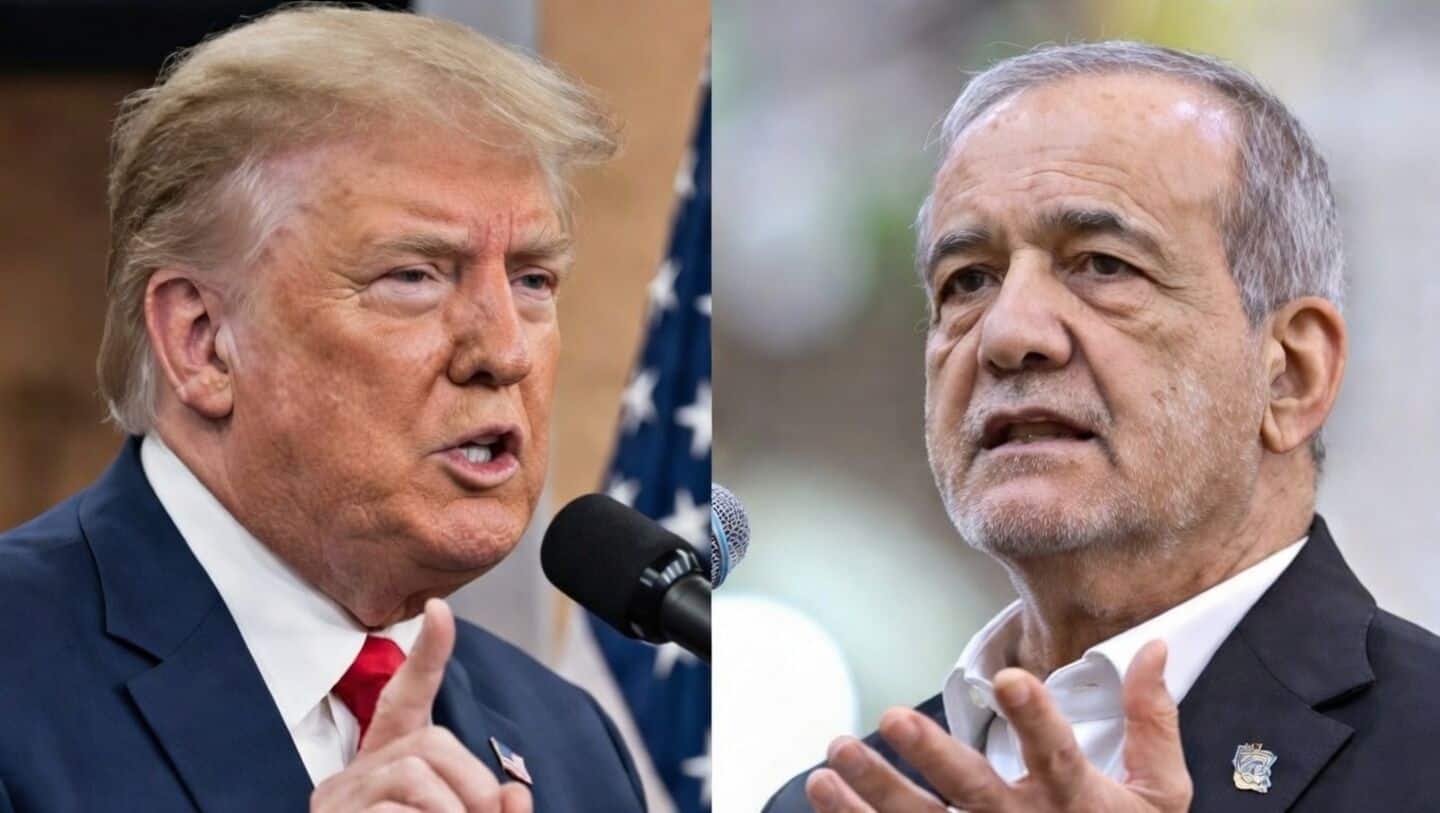
Iran lists reasons why negotiations with US are failing
What's the story
Iranian President Masoud Pezeshkian has accused the United States of sabotaging negotiations through contradictory actions and threats. In a series of posts on X, Pezeshkian said that the world is witnessing "your hypocritical, empty talk and the contradiction between your claims and your actions." He blamed three main factors for stalled negotiations: breach of commitments, blockade, and threats.
Diplomatic tensions
Iran's historical mistrust of US actions
Pezeshkian reiterated Iran's willingness for dialogue but stressed that "honoring commitments is the basis of meaningful dialogue."
He also highlighted deep historical mistrust toward US conduct, saying Iranians don't submit to force.
The ongoing naval blockade near the Strait of Hormuz remains a major sticking point in negotiations.
Despite US President Trump's ceasefire extension, tensions continue with both sides trading threats and military actions.
Maritime tensions
Iranian seizure of vessels raises global economic concerns
On Wednesday, right after the truce extension, Iran's Revolutionary Guards seized two vessels, MSC Francesca and Epaminondas, citing maritime violations.
In a statement, the Guards said the ships were detained for "operating without the required authorization and for manipulating navigation systems," adding that this endangered maritime safety.
At least three container ships were also hit by gunfire in the Strait of Hormuz on Wednesday, maritime security sources and the United Kingdom Maritime Trade Operations (UKMTO) said
Stalled diplomacy
Diplomatic efforts to resolve situation stalled
Diplomatic efforts to resolve the situation have so far failed.
The White House is waiting for a "unified" response from Iran's leadership, indicating possible internal divisions within Tehran, White House press secretary Karoline Leavitt said on Wednesday.
However, she refuted reports that Tehran has been given until Sunday to offer a coherent position, saying, "The president has not set a firm deadline to receive an Iranian proposal, unlike some of the reporting we've seen today."