Iran's harsh crackdown on protestors amid hundreds of deaths
What's the story
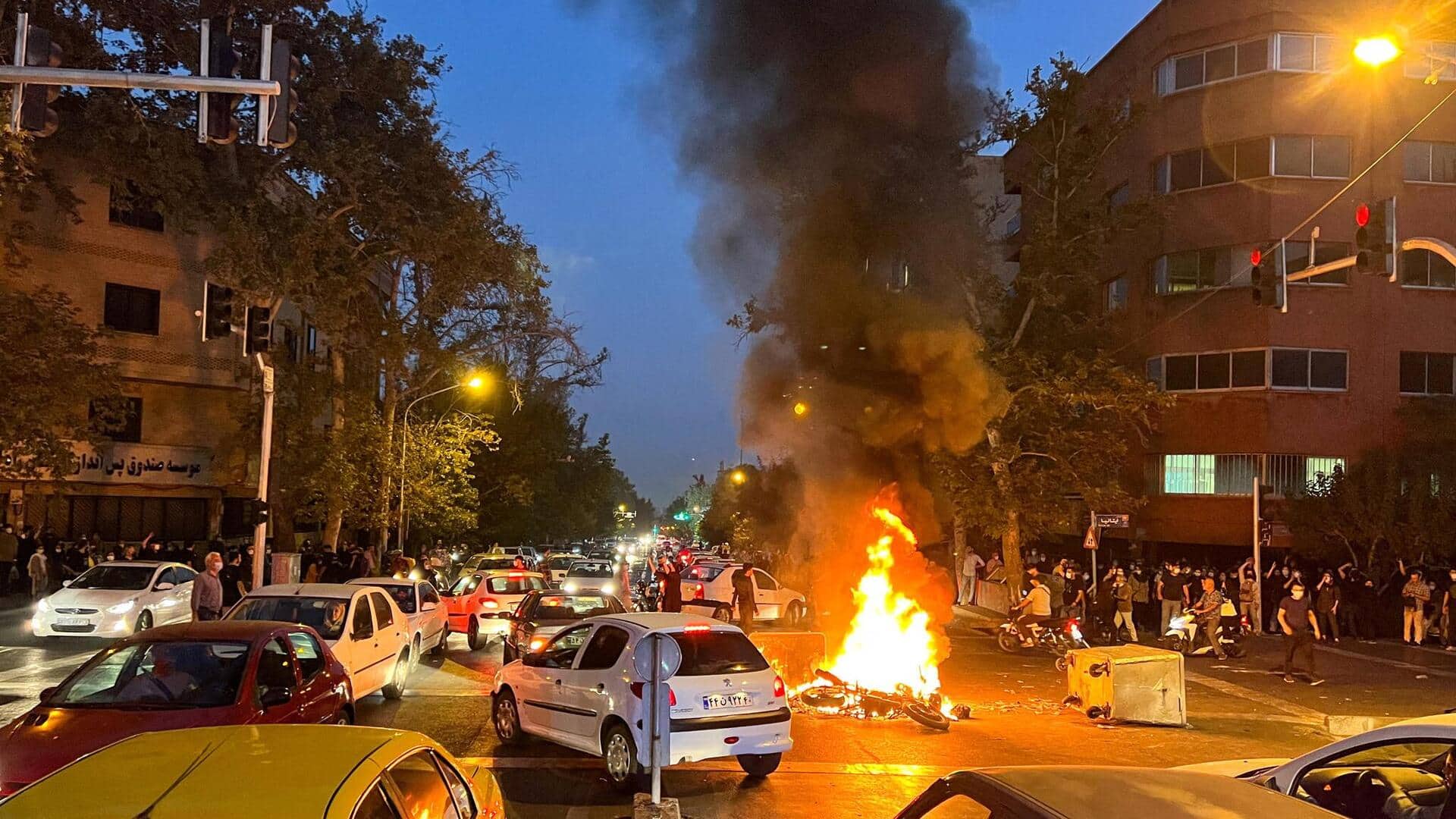
Iran is witnessing its worst unrest since the 1979 Islamic Revolution, with protests over economic hardship turning into a challenge to the clerical leadership. The protests, which started on December 28, spread to all 31 provinces of the country by last week. Security forces have responded with deadly force and mass arrests, while a near-total internet blackout has been imposed to curb information flow.
Unrest details
Protests reveal public anger against Iran's ruling clerical system
The protests, which started over economic issues, a falling rial and hyperinflation driving up the cost of living, have now turned into a wider revolt against the ruling clerical system.
Public anger is directed at the Revolutionary Guards, whose business interests are seen as symbols of inequality and corruption.
The US-based Human Rights Activists News Agency (HRANA) reported that at least 646 people have died in the unrest, including protesters, military personnel, and bystanders.
Government response
Iran's leadership frames protests as foreign-backed security threat
Iran's leadership has portrayed the protests as a security threat backed by foreign actors.
The Ministry of Intelligence claims to have arrested "terrorist" teams behind violence against paramilitary volunteers and military sites.
Foreign Minister Abbas Araqchi said the situation was "under total control," while President Ebrahim Raisi warned citizens against joining what he called "rioters and terrorists."
International reaction
US President Trump threatens tariffs, warns of military action
US President Donald Trump has threatened a 25% tariff on countries trading with Iran, a list that includes India.
He warned that the US would retaliate if security forces fired on protesters.
The situation has also prompted warnings from Iranian officials against miscalculations by Washington, with Tehran's regional influence already weakened by recent conflicts.
Information control
Iran's internet blackout limits information flow, complicates reporting
Iran imposed a nationwide internet shutdown on January 8. The regime's detractors say the move aims to limit information flow about the protests within the country and globally.
NetBlocks reported national access fell to just 1% of ordinary levels by the fourth day of the shutdown.
Journalists face significant obstacles due to this blackout, making it difficult to verify events or assess the true scale of unrest.