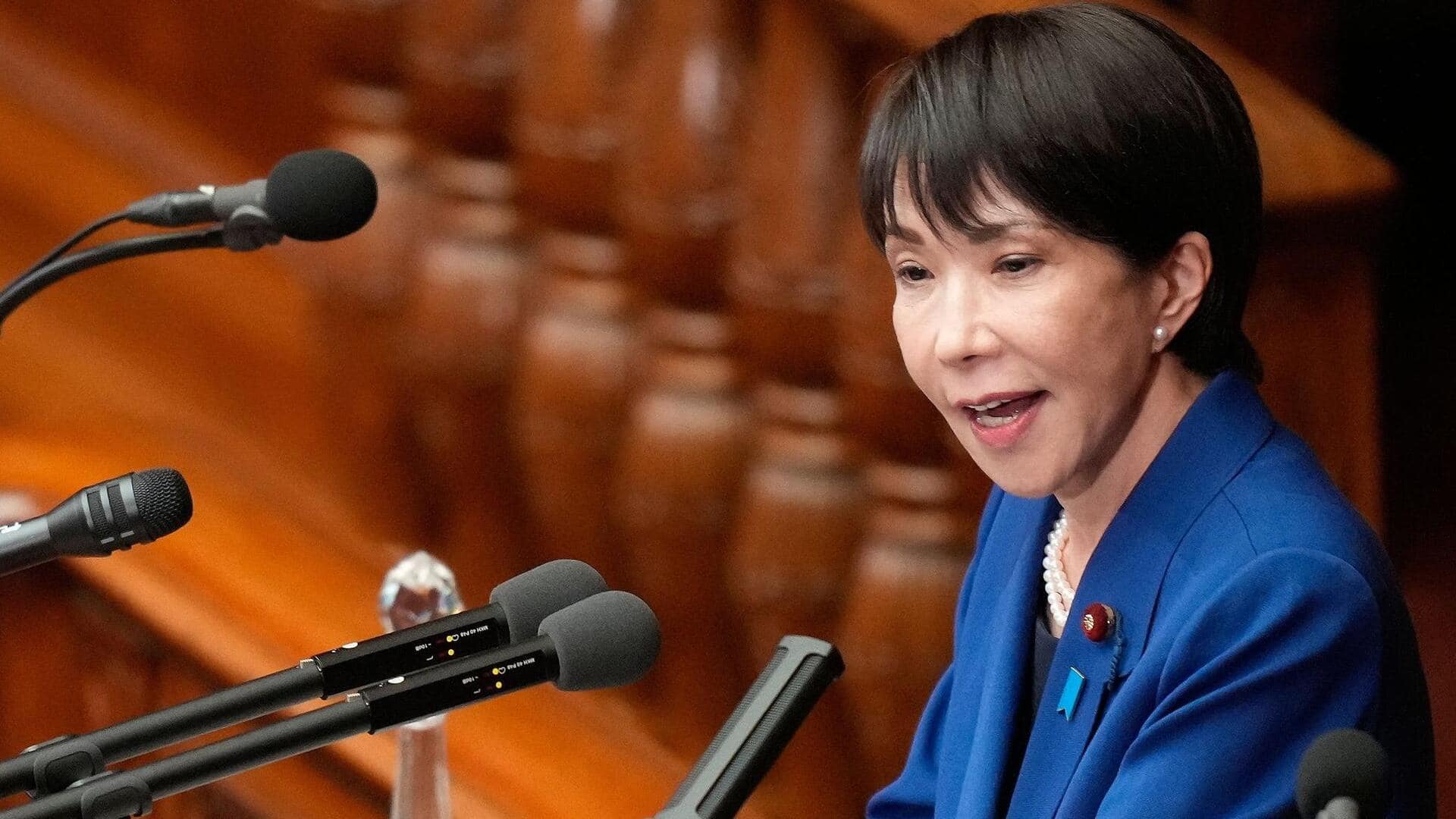
Japan PM Takaichi to dissolve parliament, call national election
What's the story
Japanese Prime Minister Sanae Takaichi has announced plans to dissolve the parliament and call for a national election. The decision comes as she seeks voter support for her proposed increase in spending and a new security strategy, which is expected to accelerate Japan's defense build-up. This will be the first major electoral challenge for Takaichi since she took office as Japan's first female prime minister in October 2025.
Election details
Election to decide all seats in lower house
The upcoming election, scheduled for February 8, 2026, will determine all 465 seats in Japan's lower house of parliament. Takaichi hopes to use the early election to strengthen her position within the ruling Liberal Democratic Party (LDP) and maintain her coalition's slim majority. The decision comes amid rising living costs, which continue to be a major concern for Japanese citizens.
Fiscal proposals
Takaichi's spending plans and opposition's response
Takaichi has promised to suspend an 8% food levy for two years, a move that could strain Japan's finances. This proposal is similar to those made by opposition parties, who have also called for a consumption tax cut. The ruling LDP has previously resisted such calls, fearing it would undermine market confidence in Japan's fiscal stability.
Tax proposals
Opposition parties propose abolishing food sales tax
Meanwhile, a newly formed political party has proposed abolishing the 8% food sales tax and suggested creating a sovereign wealth fund to finance this permanent cut. Other opposition parties, including the Democratic Party for the People, have also pushed for reducing or eliminating the consumption tax. These proposals come as inflation in Japan has exceeded the Bank of Japan's 2% target for nearly four years.
Economic concerns
Takaichi's spending plans raise concerns among economists
Takaichi's spending plans have raised eyebrows among economists. Keiji Kanda from the Daiwa Institute of Research expressed concern that these measures could fuel inflation and push bond yields higher. The yield on the 10-year Japanese government bond hit a 27-year high of 2.275% on Monday, amid expectations of Takaichi's expansionary fiscal policies following an election victory.