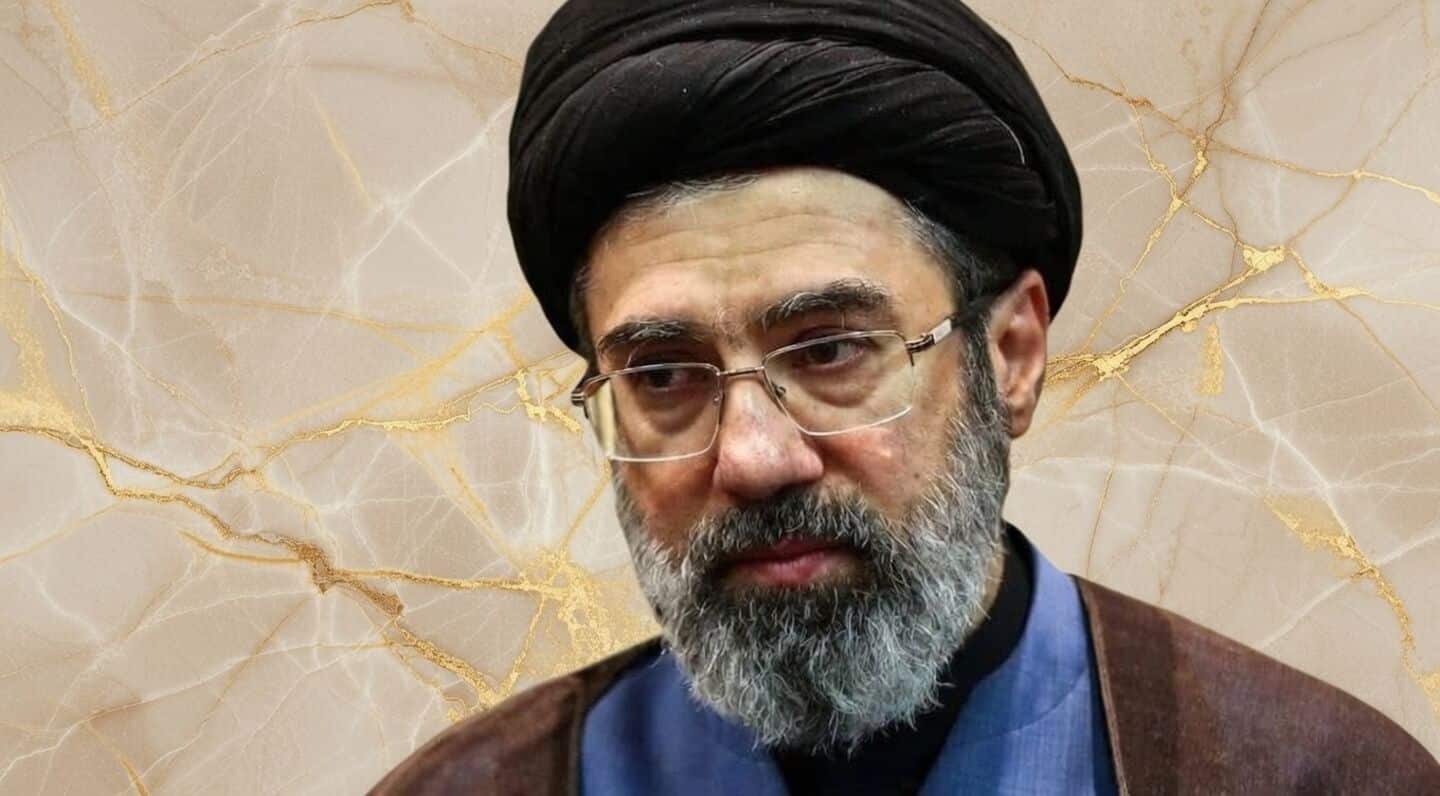
Mojtaba Khamenei's face, lips severely burned, may need plastic surgery
What's the story
Iran's Supreme Leader Mojtaba Khamenei is alive but has been severely injured, according to a report by The New York Times. The injuries have left him with limited communication abilities and he may require plastic surgery. However, "though Mr. Khamenei was gravely wounded, he is mentally sharp and engaged," four senior Iranian officials familiar with his condition told the newspaper.
Physical toll
Details of Khamenei's injuries and the resultant power shift
The report said that Khamenei has undergone multiple surgeries on one of his legs and is awaiting a prosthetic. His hand has also been operated on, with limited recovery.
More visibly, "his face and lips have been burned severely, making it difficult for him to speak," the report said.
This has resulted in a shift in how power is exercised at the top levels of governance in Iran.
Governance change
From public addresses to handwritten notes: The communication overhaul
If the report is true, it explains why Khamenei has not made any public appearances or broadcast messages since taking over from his father. Instead, communication has become covert, with handwritten messages relayed through a human chain to his hideout.
According to the report, this is a conscious decision as he "does not want to appear vulnerable or sound weak."
Even senior officials are keeping their distance from him due to fears of being traced by Israel.
Political shift
Diplomacy at risk as military takes charge
With restricted access, decision-making has shifted to military commanders of the Islamic Revolutionary Guards Corps (IRGC).
"Mojtaba is managing the country as though he is the director of the board. The generals are...board members," Abdolreza Davari, a former adviser to ex-president Mahmoud Ahmadinejad, said.
The influence of the IRGC is evident when last week reports surfaced that the US had set two conditions to resume talks: reopening Hormuz and Iran's delegation having full authority from IRGC to finalize any agreement.
Generals
Civilian leaders sidelined
This is a clear departure from the highly centralized system of his father where ultimate authority was in the hands of one person, say analysts.
Under the new system, the report said, civilian leaders such as President Masoud Pezeshkian and Foreign Minister Abbas Araghchi have been sidelined on strategic issues, focusing mostly on domestic management.
This change has also affected diplomacy with the US.
A planned round of talks collapsed after military commanders opposed negotiations amid a US naval blockade.